

For most college basketball fans, March Madness is the best time of the year. The excitement of Selection Sunday, the opening-round upsets and the opportunity to watch smaller programs challenge national powers are what make the NCAA Tournament special. But for some schools, the experience has become little more than a distant memory.
Several Division I programs haven't appeared in the NCAA Tournament in decades. Some have enjoyed successful regular seasons without winning the conference tournament that would secure an automatic bid. Others have struggled through coaching changes, conference realignment and extended periods without meaningful postseason success.
The 2026-27 season offers another opportunity for these programs to rewrite their histories. A few are attempting to end droughts that began before many current college basketball fans were born, while others are chasing their first NCAA appearance since the 1980s.
Here are ten programs facing especially long waits, presented from the shortest drought in this group to the longest.
10. Marist: Last NCAA Tournament appearance in 1987
Marist basketball enjoyed one of its most successful periods during the mid-1980s, making consecutive NCAA Tournament appearances in 1986 and 1987. The Red Foxes were led by a talented group that included future NBA center Rik Smits, who became one of the most recognizable players in program history. Since that memorable stretch, however, Marist has been unable to return to college basketball's biggest event.
The 1986-87 team provides a reminder of how quickly a season can change. Marist stood at 6-9 in late January before winning a school-record 14 consecutive games and capturing another ECAC Metro Conference championship. That remarkable turnaround carried the Red Foxes into the NCAA Tournament, but it remains their most recent appearance.
Nearly four decades later, the challenge is finding a way to reproduce that postseason success. Marist competes in a conference where the automatic bid is generally the clearest route to March Madness, making conference tournament execution particularly important. A successful 2026-27 season would give the program an opportunity to reconnect with one of its proudest basketball traditions.
9. Jacksonville: Last NCAA Tournament appearance in 1986
Jacksonville owns one of the more fascinating NCAA Tournament histories among programs currently outside the national spotlight. The Dolphins reached the national championship game in 1970 behind legendary center Artis Gilmore, eventually falling to UCLA. That remarkable run established Jacksonville as one of college basketball's most memorable smaller programs.
The Dolphins returned to the NCAA Tournament several times after that championship appearance, but their most recent trip came in 1986. Since then, Jacksonville has experienced periods of success without finding a way back into the national tournament. The program's history demonstrates that reaching college basketball's biggest stage once doesn't guarantee a regular invitation.
Jacksonville enters another season hoping to turn conference competitiveness into postseason success. The ASUN has produced memorable NCAA Tournament stories over the years, but earning its automatic bid requires surviving a difficult conference tournament. For the Dolphins, ending the drought would provide an opportunity to celebrate a program whose history deserves more attention.
8. Toledo: Last NCAA Tournament appearance in 1980
Few programs have experienced as much regular-season frustration during their NCAA Tournament drought as Toledo. The Rockets have produced successful teams, won conference championships and frequently competed near the top of the Mid-American Conference. Yet their most recent NCAA Tournament appearance remains the 1980 event.
Toledo came painfully close to ending that drought last March. The Rockets reached the 2026 MAC Tournament championship game before losing 79-76 to Akron, which claimed the conference's automatic bid. The defeat provided another reminder that an entire season can come down to a handful of possessions.
The Rockets' history includes a memorable 1979 NCAA Tournament victory over Iowa that helped send Toledo to the Sweet 16. That accomplishment remains an important part of the program's identity, but the current challenge is creating a new chapter. Another competitive regular season would be encouraging, although Toledo ultimately needs to finish the job when conference tournament pressure arrives.
7. VMI: Last NCAA Tournament appearance in 1977
VMI basketball experienced a remarkable stretch during the 1970s, making NCAA Tournament appearances in consecutive seasons and producing some of the greatest moments in school history. The Keydets reached the Elite Eight in 1976 and followed with another postseason appearance in 1977. Those teams established a standard that remains difficult to match nearly fifty years later.
The school celebrated the accomplishments of its 1976 and 1977 teams during the 2025-26 season, bringing attention to a period when VMI competed successfully against nationally recognized opponents. The Keydets defeated Duquesne in the opening round of the 1977 tournament, a victory that remains an important historical milestone. Since then, the program has been unable to secure another NCAA invitation.
VMI's challenge involves competing in a Southern Conference that regularly features established mid-major programs. The conference has produced numerous competitive teams, making the postseason route demanding even for programs enjoying successful seasons. A return to March Madness would represent one of the most significant accomplishments in modern VMI basketball history.
6. Rice: Last NCAA Tournament appearance in 1970
Rice basketball hasn't participated in the NCAA Tournament since 1970, when coach Don Knodel guided the Owls to a Southwest Conference championship. That team completed an impressive turnaround for a program that had struggled before Knodel's arrival. His success remains one of the most significant coaching achievements in Rice basketball history.
The Owls have spent the decades since attempting to establish sustained success across different conference environments. Conference realignment has changed the programs Rice competes against, but the ultimate objective remains unchanged. The Owls need to develop enough consistency to challenge for a conference championship and secure a postseason opportunity.
Rice's drought is particularly striking because the school has competed against numerous major basketball programs throughout its history. A return to the NCAA Tournament would create an entirely new generation of memories for supporters who have never experienced the Owls participating in March Madness. The 2026-27 season provides another chance to move toward that goal.
5. Seattle: Last NCAA Tournament appearance in 1969
Seattle has one of the more unusual NCAA Tournament droughts because its basketball history includes an extended period outside Division I. The program once competed regularly on the national stage and reached the NCAA championship game in 1958. Seattle eventually stepped away from Division I before returning decades later.
That history makes the Redhawks' drought different from those of programs that have competed continuously at the highest level. Seattle's last NCAA Tournament appearance came in 1969, meaning the school has gone more than half a century without participating in the event. However, a substantial portion of that period occurred while the program was competing outside Division I.
The Redhawks have worked to rebuild their national profile since returning to the highest level. Their move into the West Coast Conference created another opportunity to compete against established basketball programs and develop a stronger postseason identity. Returning to March Madness would reconnect Seattle's modern program with a history that includes some remarkable national accomplishments.
4. Columbia: Last NCAA Tournament appearance in 1968
Columbia's 1967-68 basketball season remains one of the greatest in Ivy League history. The Lions finished 23-5, earned an NCAA Tournament appearance and concluded the campaign ranked sixth nationally. The team featured outstanding players and was led by coach Jack Rohan, who received national coaching recognition.
Columbia's path to the tournament was anything but ordinary. The Lions had to defeat Princeton in an Ivy League playoff to secure the conference championship, winning 92-74 before advancing to the NCAA Tournament. Columbia then defeated La Salle before suffering a narrow 61-59 loss to Davidson in the East Regional semifinals.
That remarkable season remains the program's most recent NCAA Tournament appearance. Columbia has spent the decades since attempting to reproduce the success of a team that established itself among the nation's elite. Because the Ivy League now awards its automatic bid through a conference tournament, the Lions must build a team capable of succeeding during both the regular season and a demanding postseason weekend.
3. Bowling Green: Last NCAA Tournament appearance in 1968
Bowling Green's most recent NCAA Tournament appearance came in 1968, when the Falcons captured the Mid-American Conference championship under coach Bill Fitch. The team finished 18-7 and featured standout forward Walt Piatkowski, who became one of the most accomplished scorers in program history. Bowling Green entered the NCAA Tournament with an opportunity to extend its successful season.
The Falcons faced Marquette in a closely contested opening-round matchup. Piatkowski scored 27 points, but Bowling Green suffered a heartbreaking 72-71 defeat. The narrow loss remains the program's most recent NCAA Tournament game, leaving generations of Falcons supporters waiting for another opportunity.
The 1968 team also holds an interesting place in coaching history because Fitch eventually became an accomplished NBA coach. Bowling Green has enjoyed successful seasons since his departure, but the NCAA Tournament drought has continued. Ending it would provide the program with a chance to celebrate both its historical accomplishments and a new generation of players.
2. Tennessee Tech: Last NCAA Tournament appearance in 1963
Tennessee Tech has appeared in the NCAA Tournament only twice, with its most recent trip coming in 1963. The Golden Eagles faced Loyola Chicago in that tournament, losing to a team that eventually captured the national championship. More than six decades later, Tennessee Tech is still attempting to return.
The program enters the 2026-27 season with an especially interesting coaching storyline. Tobin Anderson, who guided Fairleigh Dickinson to its historic upset of top-seeded Purdue in the 2023 NCAA Tournament, is now leading the Golden Eagles. Anderson has experience building successful programs at multiple levels, including Division II and Division III.
Tennessee Tech is also beginning a new chapter in the Southern Conference after leaving the Ohio Valley Conference. The combination of a new league and a coach with remarkable NCAA Tournament experience creates an intriguing situation. Anderson has already demonstrated that an overlooked program can produce one of March Madness's most unforgettable moments, and Tennessee Tech supporters would welcome another opportunity to experience that excitement.
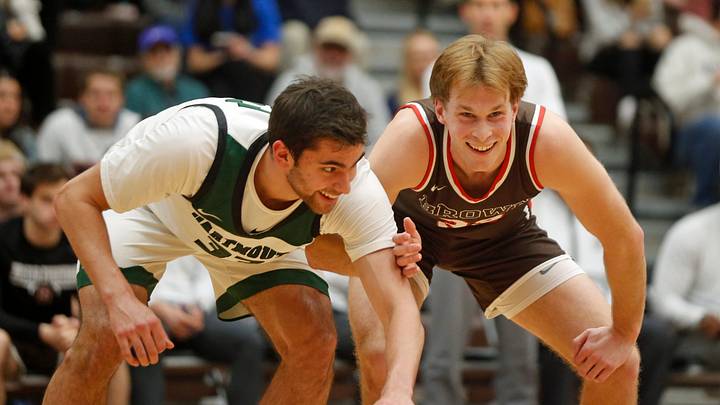
1. Dartmouth: Last NCAA Tournament appearance in 1959
Dartmouth owns the longest NCAA Tournament drought among the ten programs featured here. The Big Green last appeared in March Madness in 1959, when they lost to West Virginia in the opening round. That appearance came during a period when Dartmouth was one of the most successful basketball programs in the Northeast.
The program's historical accomplishments are remarkable. Dartmouth reached the national championship game in both 1942 and 1944, finishing as the runner-up on each occasion. The Big Green also made seven NCAA Tournament appearances between 1941 and 1959, establishing a tradition that would be difficult for many modern programs to duplicate.
Dartmouth has not returned to the NCAA Tournament since that final appearance in 1959. The Ivy League has become increasingly competitive, and the conference's postseason tournament provides another obstacle for programs attempting to secure the automatic bid. A return in 2027 would end a wait spanning nearly seven decades and represent one of the most remarkable comeback stories in college basketball.
Why these droughts make March Madness special
The NCAA Tournament isn't meaningful only because of national championship contenders and recognizable basketball powers. Some of its greatest stories involve programs that have spent decades attempting to earn another opportunity. For schools such as Dartmouth, Tennessee Tech and Bowling Green, simply reaching the tournament would represent an enormous achievement.
The current landscape also creates opportunities for dramatic changes. Coaching hires, conference realignment and the transfer portal can reshape programs quickly, allowing teams to improve significantly from one season to the next. But conference tournament success remains the deciding factor for many smaller programs, and a strong regular season offers no guarantee of an automatic bid.
Only a few of these ten schools might realistically end their droughts in 2027. However, every program begins the season with an opportunity to change its history. That possibility remains one of the reasons college basketball is so compelling.
 Add us as a preferred source on Google