

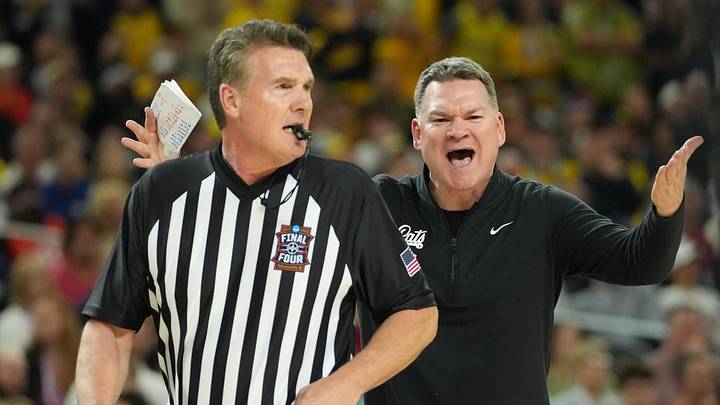
Some college basketball programs attempt to build confidence during November and December by scheduling manageable opponents. Others take the opposite approach, filling their calendars with nationally recognized programs and challenging road assignments.
The 2026-27 season features several extraordinary nonconference schedules, including matchups between teams that competed deep into last season's NCAA Tournament. Those games should provide valuable information about the national championship race long before conference standings begin taking shape.
A difficult nonconference schedule can provide enormous benefits. Quality victories strengthen NCAA Tournament résumés, while challenging opponents expose weaknesses that might otherwise remain hidden until March.
However, scheduling aggressively also creates risks. Teams introducing numerous newcomers might struggle to establish chemistry while facing experienced opponents, and a difficult stretch of losses can quickly increase pressure.
These rankings consider the overall strength of confirmed regular-season opponents, the difficulty of road and neutral-site assignments, and the number of challenging games each program faces. Exhibition contests are excluded, and potential tournament opponents are distinguished from confirmed matchups.
Here are the 10 toughest nonconference schedules entering 2026-27.
10. Florida
Florida enters the season with national championship expectations, but the Gators won't have an easy path through November and December. Their schedule includes an opening matchup with Miami, a road game against Florida State and a home contest against Duke in the ACC/SEC Challenge. The Gators will also participate in the Players Era event in Las Vegas, creating additional opportunities to face quality opponents.
The challenge becomes particularly interesting because Florida returns an experienced frontcourt but must establish greater consistency from its guards. Facing talented opponents early should provide Todd Golden with opportunities to evaluate different offensive combinations. The Gators could enter SEC play with several valuable victories, although their schedule offers little room for prolonged struggles.
9. Illinois
Illinois has assembled a demanding nonconference schedule featuring several outstanding opponents. The Fighting Illini will travel to Texas Tech on November 10 before visiting Duke on November 17, creating two difficult road assignments early in the season. They will also face UConn in Chicago on December 4, providing another high-profile matchup against a national championship contender.
Those games should reveal how effectively Illinois has developed its offensive chemistry following last season's Final Four appearance. The Fighting Illini possess outstanding frontcourt talent, but the ability to handle defensive pressure will become especially important against Texas Tech, Duke and UConn. Brad Underwood's team could collect several significant résumé-building victories before Big Ten competition becomes the primary focus.
8. Kentucky
Kentucky has assembled a challenging nonconference schedule featuring several recognizable opponents and difficult playing environments. The Wildcats will face Kansas in the Champions Classic on November 10 before meeting Indiana in Indianapolis on November 20. December brings a road game at Virginia, a home rivalry matchup with Louisville and a neutral-site contest against North Carolina at Madison Square Garden.
Those games should provide Mark Pope with important information about how quickly his new contributors have developed chemistry. Kentucky has added outstanding perimeter shooter Milan Momcilovic, but the Wildcats must establish consistency across several positions. If they perform well against this schedule, they could enter SEC play with a strong NCAA Tournament résumé.
7. Michigan State
Michigan State has assembled another demanding nonconference schedule under Tom Izzo. The Spartans will face Duke in the Champions Classic on November 10 before traveling to Tennessee on November 17. They will also meet Arkansas in Detroit on November 26 and Gonzaga in California on December 19.
The combination of elite opponents and challenging neutral-site environments should provide an outstanding test for Michigan State's experienced roster. Jeremy Fears Jr. returns to lead the offense, but the Spartans need consistent contributions from their frontcourt and perimeter shooters. If Michigan State performs well against this schedule, it could establish itself as a legitimate national championship contender before Big Ten play intensifies.
6. Michigan
Michigan enters the season as the defending national champion, but the Wolverines have assembled a schedule that provides little opportunity to ease into the new campaign. They will face UConn in Boston on November 6 in a rematch of the national championship game before hosting Marquette on November 11. A neutral-site contest against Villanova in Philadelphia follows on November 21.
The Wolverines will also participate in the Players Era event in Las Vegas, where they could encounter several quality opponents. Michigan opens against Creighton before facing either TCU or Miami, with additional matchups determined by tournament results. A December 5 meeting with Louisville in Detroit provides another important challenge.
The schedule should reveal how quickly Michigan's new frontcourt develops chemistry around returning guard Elliot Cadeau. The Wolverines have enough talent to compete against outstanding opponents, but their margin for error could be smaller during the early portion of the season. Several important résumé-building opportunities await before conference competition becomes the primary focus.
5. Arizona
Arizona's nonconference schedule features an impressive combination of difficult road games, neutral-site matchups and nationally recognized opponents. The Wildcats open against UCLA in Las Vegas on November 2 before traveling to Auburn on November 13. They will then host UConn on November 18 in one of the most anticipated early-season matchups.
The Wildcats will also participate in the Maui Invitational, where they could encounter several quality opponents depending on tournament results. Arizona's schedule provides additional challenges as the team attempts to replace several important contributors from last season's Final Four run. Tommy Lloyd needs his young perimeter players to develop quickly because the competition will become demanding almost immediately.
The combination of experienced frontcourt talent and highly regarded newcomers gives Arizona significant potential. However, the Wildcats must establish dependable offensive chemistry against opponents capable of exposing weaknesses. A successful nonconference performance could position Arizona among the nation's strongest championship contenders.
4. Kansas
Kansas has assembled an extraordinary nonconference schedule featuring several recognizable programs and important neutral-site opportunities. The Jayhawks will face Kentucky in the Champions Classic on November 10 before participating in the Players Era event in Las Vegas. Additional matchups include Villanova, Northern Iowa, Missouri, UConn and Ohio State.
The schedule is particularly interesting because Kansas has added another highly regarded freshman in Tyran Stokes. Bill Self must establish chemistry among his newcomers while integrating experienced contributors who understand the program's expectations. Facing quality opponents throughout November and December should provide valuable information about how quickly the Jayhawks are developing.
Kansas has enough talent to compete for a national championship, but the early schedule will test its offensive consistency and defensive execution. Several of these games could become important when the NCAA Tournament selection committee evaluates the Jayhawks' résumé. A successful nonconference campaign would provide significant momentum entering Big 12 competition.
3. Gonzaga
Gonzaga begins its first season in the Pac-12 with one of the nation's most demanding nonconference schedules. The Bulldogs open the regular season against Purdue in Las Vegas on November 2 before facing LSU and participating in the Players Era event. They will also meet UCLA in Anaheim on December 5 and travel to Creighton on December 12.
The schedule becomes even more impressive when considering Gonzaga's neutral-site matchup with Michigan State on December 19. The Bulldogs also have a February 20 meeting with Duke in Detroit, providing another nationally significant nonconference game during the middle of league play. Those contests should offer valuable opportunities to strengthen the program's NCAA Tournament résumé.
Mark Few has consistently challenged his teams against quality opponents, and this season continues that approach. Gonzaga must adjust to a new conference while navigating a demanding collection of nonconference matchups. The Bulldogs could emerge from those challenges exceptionally well prepared for March.
2. Duke
Duke has assembled a remarkable nonconference schedule featuring several national championship contenders. The Blue Devils will face Michigan State in the Champions Classic on November 10 before hosting Illinois on November 17. A Thanksgiving matchup with UConn in Las Vegas follows on November 25, creating another opportunity for a nationally significant victory.
The challenges continue in December when Duke travels to Florida for the ACC/SEC Challenge. The Blue Devils will also meet Georgia at Madison Square Garden and face Texas Tech later in the month. A February matchup with Gonzaga in Detroit provides another important test against a nationally recognized opponent.
Jon Scheyer has assembled another talented roster, but the schedule should reveal how quickly the Blue Devils establish offensive chemistry. Duke possesses enough individual talent to compete against almost anybody, although several opponents will challenge its ability to execute under pressure. A strong performance against this collection of teams could establish the Blue Devils as a leading national championship contender.
1. UConn
UConn has assembled the nation's most demanding nonconference schedule, and the collection of opponents is extraordinary. The Huskies will face Michigan in Boston on November 6 before hosting Ohio State on November 13. Five days later, they travel to Arizona for a true road game against one of the Big 12's strongest programs.
The schedule becomes even more difficult during the following weeks. UConn will face Duke in Las Vegas on November 25 before meeting Illinois in Chicago on December 4. Kansas visits Connecticut on December 12, and the Huskies close their nonconference schedule against Virginia at Madison Square Garden on December 20.
That means UConn will face seven major opponents with legitimate postseason aspirations, including several programs expected to compete for high NCAA Tournament seeds. The combination of road games, neutral-site contests and nationally recognized opponents makes the schedule particularly demanding.
Dan Hurley has deliberately created opportunities for his team to compete against elite opponents before Big East play becomes the primary focus. The approach should provide valuable information about UConn's strengths and weaknesses while creating numerous opportunities to earn quality victories.
The Huskies could enter conference play with several losses and still possess one of the nation's strongest NCAA Tournament résumés. Their schedule provides little opportunity to hide weaknesses, but it also offers an extraordinary chance to establish national credibility.
The toughest nonconference schedules don't always produce the best records, and that distinction matters when evaluating teams in December. Programs willing to challenge themselves against elite opponents can become better prepared for the physical and tactical demands of March.
These 10 teams have embraced that challenge. The next question is which programs will turn those difficult matchups into the victories that shape their championship aspirations.
 Add us as a preferred source on Google