

Roster turnover has become one of the defining characteristics of modern college basketball. Between the NBA Draft, transfer portal and professional opportunities overseas, keeping an elite player for another season can sometimes feel just as significant as landing the highest-rated transfer available.
That's why the 2026-27 season is so interesting.
Florida brought back Thomas Haugh. Michigan State retained Jeremy Fears Jr. Vanderbilt gets another season from Tyler Tanner. BYU kept Rob Wright III. UConn returns Braylon Mullins and Arizona still has Motiejus Krivas anchoring the middle after its Final Four run.
Those aren't simply useful returning players. They're legitimate national stars.
Here are 10 returners who enter the season with a realistic path to first-team All-America recognition.
1. Thomas Haugh, Florida
Haugh enters the season as the most obvious candidate because he combines individual production with the possibility of playing for the best team in college basketball.
He averaged 17.1 points and 6.1 rebounds last season while shooting 46% from the field, earning consensus second-team All-America honors and first-team All-SEC recognition. Those numbers alone would make him a strong candidate. His ability to impact winning in several different ways makes the case even stronger.
When CBS Sports surveyed nearly 100 Division I coaches about the best player in college basketball entering 2026-27, Haugh received 43% of the vote. No other player was particularly close. If Florida spends the season near No. 1 and Haugh improves even modestly, first-team All-America status may become the expectation rather than the ceiling.
2. Jeremy Fears Jr., Michigan State
Fears is the type of point guard whose value becomes obvious within a few possessions. He controls tempo, creates shots for teammates and gives Michigan State an experienced decision-maker capable of handling pressure.
His numbers reinforce that impression. Fears averaged 15.2 points and an extraordinary 9.4 assists last season, leading the country in assists while earning second-team All-America and first-team All-Big Ten honors.
Now he returns to a Michigan State roster with significant continuity. That matters because Fears won't spend November figuring out how unfamiliar teammates prefer to play. He can begin the season with established chemistry and Final Four aspirations. If the Spartans challenge for the Big Ten title, Fears will be at the center of everything.
3. Tyler Tanner, Vanderbilt
Tanner might still be underrated nationally despite producing one of the most complete guard seasons in the country.
He averaged 19.5 points, 5.1 assists and 2.4 steals last season, becoming the only player nationally to average better than 19 points, five assists and two steals. Tanner also set Vanderbilt single-season records with 184 assists and 86 steals, earned first-team All-SEC honors and landed on the SEC All-Defensive team.
Those aren't breakout-candidate numbers. They're superstar numbers.
Tanner received 14% of the vote in CBS Sports' coaches survey of the best player in college basketball, placing third behind Haugh and Fears. Vanderbilt's team success will influence how much national recognition he ultimately receives, but individually there isn't much left for Tanner to prove.
4. Rob Wright III, BYU
Wright's decision to remain at BYU may prove to be one of the most important retentions of the offseason.
He averaged 18.1 points, 4.6 assists, 3.5 rebounds and 1.2 steals last season while shooting 46.7% from the field and 41% from 3-point range. He scored in double figures 32 times and erupted for 39 points in an overtime victory against Colorado.
The Big 12 gives Wright exactly the platform he needs. BYU will face high-level opponents throughout conference play, creating repeated opportunities for its point guard to produce in nationally relevant games. If the Cougars challenge for the league championship, Wright's first-team All-America case could become extremely difficult to ignore.
5. Braylon Mullins, UConn
Mullins enters his sophomore season with both production and one unforgettable March moment already on his résumé.
He averaged 12.0 points and 3.5 rebounds as a freshman and earned Big East All-Freshman recognition. More importantly for UConn's immediate future, he became increasingly comfortable during the NCAA Tournament, scoring in double figures in five of the Huskies' six tournament games.
His role should expand substantially. UConn has other talented guards, including Silas Demary Jr., but Mullins possesses the shooting and scoring ability to become the most explosive offensive player on another Dan Hurley contender. A jump into the 16-to-18-point range combined with UConn remaining near the top of the national rankings would put him directly into the All-America conversation.
6. Motiejus Krivas, Arizona
Krivas represents a different kind of All-America candidate because his value isn't dependent on becoming a 20-point scorer.
He averaged 10.4 points and 8.2 rebounds last season while shooting 56.9% from the field. He also earned first-team All-Big 12 and Big 12 All-Defensive honors after helping Arizona reach its first Final Four since 2001.
His defensive presence is the foundation of the case. Krivas can alter possessions without recording a block simply by making guards reconsider what they want to do around the basket. If his offensive production increases while Arizona remains a top national contender, voters will have to decide how heavily to reward one of the country's most impactful defensive players.
7. David Mirkovic, Illinois
Mirkovic already accomplished enough as a freshman to make his sophomore ceiling enormous.
He averaged 13.5 points, 8.1 rebounds and 2.6 assists while producing nine double-doubles and helping Illinois reach the Final Four. He was also named to the NCAA Tournament All-South Region team, evidence that his production held up when the games became most important.
His offseason foot surgery creates uncertainty entering the year, and Illinois has not announced an official return timetable. Monday's practice images were encouraging because Mirkovic was participating without visible foot support, but his health remains something to monitor rather than assume. If he gets healthy and stays there, Mirkovic has the all-around game and team platform to make a serious run at first-team honors.
8. Flory Bidunga, Louisville
Bidunga's move from Kansas to Louisville gives him an opportunity to become much more prominent offensively while remaining on a team with major expectations.
His athleticism around the rim is obvious. He finished last season with 82 dunks and gives Pat Kelsey a big man capable of changing games as a finisher, rebounder and rim protector. The more interesting question is how much his offensive repertoire expands when Louisville puts greater responsibility on him.
The Cardinals have surrounded Bidunga with talent, including Jackson Shelstad, which should create plenty of opportunities around the basket. If Louisville challenges Duke near the top of the ACC and Bidunga becomes its dominant interior presence, his All-America case could develop quickly.
9. Braden Huff, Gonzaga
Huff's case comes with a straightforward qualifier: he has to stay healthy.
When available, he's one of the most efficient offensive big men in college basketball. His touch around the basket, ability to score through contact and comfort operating within Gonzaga's offense give Mark Few a legitimate centerpiece.
The Bulldogs should provide Huff with plenty of opportunities to produce, and Gonzaga's national profile ensures that big performances won't go unnoticed. A healthy full season could turn Huff into one of the country's most productive centers. The talent is not the question. Availability will determine whether the résumé becomes strong enough.
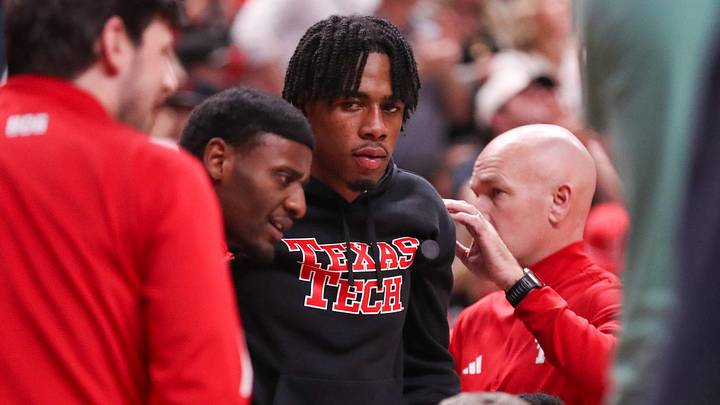
10. JT Toppin, Texas Tech
Toppin would be considerably higher on this list if his health situation were different.
He is already one of the most accomplished returning players in college basketball, having earned Big 12 Player of the Year recognition in 2025 and second-team All-America honors from CBS Sports in 2026. His production and talent are absolutely good enough for first-team consideration.
The issue is his recovery from the torn ACL he suffered in February. His exact return timeline remains unclear, which makes projecting a full season impossible in late September.
If Toppin returns early enough and looks like himself, he'll immediately become one of the best players in the Big 12. Until then, his placement has to reflect the uncertainty rather than pretend it doesn't exist.
Returning stars could define the season
College basketball's offseason conversation naturally gravitates toward transfers and freshmen because they're new. But continuity can be just as valuable, particularly when the players returning are already this accomplished.
Haugh gives Florida a proven All-American on a potential No. 1 team. Fears gives Tom Izzo one of the best point guards in the country. Tanner is coming off a season that already belongs among the best in Vanderbilt history, while Wright chose to remain at BYU after establishing himself as one of the Big 12's premier guards.
Those decisions change the national landscape.
The portal will matter. The freshmen will matter.
But some of the biggest stars of 2026-27 are players college basketball fans already know.
 Add us as a preferred source on Google