

The transfer portal has transformed college basketball roster construction, but adding the most talented available player doesn't always produce the best results. Sometimes the most important addition is somebody who addresses a specific weakness or provides a skill that was missing from an otherwise talented roster.
A dependable point guard can completely change how an offense functions. A reliable perimeter shooter might create additional space for an entire frontcourt, while an outstanding interior defender can allow teammates to become more aggressive on the perimeter.
Those situations are particularly important for programs with national championship expectations. Coaches often enter the offseason knowing exactly what prevented their teams from advancing further in March, and the transfer portal provides an opportunity to address those weaknesses immediately.
The following 15 players stand out because their new programs appear particularly well suited to their individual strengths. These aren't necessarily the 15 most talented transfers in the country. Instead, they're players whose new situations could help maximize their impact during the upcoming season.
15. Tylen Riley, Cincinnati
Tylen Riley arrives at Cincinnati after averaging 15 points and 4.4 assists at Tulsa last season. His experience directing an offense should provide valuable stability for a Bearcats program beginning a new era under Jerrod Calhoun. Cincinnati needs dependable guard play to compete consistently in the Big 12, and Riley has already demonstrated an ability to handle significant offensive responsibilities.
The fit makes sense because Riley won't need to become an entirely different player to contribute. His ability to attack defenders, create contact and distribute the basketball should help establish Cincinnati's offensive identity. If he adjusts quickly to the conference's defensive demands, Riley could become one of the Bearcats' most important players.
14. DJ Wagner, Maryland
DJ Wagner arrives at Maryland with considerable experience after previous stops at Kentucky and Arkansas. The former highly regarded recruit has demonstrated an ability to create offense against quality competition, although consistency has remained an important part of his development. Maryland offers an opportunity to assume significant responsibilities under Buzz Williams.
The Terrapins need experienced guards capable of handling difficult possessions while their new roster develops chemistry. Wagner's ability to attack the basket and create opportunities off the dribble should provide an important offensive foundation. If Williams helps him become a more efficient decision-maker, Wagner could enjoy one of the most productive seasons of his career.
13. Stefan Vaaks, Illinois
Stefan Vaaks arrives at Illinois after beginning his college career at Providence, giving Brad Underwood another versatile perimeter player. His combination of size and shooting ability makes him an intriguing fit for an offense that frequently uses skilled forwards to create advantages. Illinois already has several established offensive contributors, which should allow Vaaks to concentrate on becoming an efficient complementary weapon.
The Fighting Illini don't necessarily need Vaaks to dominate possessions. They need him to make perimeter shots, attack favorable matchups and help maintain offensive spacing. If he becomes comfortable operating alongside David Mirkovic and Andrej Stojakovic, Vaaks could become an important addition to a team with national championship aspirations.
12. Denzel Aberdeen, Florida
Denzel Aberdeen's return to Florida represents one of the offseason's most interesting transfers because he already understands the program's championship expectations. After spending last season at Kentucky, Aberdeen rejoins Todd Golden's experienced roster with familiarity that most newcomers simply don't possess. That should make his transition considerably easier.
Florida's primary concern isn't finding enough talented players. The Gators need improved perimeter consistency to complement their outstanding frontcourt. Aberdeen provides another experienced guard capable of contributing in different combinations, and his familiarity with the system could make him especially valuable during important postseason games.
11. Jeremiah Wilkinson, Arkansas
Jeremiah Wilkinson joins Arkansas after averaging 17.4 points at Georgia last season. His proven SEC scoring ability gives John Calipari an important experienced contributor as the Razorbacks introduce another highly regarded freshman class. Wilkinson can create offense when possessions become difficult, which should help relieve pressure on Arkansas' younger guards.
The fit is particularly attractive because the Razorbacks need somebody capable of providing dependable perimeter production. Wilkinson should have opportunities to attack favorable matchups while playing alongside talented athletes who can finish around the basket. If he maintains his scoring efficiency, he could become one of Arkansas' most important offensive players.
10. Ace Glass, Vanderbilt
Ace Glass arrives at Vanderbilt after averaging 16.4 points during an outstanding freshman season at Washington State. His perimeter shooting and ability to create offense should provide an excellent complement to returning star Tyler Tanner. Vanderbilt already has one of the nation's most complete point guards, meaning Glass can concentrate on becoming a dangerous scoring option.
Opponents frequently devote significant defensive attention to Tanner, creating opportunities for teammates who can make shots and attack rotating defenders. Glass appears particularly well suited to take advantage of those situations. If the two guards develop strong chemistry, Vanderbilt could have one of the SEC's most difficult backcourts to defend.
9. Dedan Thomas Jr., Houston
Dedan Thomas Jr. joins Houston after playing at LSU and UNLV, bringing considerable experience as an offensive organizer. Kelvin Sampson has built one of college basketball's most consistent programs around dependable guard play, defensive intensity and disciplined execution. Thomas possesses the decision-making ability to become an important part of that approach.
Houston needs a point guard capable of controlling possessions without sacrificing offensive creativity. Thomas has demonstrated an ability to distribute the basketball while creating opportunities for himself, giving the Cougars another potential backcourt leader. If he embraces Sampson's defensive expectations, the transition could become one of the most successful in the country.
8. Moustapha Thiam, Michigan
Moustapha Thiam arrives at Michigan after playing at Cincinnati, giving the defending national champions another imposing interior presence. The 7-foot-2 center possesses the size and shot-blocking ability to become an important defensive contributor. Michigan must replace several outstanding frontcourt players from its championship team, making Thiam's arrival particularly important.
The Wolverines have established a system that allows talented big men to contribute offensively while protecting the basket. Thiam should benefit from playing alongside experienced guard Elliot Cadeau, whose passing ability can create opportunities around the rim. If Thiam develops greater offensive consistency, he could help Michigan maintain one of the nation's strongest frontcourts.
7. Isaiah Johnson, Texas
Isaiah Johnson joins Texas after averaging 16.9 points at Colorado during his freshman season. His ability to create offense off the dribble gives Sean Miller an important perimeter weapon as the Longhorns rebuild their rotation. Texas has several talented frontcourt players, but those contributors need guards capable of generating favorable opportunities.
Johnson's ability to attack defenders should create additional scoring chances for Matas Vokietaitis and David Punch. He also possesses the confidence to create his own shot when opponents disrupt the offense. If he becomes a more complete distributor while maintaining his scoring production, Johnson could help transform Texas into one of the SEC's most dangerous offensive teams.
6. Tounde Yessoufou, St. John's
Tounde Yessoufou arrives at St. John's after averaging 17.8 points and 5.9 rebounds during his freshman season at Baylor. His combination of physicality, athleticism and scoring ability makes him an intriguing fit for Rick Pitino's demanding system. The Red Storm need new offensive leaders after losing several important contributors from last season.
Yessoufou should have opportunities to become a primary scoring option while contributing defensively and on the glass. His ability to attack opponents physically could fit well with the aggressive identity Pitino has established. If he develops into a more efficient perimeter shooter, Yessoufou could become one of the Big East's most difficult players to defend.
5. PJ Haggerty, Texas A&M
PJ Haggerty arrives at Texas A&M after averaging 23.4 points at Kansas State last season. His ability to create offense and consistently reach the free-throw line gives Bucky McMillan an accomplished scorer capable of carrying significant responsibilities. The Aggies need somebody who can generate dependable offense against difficult SEC defenses.
Haggerty's experience should make him particularly valuable when possessions become uncomfortable. He has demonstrated an ability to produce at multiple programs, suggesting that his scoring instincts can translate into different systems. If McMillan builds an offense that maximizes Haggerty's ability to attack defenders, Texas A&M could become one of the conference's most dangerous teams.
4. Juke Harris, Tennessee
Juke Harris arrives at Tennessee after averaging 21.4 points at Wake Forest last season. His size and ability to create shots give Rick Barnes a proven offensive weapon capable of attacking opponents in several different ways. Tennessee has enjoyed considerable success with experienced transfers, and Harris could become the latest player to thrive in that environment.
The Volunteers need consistent offensive creation to complement their defensive identity. Harris can generate opportunities when opponents prevent Tennessee from executing its preferred offensive actions, making him particularly valuable during close games. If he embraces Barnes' defensive expectations while maintaining his scoring efficiency, the fit could become outstanding.
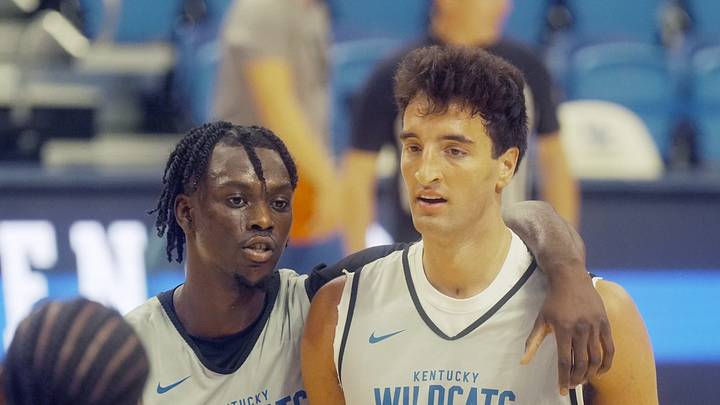
3. Milan Momcilovic, Kentucky
Milan Momcilovic gives Kentucky something every championship contender wants: an elite perimeter shooter capable of changing how opponents defend an entire offense. He made 136 three-pointers at Iowa State last season while shooting 48.7 percent from beyond the arc. Those numbers demonstrate extraordinary efficiency and the ability to punish defensive mistakes.
Mark Pope's offense should provide numerous opportunities for Momcilovic to operate through movement and spacing. His shooting could create additional room for Kentucky's guards to attack while preventing opponents from concentrating on the interior. If Momcilovic maintains his efficiency, his arrival could become one of the most important developments in the Wildcats' championship pursuit.
2. Flory Bidunga, Louisville
Flory Bidunga arrives at Louisville after establishing himself as one of the Big 12's premier interior defenders at Kansas. His shot-blocking ability, athleticism and efficiency around the basket give Pat Kelsey an outstanding frontcourt foundation. Louisville has assembled several talented perimeter contributors, making Bidunga's ability to protect the rim particularly valuable.
The Cardinals need a dependable interior presence capable of supporting their guards defensively while finishing opportunities around the basket. Bidunga should receive numerous scoring chances created by Louisville's experienced playmakers, including Jackson Shelstad. If he continues developing offensively, he could become one of the ACC's most influential frontcourt players.
1. John Blackwell, Duke
John Blackwell arrives at Duke after averaging 19.1 points and 5.1 rebounds at Wisconsin last season. His ability to create offense, make perimeter shots and perform against high-level competition gives Jon Scheyer an experienced scoring weapon. Duke must replace significant offensive production, making Blackwell's arrival particularly important.
The Blue Devils have talented returning contributors and highly regarded freshmen, but they need somebody capable of creating dependable offense when opponents disrupt their preferred actions. Blackwell has already demonstrated that he can handle major responsibilities against Big Ten competition. If he develops chemistry with Duke's returning players, his combination of experience and scoring ability could become the difference between another successful season and a national championship run.
The transfer portal creates opportunities for programs to address weaknesses immediately, but the most successful additions aren't always the players with the biggest statistical résumés. Fit, chemistry and clearly defined responsibilities can be just as important as individual talent.
These 15 players enter situations where their strengths appear particularly valuable. The challenge now is turning those promising combinations into meaningful results when the regular season begins.
 Add us as a preferred source on Google