

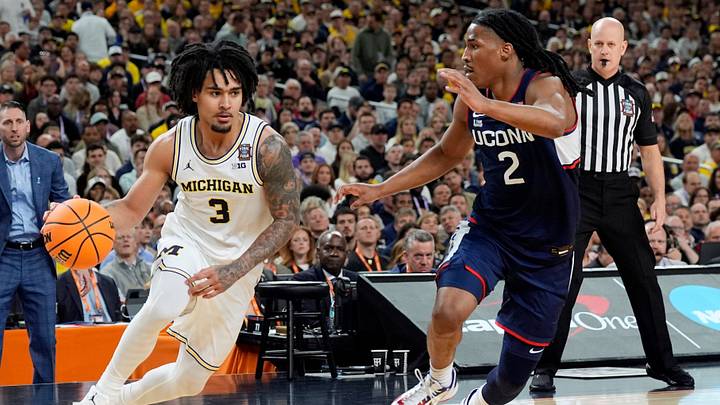
College basketball has changed dramatically in recent years, but one thing remains true. Teams with dependable point guards have a tremendous advantage when games get tight, particularly against the kind of defensive pressure that defines conference play and the NCAA Tournament. Having somebody who can organize an offense, make the right decisions and create opportunities for teammates is often the difference between a good season and a memorable one.
The 2026-27 season features an impressive collection of point guards, and the variety of talent makes this year's rankings especially interesting. Some players are traditional floor generals who thrive on getting teammates involved, while others are dynamic scorers who can completely take over games. There are also several transfers preparing for larger responsibilities and young guards looking to establish themselves among the nation's elite.
These rankings consider offensive production, playmaking, leadership, defensive ability and projected impact during the upcoming season. The emphasis is on what each player can contribute in 2026-27 rather than simply rewarding past accomplishments.
20. Miles Sadler, West Virginia
West Virginia has an intriguing young point guard in Miles Sadler, who arrives with the opportunity to play an important role in the Mountaineers' offense. His quickness, creativity and ability to attack defenders give West Virginia a player capable of creating scoring opportunities when possessions begin to break down. That kind of individual playmaking could be particularly valuable in the Big 12, where physical defenses routinely force opponents into uncomfortable situations.
The biggest challenge for Sadler will be adjusting to the pace and physicality of college basketball while learning when to attack and when to distribute. He has the talent to become an exciting offensive player, but consistency will determine how quickly he develops into a dependable floor general.
19. Trey Green, Saint Louis
Trey Green enters the season with an opportunity to become one of the Atlantic 10's most important guards. He averaged 10.7 points last season while connecting on 44.2 percent of his three-point attempts, giving Saint Louis a dangerous perimeter weapon who can change games without needing to dominate the ball.
With Robbie Avila no longer running the offense, Green could be asked to assume additional responsibilities as a creator. Josh Schertz has built an offensive system that rewards intelligent movement, spacing and decision-making, and Green's shooting ability already makes him an excellent fit. If he develops into a more complete playmaker, Saint Louis could remain one of the nation's most dangerous mid-major programs.
18. Tylen Riley, Cincinnati
Cincinnati added an experienced offensive creator when Tylen Riley arrived from Tulsa. Riley averaged 15 points and 4.4 assists last season while helping the Golden Hurricane reach the NIT championship game. His ability to attack the basket, create contact and distribute the ball should give the Bearcats an important offensive foundation.
The transition to Big 12 basketball will present a considerable challenge, particularly against opponents capable of pressuring the ball for an entire game. However, Riley has already demonstrated that he can handle major offensive responsibilities. First-year Cincinnati coach Jerrod Calhoun will need his experience and composure as the Bearcats attempt to establish a new identity.
17. Cayden Boozer, Duke
Cayden Boozer enters his sophomore season with an opportunity to become a more influential part of Duke's backcourt. The Blue Devils are replacing significant offensive production, which creates additional opportunities for returning players who already understand Jon Scheyer's system. Boozer's basketball intelligence and willingness to make the right pass give him a foundation for becoming a dependable offensive organizer.
His development as a perimeter scorer will be particularly important. Opponents will challenge Duke's guards to create offense when their preferred options are unavailable, and Boozer must become comfortable taking advantage of those opportunities. If his confidence and consistency improve, he could become an important contributor for a team with national championship expectations.
16. Chance Mallory, Virginia
Chance Mallory showed considerable promise during his freshman season at Virginia, averaging nine points and 3.4 assists while providing energy on both ends of the floor. His quickness allows him to pressure opposing ballhandlers, and his ability to penetrate defenses creates opportunities for teammates. Those qualities give him the potential to become an excellent fit in Ryan Odom's system.
The next step involves developing greater consistency as an offensive decision-maker and perimeter shooter. Virginia has talented frontcourt players capable of finishing opportunities around the basket, but the Cavaliers need somebody who can consistently put them in favorable positions. Mallory could become that player while developing into one of the ACC's most intriguing young guards.
15. Tahaad Pettiford, Auburn
Tahaad Pettiford is one of the most entertaining offensive players in the SEC when he finds his rhythm. He possesses the confidence and shot-making ability to produce explosive scoring stretches, often creating opportunities that appear unavailable to other guards. His ability to attack off the dribble makes him especially dangerous when defenses become too aggressive.
The challenge is turning those flashes into dependable production over an entire season. Auburn needs Pettiford to improve his decision-making, involve teammates consistently and limit possessions where difficult shots replace better offensive opportunities. If he develops that balance, his scoring ability could make him one of the conference's most difficult guards to defend.
14. Isaiah Johnson, Texas
Isaiah Johnson arrives at Texas after an impressive freshman season at Colorado, where he averaged 16.9 points and three assists. He brings the ability to create offense off the dribble and score from different areas of the floor, giving the Longhorns another dangerous perimeter option. His willingness to attack defenders could become particularly valuable against the physical defenses throughout the SEC.
Texas has several talented offensive players, which means Johnson must learn to balance his individual scoring opportunities with the responsibility of getting others involved. That adjustment could determine how effectively the Longhorns operate in close games. If Johnson becomes a dependable facilitator without sacrificing his scoring instincts, he could play an enormous role in Texas' championship ambitions.
13. Jackson Shelstad, Louisville
Jackson Shelstad gives Louisville an experienced guard capable of creating offense against quality competition. The former Oregon standout arrives with the confidence to take difficult shots and the ability to make plays when opponents disrupt the offense. Those qualities should be valuable for a Louisville team introducing several important newcomers.
Pat Kelsey has assembled a roster with considerable talent, including former Kansas center Flory Bidunga. Shelstad's ability to develop chemistry with those players will be essential, particularly when the Cardinals face opponents capable of forcing uncomfortable half-court possessions. If he becomes the player who connects Louisville's offensive pieces, the Cardinals could develop into one of the ACC's most dangerous teams.
12. Melvin Council Jr., Kansas
Melvin Council Jr. brings a valuable combination of experience, defensive intensity and offensive versatility to Kansas. He averaged 12.7 points, five rebounds and 5.1 assists last season while earning Big 12 Newcomer of the Year honors. His ability to influence games without relying exclusively on scoring makes him particularly important for Bill Self.
Council's eligibility situation has created uncertainty entering the season, so his availability remains an important consideration. When available, he gives Kansas a dependable ballhandler who understands how to operate against demanding Big 12 competition. The Jayhawks have several talented newcomers, but Council's leadership and familiarity with the program could help accelerate their development.
11. Dedan Thomas Jr., Houston
Dedan Thomas Jr. joins Houston with the opportunity to become a central figure in Kelvin Sampson's offense. Thomas has demonstrated an ability to organize possessions, attack defenses and create opportunities for teammates, giving the Cougars an experienced playmaker as they integrate new personnel. His offensive creativity could provide an important complement to Houston's demanding defensive approach.
Playing for Sampson requires more than offensive production. Thomas must embrace the physicality, defensive accountability and attention to detail that have helped Houston become one of the nation's most consistent programs. If he makes that adjustment quickly, the Cougars could have another outstanding backcourt leader.
10. Jordan Smith Jr., Arkansas
Jordan Smith Jr. arrives at Arkansas with the talent to become one of college basketball's most exciting freshmen. His combination of athleticism, defensive energy and ability to attack the basket gives John Calipari an intriguing offensive weapon. Smith has the physical tools to create advantages against defenders while making an immediate impact through his defensive activity.
The biggest question involves how quickly he adjusts to the responsibilities of directing an SEC offense. Calipari has a long history of developing talented guards, and Smith could become the latest player to thrive in that environment. If his perimeter shooting and decision-making develop quickly, he has the potential to become one of the conference's biggest breakout stars.
9. Quinn Ellis, St. John's
Quinn Ellis arrives at St. John's with a background that makes him different from most college basketball newcomers. His professional experience with Olimpia Milano exposed him to high-level European competition, including the EuroLeague, where decision-making and defensive discipline are essential. That experience could translate well into Rick Pitino's demanding system.
St. John's has several talented offensive players, but the Red Storm need somebody capable of controlling possessions and establishing consistency. Ellis should provide composure and an understanding of how to manage difficult defensive situations. His statistical production might not always attract national attention, but his influence could be essential to another successful Big East season.
8. Nigel James Jr., Marquette
Nigel James Jr. emerged as one of Marquette's most encouraging developments during a difficult 2025-26 season. He averaged 19 points and 5.5 assists in Big East play, demonstrating an impressive ability to create offense against conference opponents. His combination of scoring and playmaking gives Shaka Smart an excellent foundation for rebuilding the Golden Eagles.
The challenge will be maintaining that production now that opposing defenses can prepare specifically for him. James will face increased attention and must find ways to create opportunities when opponents attempt to take away his preferred scoring areas. If he continues developing as a leader and decision-maker, Marquette could return to the NCAA Tournament conversation.
7. Josh Hubbard, Mississippi State
Josh Hubbard is one of college basketball's most dangerous offensive players, capable of changing a game with his perimeter shooting. He averaged 22.1 points last season and has established himself as one of the SEC's premier scorers. His ability to create shots from difficult positions forces opposing defenses to account for him well beyond the three-point line.
Hubbard isn't a traditional pass-first point guard, but his ability to create offense makes him impossible to overlook. Mississippi State needs him to balance his scoring responsibilities with more consistent opportunities for teammates, particularly when opponents devote additional defenders to stopping him. If that part of his game improves, Hubbard could become an even more complete offensive weapon.
6. Rodney Rice, USC
Rodney Rice enters the 2026-27 season with an opportunity to become one of the Big Ten's most productive guards after injuries interrupted what was shaping up to be an outstanding debut campaign at USC. Rice averaged 20.3 points, six assists and 3.3 rebounds through six games last season before a shoulder injury required surgery and ended his year. His ability to score from different areas of the floor while creating opportunities for teammates gives Eric Musselman an experienced offensive leader capable of changing games.
Rice's early production was impressive enough to earn him a spot on the preseason All-Big Ten team, making him the first USC player under Musselman to receive that recognition. He also recorded just the second triple-double in program history, finishing with 21 points, 10 rebounds and 10 assists against Illinois State. Those performances demonstrated that Rice can contribute far beyond scoring, particularly when he's responsible for organizing the offense and finding teammates in favorable positions.
The biggest question is how quickly Rice can return to that level after missing most of last season. USC has added several newcomers, and developing chemistry with players such as Alijah Arenas and Jacob Cofie will be essential as the Trojans attempt to improve on last year's 18-14 record. If Rice remains healthy and builds on his impressive early production, he could become one of the conference's most dangerous offensive creators and give USC a legitimate opportunity to return to the NCAA Tournament.
5. Elliot Cadeau, Michigan
Elliot Cadeau's development was one of the defining stories of Michigan's national championship season. After transferring from North Carolina, he became an important part of the Wolverines' offense and earned Final Four Most Outstanding Player honors. His improved perimeter shooting helped make him considerably more difficult to defend, while his passing ability continued creating opportunities for teammates.
Michigan must replace several important contributors, placing additional responsibility on Cadeau's shoulders. He now has the experience of winning on the biggest stage and understands what championship-level basketball requires. If he becomes a more consistent offensive leader, the Wolverines could remain among the Big Ten's strongest programs.
4. Silas Demary Jr., UConn
Silas Demary Jr. enters the season with enormous expectations after establishing himself as one of the Big East's most complete guards. His combination of size, defensive versatility and offensive decision-making makes him particularly valuable in Dan Hurley's system. Demary can influence games without dominating the scoring column, which is an important quality for a team with several talented offensive options.
UConn returns Braylon Mullins and other important contributors, giving Demary an opportunity to lead another championship contender. His responsibility will be controlling tempo, creating quality possessions and maintaining the defensive intensity that has defined the Huskies' success. If he delivers another outstanding season, UConn could once again compete for a national title.
3. Rob Wright III, BYU
Rob Wright III returns to BYU after averaging 18.1 points and 4.6 assists while shooting 41 percent from three-point range last season. His combination of scoring ability and offensive efficiency gives the Cougars a dependable centerpiece following AJ Dybantsa's departure.
Wright can create shots off the dribble, stretch defenses and attack opponents who become too aggressive. However, BYU needs him to become an even more complete floor general while establishing chemistry with new contributors. If he handles those responsibilities successfully, Wright could become one of the Big 12's premier players and a legitimate All-America candidate.
2. Tyler Tanner, Vanderbilt
Tyler Tanner has developed into one of the most complete guards in college basketball. He played an important role in Vanderbilt's outstanding 2025-26 season, contributing through scoring, playmaking, defensive activity and leadership. His ability to influence games in multiple ways makes him especially valuable in the SEC, where opponents can challenge a team's offensive approach in different ways.
Vanderbilt faces significant expectations after last season's success, and Tanner will be responsible for maintaining the program's momentum. He doesn't need to score 30 points to control a game because his decision-making and defensive contributions create value on nearly every possession. That versatility makes him one of the nation's most important returning players.
1. Jeremy Fears Jr., Michigan State
Jeremy Fears Jr. enters the season as one of the most accomplished playmakers in college basketball. He led the nation with 9.4 assists per game last season while also averaging more than 15 points, demonstrating an exceptional ability to balance scoring with creating opportunities for teammates. His vision and understanding of defensive positioning allow him to deliver passes that few other guards would even attempt.
Michigan State has legitimate Final Four aspirations, and Fears will be responsible for making the Spartans' offense function against the Big Ten's demanding defenses. His ability to control tempo, make decisions under pressure and establish confidence among his teammates gives Tom Izzo an enormous advantage. Continued improvement as a perimeter shooter would make him even more difficult to defend.
The point guard position remains one of the most important ingredients in building a championship team. While several players on this list have the ability to produce outstanding individual seasons, the best guards will ultimately be judged by how effectively they elevate their teams. That is what separates impressive statistics from meaningful winning basketball.
 Add us as a preferred source on Google