

There are a number of quality NCAA Basketball players coming back from injury. Here are four that’ll make the most impact going forward.
Killian Tillie – Gonzaga
The 6-10 Jr. forward had been out the entire season since undergoing surgery on his ankle in October. But Tillie returned and played nine minutes in Gonzaga’s last game against Santa Clara (Five points, 1/2 from three-point range, three Off. Rebounds, two blocks).
Tillie’s minutes will steadily increase, and he has a chance to take Mark Few’s squad to another level.
The junior is a versatile scorer that shot 47.9% from three last season. This, along with his offensive rebounding and passing abilities, could make what is already the #1 offense per KenPom even more deadly.
Where Tillie’s return could be most important is on the defensive end. Arguably the team’s best shot blocker last season, the forward’s defensive rebounding abilities could make the most impact. Gonzaga was 16th in Def. Rebounding last season but is currently only 191st. Some of this is due to losing Jonathan Williams, but Tillie’s 17.4% Def. Rebounding rate last season would rank 1st among major contributors on this year’s team. He will definitely provide a boost.
It will be interesting to see how often Mark Few plays lineups with Tillie at the 4 position and Brandon Clarke at the 5. Tillie’s versatility on both ends could make this successful.
Credit to Gonzaga Bulldogs
Lamonte Turner – Tennessee
Turner underwent shoulder surgery in the offseason and came back to play three games in November. He really struggled, shooting only 5-25 (20%) from three, and then sat out the entire month of December. Coach Rick Barnes seemed to conclude the junior had rushed back too soon and needed more time to recover/get back to form.
Turner returned in Tennessee’s blowout victory over Georgia, scoring 6 points but going 0-3 from downtown. If Turner can recapture the scoring ability he had last season, he could take Tennessee’s ceiling from a Final 4 to a National Title.
Turner was arguably the team’s best shooter last season, making 39.5% of his threes and 88% of free throws.
Turner had the second highest assist rate (behind Jordan Bone) of any returning player for the Volunteers. He can take some playmaking pressure off of Bone, who’s been asked to carry the load this season at the guard position.
Even though Grant Williams and Admiral Schofield are the #1 and #2 options, Turner provides a third player with real offensive upside. Turner had 4 games with 20-plus points last season, and if he gets hot, he’s capable of winning Tennessee a game in the NCAA Tournament.
Credit to ACC Digital Network
Phil Cofer
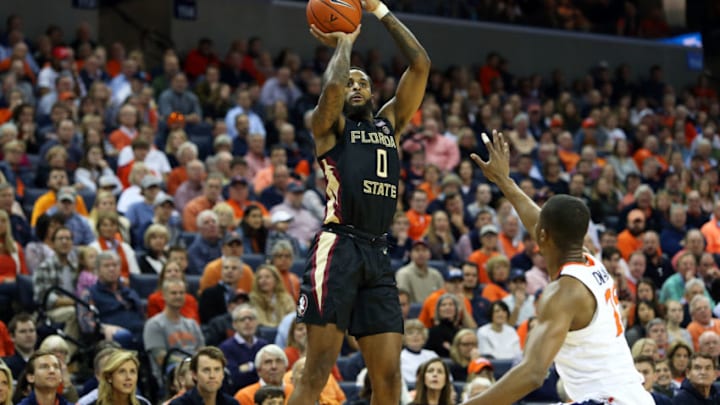
6-8 senior forward Phil Cofer suffered a foot injury in the preseason and missed ten of the first 11 games. Since returning, Cofer has averaged 24 minutes, 10 points, and shot 50% from three (6-12) over the last three games. If Cofer can get back to where he was last season, he’ll provide a consistent scoring presence for the Seminoles.
Cofer was among Florida State’s best shooters last season (37.5% from three). His presence will likely boost the team’s 3P% going forward (currently only 33.6%). He’ll also provide some rebounding help down low for a FSU team that’s only 175th in defensive rebounding.
Averaging 12.8 points per game last season (1st on team), Cofer scored 10-plus points in 23/35 games. FSU shares the wealth, as no player is averaging more than 12.1 points per game this season (Terrance Mann). But Cofer is probably the one player that the Seminoles can count on to put up points in any given game.
Credit to ACC Digital Network
Lindell Wigginton
The 6-2 sophomore guard missed 10 of Iowa State’s first 11 games with a left foot strain, but has returned for the last three contests. Upon return, he’s averaging 13.3 points per game and shooting 34% from the field (19% from three). He’s looked pretty healthy but clearly isn’t sharp yet.
The transition may take some time, as Iowa State has been playing at a high level without Wigginton contributing. Therefore, Coach Steve Prohm may not want to shake things up too much. But as good as the Cyclones looked against Kansas, I think they will need Wigginton to be a significant contributor if they want to make a deep run in March.
Wigginton was the lead ball-handler last season, averaging 16.7 points on 40% shooting (41% from three). The guard scored 20-plus points 13 times last season, providing valuable offensive upside.
Credit to Big 12 Conference
The sophomore probably had too much burden as a playmaker, and it showed with a TO rate of 18.7% compared to a 17.7% assist rate. But the Cyclones have more playmaking options this season (see chart), which should allow Wigginton to focus more on scoring. The sophomore could be perfectly suited as a “6th man” scoring threat for this squad.
(All statistics used in this article were found via KenPom and are up to date through the games completed on Jan 7).
 Add us as a preferred source on Google