

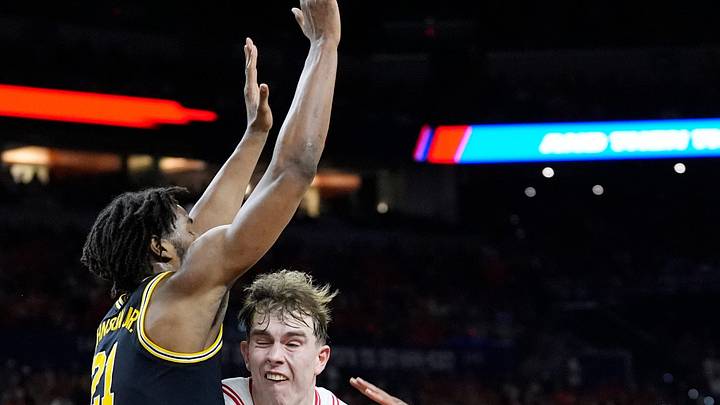
The Big 12 has developed a reputation for being one of the toughest conferences in college basketball, and the 2026-27 season should provide another reminder of why. The league features established All-Americans, experienced transfers, elite freshmen and several programs capable of making deep NCAA Tournament runs.
Arizona is attempting to build on a Final Four appearance, Kansas has added another extraordinary freshman, and Texas Tech returns one of the country's most accomplished frontcourt players. Houston remains a national contender under Kelvin Sampson, while BYU, Iowa State and several other programs have assembled intriguing rosters.
What makes the conference particularly interesting is the variety of talent. Some of its best players are dominant interior defenders, while others can completely change games through their shooting or playmaking. Several newcomers also have the opportunity to become immediate stars.
These rankings consider previous production, individual talent, projected development and expected impact during the upcoming season. Players with unresolved injury or eligibility situations are evaluated with those uncertainties in mind.
Here are the 25 best Big 12 players entering 2026-27.
25. Joson Sanon, West Virginia
Joson Sanon gives West Virginia an intriguing perimeter scoring option after transferring from St. John's. The 6-foot-5 guard possesses the size and offensive confidence to create opportunities against difficult defenders, making him a potentially important contributor for Ross Hodge. His arrival comes at a time when the Mountaineers are attempting to establish greater consistency in Big 12 competition.
Sanon's challenge will be becoming a dependable offensive player rather than simply producing occasional impressive scoring stretches. West Virginia needs perimeter contributors who can make good decisions while handling the conference's physical defenses. If Sanon develops that consistency, he could become one of the Mountaineers' most important players.
24. Dior Johnson, UCF
Dior Johnson arrives at UCF after playing at Tarleton State, bringing offensive creativity and experience to Johnny Dawkins' backcourt. The 6-foot-3 guard has the ability to create his own shot and attack defenders off the dribble. Those qualities could become especially valuable for a Knights team that has undergone significant roster changes.
UCF needs dependable offensive leadership as its newcomers establish chemistry. Johnson's ability to generate scoring opportunities gives the Knights another option when possessions become difficult. His success will depend on balancing individual production with the responsibility of helping organize the offense.
23. Kayden Mingo, Baylor
Kayden Mingo arrives at Baylor after beginning his college career at Penn State, giving Scott Drew another talented guard with considerable potential. The former highly regarded recruit possesses the quickness and ballhandling ability to become an important offensive contributor. Baylor has several newcomers competing for responsibilities, creating an opportunity for Mingo to establish himself.
The Bears need dependable perimeter play to become more competitive in the Big 12. Mingo's ability to attack defenders and create opportunities for teammates could become an important part of that improvement. If he develops into a consistent decision-maker, his transfer could prove particularly valuable.
22. Taylen Kinney, Kansas
Taylen Kinney arrives at Kansas as one of the nation's most intriguing freshman guards. The 6-foot-3 prospect brings impressive ballhandling, scoring instincts and confidence to a program with significant national championship expectations. His ability to create offense could make him an immediate contributor for Bill Self.
Kansas also has experienced backcourt options, meaning Kinney won't necessarily need to direct every possession. That should allow him to develop while learning the responsibilities of playing in one of college basketball's most demanding systems. If his transition goes smoothly, Kinney could become an important part of the Jayhawks' championship pursuit.
21. Miles Sadler, West Virginia
Miles Sadler arrives at West Virginia as one of the highest-rated recruits in program history. The Canadian point guard has demonstrated impressive passing ability and offensive creativity, giving Ross Hodge a potential long-term leader in the backcourt. His combination of confidence and basketball intelligence should help him compete for significant responsibilities immediately.
The challenge will be adjusting to the physicality and defensive sophistication of Big 12 basketball. West Virginia needs somebody capable of creating opportunities without committing unnecessary turnovers, particularly against the league's strongest defensive teams. If Sadler develops quickly, he could become one of the conference's most exciting freshmen.
20. Leon Bond III, Iowa State
Leon Bond III joins Iowa State after playing at Northern Iowa, bringing defensive versatility and experience to T.J. Otzelberger's roster. His ability to defend different positions makes him an intriguing fit for a program that emphasizes physicality and disciplined defensive execution. Bond also possesses the athleticism to contribute in transition and around the basket.
Iowa State must replace several important offensive contributors, creating opportunities for newcomers to assume larger roles. Bond's ability to provide energy without requiring significant offensive possessions should help him establish a place in the rotation. If his scoring becomes more consistent, he could become an especially valuable two-way contributor.
19. Jaquan Johnson, Iowa State
Jaquan Johnson arrives at Iowa State after playing at Bradley, giving the Cyclones another experienced perimeter option. His quickness and ability to attack defenders should provide important offensive flexibility as the program rebuilds portions of its rotation. Johnson has demonstrated that he can handle significant responsibilities at the college level.
The biggest adjustment will involve competing against Big 12 defenses that consistently pressure ballhandlers and challenge passing lanes. Iowa State needs Johnson to provide efficient offense while embracing Otzelberger's defensive expectations. If he succeeds in both areas, he could become one of the conference's more valuable transfer additions.
18. Brett Decker Jr., Baylor
Brett Decker Jr. arrives at Baylor after an outstanding season at Liberty, where he averaged 16.9 points and connected on approximately 47 percent of his three-point attempts. That combination of scoring production and shooting efficiency makes him one of the conference's most intriguing transfers. His ability to stretch defenses should create additional opportunities for Baylor's other offensive contributors.
The challenge will be maintaining that efficiency against bigger and more athletic opponents. Big 12 defenses will attempt to prevent Decker from finding comfortable perimeter opportunities, forcing him to become more creative with his movement and shot selection. If his shooting translates, Baylor could have one of the league's most dangerous perimeter weapons.
17. Xavier Edmonds, TCU
Xavier Edmonds returns to TCU after becoming an important part of the Horned Frogs' frontcourt. His combination of physicality, rebounding and interior scoring gives Jamie Dixon an experienced player capable of competing against the conference's strongest big men. That experience should become especially valuable during difficult road games.
TCU has several returning contributors who understand the program's defensive expectations. Edmonds' ability to control the glass and finish opportunities around the basket provides an important foundation for that group. If he becomes more consistent offensively, he could challenge for All-Big 12 recognition.
16. Micah Robinson, TCU
Micah Robinson enters his junior season with an opportunity to become one of TCU's most important offensive players. He averaged 10.9 points and 4.7 rebounds last season while developing into a dependable contributor during the Horned Frogs' NCAA Tournament run. His ability to perform in important games demonstrated that he can handle increased responsibility.
TCU needs Robinson to become a more consistent scoring threat while maintaining his defensive contributions. His combination of size and offensive versatility gives Dixon several options for creating favorable matchups. If Robinson makes another significant improvement, he could become one of the Big 12's most productive wings.
15. Cruz Davis, Texas Tech
Cruz Davis joins Texas Tech after playing at Hofstra, bringing experienced perimeter scoring and ballhandling to Grant McCasland's roster. His ability to create offense should be especially valuable as the Red Raiders introduce several new contributors. Texas Tech needs dependable guards who can organize possessions while maintaining the offensive efficiency necessary to compete for a conference championship.
Davis enters a situation where the frontcourt features established talent, including JT Toppin and Darrion Williams. His ability to distribute the basketball and make opponents respect his perimeter shooting could create important opportunities for those players. If he adjusts quickly to the Big 12, Davis could become one of the conference's most valuable newcomers.
14. Bruce Branch III, BYU
Bruce Branch III arrives at BYU as one of the nation's most highly regarded freshmen. The 6-foot-8 wing possesses the size, athleticism and offensive versatility to become a difficult matchup for opposing defenses. His ability to contribute in multiple areas should make him an important part of Kevin Young's rotation.
BYU has experienced offensive contributors capable of helping Branch adjust without requiring him to dominate possessions immediately. That should allow him to develop his decision-making while taking advantage of favorable matchups. If his perimeter shooting becomes dependable, Branch could emerge as one of the Big 12's premier freshmen.
13. Donovan Atwell, Texas Tech
Donovan Atwell returns to Texas Tech after establishing himself as an important perimeter contributor. His ability to make three-pointers and provide offensive spacing is particularly valuable for a team featuring several talented interior players. Opponents must account for Atwell throughout possessions, creating opportunities for teammates to attack the basket.
Texas Tech has made significant changes to its backcourt, increasing the importance of its experienced returning contributors. Atwell's familiarity with McCasland's system should provide valuable continuity. If he maintains his shooting efficiency while becoming a more complete offensive player, he could become one of the conference's most influential guards.
12. Jaxon Kohler, BYU
Jaxon Kohler arrives at BYU after playing at Michigan State, giving the Cougars an experienced and physical frontcourt contributor. His ability to rebound, establish position and finish around the basket should provide an important complement to BYU's perimeter talent. Kohler's experience competing in demanding Big Ten games could help him adjust quickly.
BYU needs dependable interior production to maximize the effectiveness of its offensive creators. Kohler's ability to set screens and create second-chance opportunities should become an important part of Kevin Young's system. If he continues developing offensively, he could emerge as one of the conference's most productive frontcourt transfers.
11. Melvin Council Jr., Kansas
Melvin Council Jr. has returned to Kansas following a preliminary injunction that opened the door for another season of college basketball. The experienced guard was named Big 12 Newcomer of the Year last season after providing scoring, playmaking and leadership for the Jayhawks. His familiarity with Bill Self's system gives Kansas an important advantage as it introduces another talented group of freshmen.
Council's eligibility situation remains subject to ongoing legal developments, making his long-term availability something to monitor. On the court, however, his ability to organize possessions and create opportunities for teammates is well established. If he remains eligible throughout the season, Council could become one of Kansas' most important contributors.
10. Ivan Kharchenkov, Arizona
Ivan Kharchenkov returns to Arizona after an impressive freshman season in which he demonstrated outstanding versatility. The 6-foot-7 forward averaged 10.4 points while contributing through rebounding, passing and defensive activity. His ability to influence games without dominating the basketball makes him particularly valuable in Tommy Lloyd's system.
Arizona must replace several important contributors from last season's Final Four team, creating opportunities for Kharchenkov to assume greater responsibilities. His combination of physicality and offensive skill should allow him to operate in several different lineup combinations. If he develops into a more consistent perimeter scorer, he could become one of the Big 12's most complete forwards.
9. Caleb Holt, Arizona
Caleb Holt arrives at Arizona as one of the nation's premier freshman guards. The 6-foot-5 prospect possesses impressive athleticism, defensive potential and the ability to create offense against quality opponents. His arrival is particularly important because Arizona must replace several established perimeter contributors from last season.
Tommy Lloyd needs Holt to provide immediate production while learning how to operate within the Wildcats' offensive system. His ability to attack defenders and create opportunities in transition should fit naturally with Arizona's preferred style. If Holt adjusts quickly, he could become one of the conference's most exciting young players.
8. Darrion Williams, Texas Tech
Darrion Williams returns to Texas Tech after spending last season at NC State, giving Grant McCasland another experienced offensive weapon. The 6-foot-6 forward previously enjoyed considerable success with the Red Raiders, and his familiarity with the program should make the transition easier. His ability to score, rebound and create opportunities for teammates gives Texas Tech valuable versatility.
Williams' return could become particularly important as JT Toppin works back from a serious knee injury. Texas Tech needs experienced players capable of carrying offensive responsibilities while its rotation develops chemistry. If Williams returns to his previous level of production, the Red Raiders could have one of the conference's most dangerous frontcourts.
7. Dedan Thomas Jr., Houston
Dedan Thomas Jr. arrives at Houston after playing at LSU and UNLV, bringing experience and offensive creativity to Kelvin Sampson's backcourt. His ability to control possessions and create opportunities for teammates makes him an intriguing addition to a program built around disciplined execution. Houston needs dependable guard leadership as it introduces several new contributors.
Thomas has demonstrated that he can generate offense against quality opponents, but the demands of Sampson's system extend well beyond scoring. He must embrace defensive pressure, rebounding responsibilities and the importance of making efficient decisions. If he adjusts successfully, Thomas could become one of the Big 12's most valuable point guards.
6. Tamin Lipsey, Iowa State
Tamin Lipsey has returned to Iowa State's roster following a court ruling that currently permits him to pursue another season of college basketball. The experienced point guard has been one of the program's most important players, contributing through passing, defensive pressure and leadership. His familiarity with T.J. Otzelberger's system provides an enormous advantage for a team introducing several newcomers.
Lipsey's eligibility remains connected to ongoing legal proceedings, so his availability throughout the season cannot be treated as completely settled. When available, however, his ability to control tempo and organize the offense makes Iowa State considerably more dangerous. His experience could become particularly valuable during difficult conference road games.
5. Joseph Tugler, Houston
Joseph Tugler has established himself as one of college basketball's premier interior defenders. The Houston forward has earned multiple All-Big 12 defensive honors and has been recognized nationally for his ability to protect the basket. His combination of athleticism, physicality and defensive instincts makes him an essential part of Kelvin Sampson's system.
Houston's success depends heavily on its ability to pressure opponents and control possessions. Tugler allows the Cougars to defend aggressively because teammates know he can provide resistance around the rim. If his offensive production continues improving, he could become one of the nation's most complete frontcourt players.
4. Robert Wright III, BYU
Robert Wright III enters his junior season as one of the Big 12's most dangerous offensive guards. The former Baylor standout has demonstrated an ability to create scoring opportunities against quality defenders while distributing the basketball effectively. His confidence and offensive creativity make him particularly difficult to contain when he establishes rhythm.
BYU needs Wright to provide consistent leadership as the program integrates several talented newcomers. His ability to attack the basket should create opportunities for perimeter shooters and interior finishers. If he becomes more consistent defensively while maintaining his offensive production, Wright could challenge for first-team All-Big 12 honors.
3. Motiejus Krivas, Arizona
Motiejus Krivas returns to Arizona after establishing himself as one of the nation's premier interior players. The 7-foot-2 center averaged 10.4 points, 8.2 rebounds and 1.9 blocks last season while helping the Wildcats reach the Final Four. His defensive presence makes Arizona considerably more difficult to attack around the basket.
Krivas also provides valuable offensive efficiency, particularly when he establishes position close to the rim. Arizona must replace several important contributors, making his experience and leadership especially valuable. If he becomes a more consistent offensive focal point, Krivas could challenge for national center of the year recognition.
2. JT Toppin, Texas Tech
JT Toppin enters the season as one of college basketball's most accomplished returning players. He averaged 21.8 points and 10.8 rebounds last season before suffering a torn ACL in February, ending what had been an outstanding individual campaign. His combination of interior scoring, rebounding and physicality makes him one of the most difficult players in the country to defend.
The biggest question is how quickly Toppin can return to his previous level following the injury. Texas Tech has added experienced contributors who should help reduce the pressure on him during the early portion of the season. If Toppin returns healthy and maintains his previous production, he could become a leading National Player of the Year candidate.
1. Tyran Stokes, Kansas
Tyran Stokes arrives at Kansas carrying extraordinary expectations after establishing himself as the nation's premier recruit in the 2026 class. The 6-foot-8 freshman averaged 31 points, 13 rebounds and six assists during his final high school season while leading Rainier Beach to a state championship. His combination of size, offensive creativity and passing ability gives Bill Self one of the most versatile newcomers in college basketball.
Stokes isn't simply an outstanding scorer. He has demonstrated an unusual ability to create opportunities for teammates while controlling games through rebounding and defensive activity. Those qualities should allow Kansas to use him in several different offensive combinations.
The challenge involves translating his talent into consistent production against experienced Big 12 opponents. Kansas has established contributors capable of helping Stokes adjust, but the Jayhawks' championship expectations will place significant responsibility on his shoulders. If he develops quickly, Stokes could become one of college basketball's most influential players.
The Big 12 possesses an extraordinary combination of established production and emerging talent. Toppin, Krivas, Tugler and several experienced guards have already demonstrated their ability to compete against elite opponents, while freshmen such as Stokes and Holt bring enormous upside.
The conference race could ultimately depend on which stars remain healthy, which newcomers adjust most quickly and which teams develop the strongest chemistry. That uncertainty should make the Big 12 one of college basketball's most entertaining leagues throughout the upcoming season.
 Add us as a preferred source on Google