

The Big Ten enters the 2026-27 college basketball season with something that should concern the rest of the country. The conference isn't simply bringing back talented players. Several of its strongest programs return established stars who already understand what it takes to compete deep into March.
Michigan is coming off a national championship, Illinois reached the Final Four, and Nebraska enjoyed a historic NCAA Tournament breakthrough. Michigan State returns one of the nation's premier point guards, while programs such as UCLA, USC and Indiana have assembled intriguing rosters capable of challenging the conference's established powers.
The combination of returning experience, transfer portal additions and highly regarded freshmen should make the Big Ten one of the most entertaining conferences in the country. There are legitimate All-America candidates, players capable of leading the nation in individual statistical categories and several newcomers who could dramatically change their teams' expectations.
These rankings consider proven production, projected development, individual talent and expected impact during the upcoming season. They aren't simply a reflection of last year's statistics, because the responsibilities and opportunities facing many players will look considerably different.
Here are the 25 best Big Ten players entering 2026-27.
25. Nikola Kusturica, UCLA
Nikola Kusturica arrives at UCLA with an international résumé that makes him one of the conference's most intriguing newcomers. The 6-foot-9 Serbian wing averaged 24.6 points, 6.9 rebounds and 2.7 assists at the 2026 FIBA Under-17 World Cup, demonstrating an impressive combination of offensive creativity and versatility. His ability to handle the basketball and create opportunities for teammates gives Mick Cronin a player who can contribute in several different ways.
The biggest challenge will be adjusting to the physicality and defensive demands of Big Ten basketball. UCLA has experienced contributors capable of helping Kusturica develop without requiring him to carry the offense immediately. If his international production translates quickly, however, he could become one of the conference's most exciting freshmen.
24. Anthony Thompson, Ohio State
Ohio State added an outstanding prospect in Anthony Thompson, a 6-foot-9 forward with the offensive versatility to become a difficult matchup for opposing defenses. His combination of size, athleticism and perimeter skills gives the Buckeyes an opportunity to create offensive advantages against smaller defenders while still maintaining frontcourt flexibility.
Thompson enters a situation where Ohio State already has an established offensive weapon in John Mobley Jr., meaning he won't necessarily need to dominate the basketball to make an impact. His development as a defender and decision-maker will be particularly important against experienced conference opponents. If Thompson adjusts quickly, the Buckeyes could have one of the Big Ten's most dangerous inside-outside combinations.
23. Cam Ward, Michigan State
Cam Ward enters his sophomore season with an opportunity to become a more important part of Michigan State's rotation. The 6-foot-9 forward provides athleticism, versatility and the ability to contribute in multiple areas without requiring a large number of offensive possessions. Those qualities make him particularly valuable in Tom Izzo's system, where rebounding, defensive effort and physical toughness are essential.
Michigan State already has an established offensive leader in Jeremy Fears Jr., allowing Ward to concentrate on becoming a more dependable complementary player. His ability to defend different positions and finish opportunities around the basket could help the Spartans establish a more versatile frontcourt. A significant sophomore improvement would make Michigan State even more dangerous.
22. Alijah Arenas, USC
Alijah Arenas showed flashes of outstanding offensive potential during his freshman season at USC, particularly after recovering from the knee injury that delayed his debut. He averaged 14.1 points over his final 14 games and produced several impressive scoring performances, including a 29-point effort against Indiana. Those performances demonstrated his ability to create shots and become dangerous when he develops confidence.
The challenge now is turning those flashes into consistent production. USC has several talented offensive players, including Rodney Rice, which should give Arenas opportunities to attack without carrying the entire offensive burden. If he improves his efficiency and decision-making, Arenas could become one of the Big Ten's most exciting young scorers.
21. Jaylen Petty, UCLA
Jaylen Petty gives UCLA another talented perimeter player capable of creating offense. His quickness, ballhandling and ability to attack defenders should provide an important complement to returning guard Trent Perry. The Bruins have assembled an intriguing backcourt, but their success will depend on how effectively those players establish chemistry.
Petty must demonstrate that he can balance his individual scoring opportunities with the responsibility of keeping teammates involved. Cronin's system also demands consistent defensive effort, making that another important area of development. If Petty becomes a dependable offensive creator while embracing those responsibilities, UCLA could have one of the conference's more difficult backcourts to defend.
20. DJ Wagner, Maryland
DJ Wagner arrives at Maryland with considerable experience after previous stops at Kentucky and Arkansas. The former highly regarded recruit has appeared in 100 college games and brings a combination of scoring ability, ballhandling and familiarity with high-level competition. His experience should be particularly valuable for a Maryland team introducing numerous newcomers.
Buzz Williams needs Wagner to provide stability while helping establish an offensive identity. Wagner has shown that he can create opportunities against quality opponents, but consistency has remained an important part of his development. If he becomes a more efficient scorer and dependable distributor, Maryland could receive an enormous boost from its new backcourt leader.
19. Braden Frager, Nebraska
Braden Frager emerged as one of Nebraska's most important contributors during its historic 2025-26 season. He averaged 11.8 points and 3.8 rebounds while earning Big Ten Sixth Man of the Year honors, demonstrating an impressive ability to provide energy and offensive production. His contributions became particularly valuable during the Cornhuskers' NCAA Tournament run.
Nebraska returns several important players, but Frager could assume a larger offensive role as the program attempts to build on last season's success. His ability to score efficiently and compete physically gives Fred Hoiberg another dependable option. If Frager continues developing, Nebraska could remain among the Big Ten's most dangerous teams.
18. Jasper Johnson, Oregon
Jasper Johnson arrives at Oregon after beginning his college career at Kentucky, giving Dana Altman another talented perimeter player to develop. Johnson possesses the offensive instincts and shot-making ability to become an important contributor, particularly for a Ducks team looking to establish a more dependable scoring identity.
The challenge involves translating his individual talent into consistent production against Big Ten competition. Oregon has several newcomers competing for important roles, meaning Johnson must establish himself through efficient offense and improved defensive reliability. If Altman helps him develop into a more complete player, Johnson could become one of the conference's most intriguing transfers.
17. Markus Burton, Indiana
Markus Burton gives Indiana an experienced offensive creator after transferring from Notre Dame. He averaged 19.1 points and 3.8 assists during his career with the Fighting Irish, demonstrating an ability to score against quality competition while creating opportunities for teammates. His experience should be especially valuable for a Hoosiers program attempting to establish consistency under Darian DeVries.
Burton's ability to attack defenders and generate offense in difficult situations gives Indiana something it frequently lacked last season. However, he must develop chemistry with a significantly reworked roster and become comfortable distributing responsibilities among several talented newcomers. If that adjustment goes smoothly, Burton could become one of the Big Ten's most productive guards.
16. Aiden Sherrell, Indiana
Aiden Sherrell arrives at Indiana with the potential to become one of the conference's most impactful frontcourt players. The former Alabama standout averaged 11.1 points, 6.2 rebounds and 2.2 blocks last season while demonstrating the ability to protect the basket and contribute offensively. His combination of size, defensive instincts and improving perimeter skills gives Indiana a versatile interior presence.
Sherrell should immediately help the Hoosiers establish greater defensive resistance around the basket. His ability to finish opportunities created by Indiana's guards could also become an important part of DeVries' offense. If Sherrell continues developing his offensive consistency, he could emerge as one of the conference's premier two-way big men.
15. Tomislav Ivisic, Illinois
Tomislav Ivisic gives Illinois another experienced interior player capable of influencing games in several different ways. His combination of size, offensive skill and understanding of Brad Underwood's system makes him particularly valuable for a team returning several important contributors from its Final Four run.
Illinois has enough offensive talent that Ivisic won't need to dominate possessions to make an impact. His ability to provide interior scoring, rebounding and frontcourt versatility should help the Fighting Illini maintain balance against difficult opponents. If he becomes more consistent defensively and establishes himself as a dependable presence around the basket, Illinois could have one of the nation's most complete frontcourts.
14. Stefan Vaaks, Illinois
Stefan Vaaks arrives at Illinois after beginning his college career at Providence, giving the Fighting Illini another talented perimeter player with considerable offensive upside. His combination of size and shooting ability should fit well in Underwood's system, particularly alongside forwards capable of creating opportunities through their passing and movement.
The biggest challenge involves adjusting to a roster already featuring several established offensive contributors. Vaaks must become comfortable contributing without dominating the basketball while maintaining the confidence to attack when opportunities appear. If he develops chemistry with Illinois' returning players, he could become one of the conference's most valuable newcomers.
13. Moustapha Thiam, Michigan
Moustapha Thiam joins Michigan with the opportunity to become one of the Big Ten's most imposing interior defenders. The 7-foot-2 center brings tremendous size and the ability to alter shots around the basket, giving the defending national champions an important defensive foundation as they replace several contributors.
Michigan's offensive system also creates opportunities for big men who can finish around the basket and provide reliable screening. Thiam won't necessarily need to become a primary scorer to make a significant impact, particularly with Elliot Cadeau directing the offense. If he develops into a dependable rebounder and defensive anchor, the Wolverines could remain among the country's strongest teams.
12. Coen Carr, Michigan State
Coen Carr has developed into one of Michigan State's most important players because of his athleticism, defensive versatility and ability to finish above the rim. He averaged approximately 12 points and 5.4 rebounds last season while becoming a dependable contributor for Tom Izzo. His energy can change games even when he isn't heavily involved in the offense.
Carr's next challenge is becoming a more consistent offensive threat beyond transition opportunities and finishes around the basket. Michigan State needs dependable scoring from its frontcourt to complement Jeremy Fears Jr.'s playmaking. If Carr continues improving his perimeter skills and offensive decision-making, he could become one of the Big Ten's most complete forwards.
11. Trent Perry, UCLA
Trent Perry enters the season as one of UCLA's most important returning players. He averaged 12.6 points, three rebounds and 2.8 assists last season while connecting on 39.2 percent of his three-point attempts. His combination of shooting, ballhandling and experience gives Mick Cronin a dependable offensive foundation.
Perry will have additional responsibilities as UCLA integrates several newcomers into its rotation. His ability to control possessions, create opportunities for teammates and provide consistent perimeter scoring could determine how quickly the Bruins develop chemistry. If he makes another significant improvement, Perry could become one of the Big Ten's most productive guards.
10. Nolan Winter, Wisconsin
Nolan Winter has developed into one of the Big Ten's most dependable interior players. He averaged 13.1 points and 8.5 rebounds last season while producing 12 double-doubles, demonstrating an impressive combination of efficiency and rebounding ability. His ability to finish around the basket gives Wisconsin a reliable offensive option when perimeter opportunities disappear.
The Badgers have made several important changes to their backcourt, placing additional responsibility on Winter's shoulders. His experience should help Wisconsin establish consistency while its newcomers develop chemistry. If Winter becomes a more dominant interior scorer and continues improving defensively, he could challenge for first-team All-Big Ten honors.
9. Rodney Rice, USC
Rodney Rice enters the season with an opportunity to become one of the conference's most productive guards after injuries interrupted his first campaign at USC. He averaged 20.3 points and six assists through six games before a shoulder injury ended his season, demonstrating an impressive ability to create offense for himself and his teammates.
Rice's early performances included a triple-double against Illinois State, highlighting the versatility that makes him so important to Eric Musselman's offense. The biggest question is how quickly he can return to that level after missing most of last season. If Rice remains healthy and develops chemistry with USC's talented newcomers, he could become one of the Big Ten's most dangerous offensive creators.
8. John Mobley Jr., Ohio State
John Mobley Jr. gives Ohio State an outstanding perimeter scoring threat capable of changing games with his shooting. His ability to create space, attack defenders and make difficult shots forces opponents to account for him throughout possessions. That offensive gravity should create additional opportunities for Ohio State's talented newcomers.
Mobley must continue developing as a decision-maker while handling increased defensive attention. The Buckeyes have added several intriguing players, but their offensive consistency will depend heavily on their established guard. If Mobley becomes a more complete playmaker without sacrificing his scoring ability, Ohio State could become a serious Big Ten contender.
7. Pharrel Payne, Maryland
Pharrel Payne returns to Maryland after injuries limited him to 10 games last season. During those appearances, he averaged 17.5 points and 7.2 rebounds while shooting 62.4 percent from the field, demonstrating how valuable he can be when healthy. His physicality and ability to finish around the basket make him one of the conference's most difficult interior matchups.
Maryland desperately needs Payne's experience and production as Buzz Williams attempts to build a more competitive roster. His ability to control the paint should create opportunities for the Terrapins' guards while providing a dependable scoring option when possessions become difficult. If Payne remains healthy, he could become one of the Big Ten's most impactful frontcourt players.
6. Trey McKenney, Michigan
Trey McKenney enters his sophomore season with an opportunity to become one of Michigan's most important offensive players. The talented guard possesses the size, confidence and scoring ability to create opportunities against quality defenders. His development becomes particularly important as the Wolverines attempt to replace several contributors from their national championship team.
Michigan already has an experienced floor general in Elliot Cadeau, which should allow McKenney to concentrate on becoming a more consistent scoring threat. His ability to attack the basket and make perimeter shots could give the Wolverines an outstanding backcourt combination. If he makes the expected sophomore improvement, McKenney could emerge as one of the conference's premier offensive players.
5. Andrej Stojakovic, Illinois
Andrej Stojakovic became an important part of Illinois' Final Four run, providing offensive versatility and the ability to create scoring opportunities from different areas of the floor. He averaged 13.5 points last season while shooting approximately 50 percent from the field, demonstrating improved efficiency and confidence.
Illinois returns several talented offensive players, but Stojakovic's ability to create his own shot remains especially valuable. His combination of size and offensive skill allows him to challenge smaller defenders while attacking bigger opponents off the dribble. If he becomes more consistent from the perimeter and continues improving defensively, Stojakovic could become one of the nation's most complete wings.
4. Elliot Cadeau, Michigan
Elliot Cadeau enters the season with something few college basketball players can claim: experience directing a national championship offense. The former North Carolina guard became a central figure in Michigan's title run and earned Final Four Most Outstanding Player honors. His ability to control tempo, distribute the basketball and create opportunities for teammates makes him one of the conference's most valuable players.
Michigan must replace several important contributors, placing additional responsibility on Cadeau's shoulders. His improved perimeter shooting has made him more difficult to defend, while his passing ability continues creating advantages for teammates. If he maintains that development, Cadeau could become a legitimate All-America candidate while helping Michigan challenge for another championship.
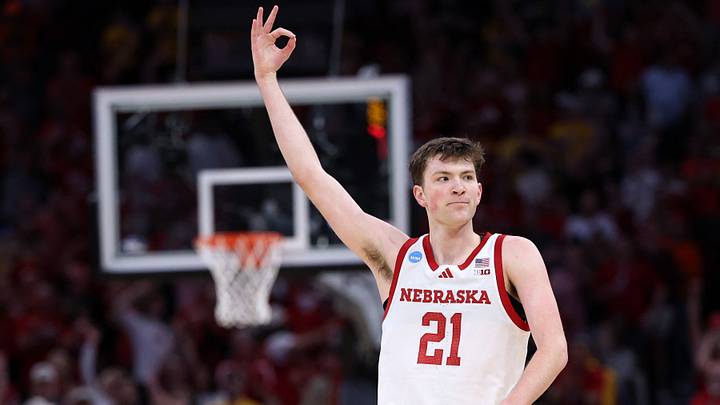
3. Pryce Sandfort, Nebraska
Pryce Sandfort established himself as one of the Big Ten's premier perimeter scorers during Nebraska's historic 2025-26 season. He averaged 18.1 points and 4.9 rebounds while connecting on 41.6 percent of his three-point attempts. His ability to make shots from difficult positions creates enormous problems for opposing defenses.
Nebraska returns several important contributors, but Sandfort remains the centerpiece of Fred Hoiberg's offense. His shooting stretches defenses and creates opportunities for teammates, making the Cornhuskers particularly dangerous when their ball movement is effective. If Sandfort maintains his efficiency while handling increased defensive attention, he could become a serious contender for Big Ten Player of the Year.
2. David Mirkovic, Illinois
David Mirkovic emerged as one of college basketball's most impressive young frontcourt players during his freshman season. He averaged 13.3 points and eight rebounds while demonstrating an unusual combination of size, offensive skill and passing ability. His versatility helped Illinois reach the Final Four and established him as one of the nation's most intriguing returning players.
Mirkovic's offensive development could make Illinois especially difficult to defend. He can contribute around the basket, create opportunities for teammates and provide the versatility necessary to operate in different offensive combinations. If he becomes a more consistent scoring threat while maintaining his rebounding production, Mirkovic could challenge for All-America honors.
1. Jeremy Fears Jr., Michigan State
Jeremy Fears Jr. enters the season as the Big Ten's premier player because of his extraordinary ability to control basketball games. He averaged 15.2 points and led the nation with 9.4 assists last season, establishing himself as one of college basketball's most accomplished floor generals. His passing vision and understanding of defensive positioning allow him to create opportunities that few other guards would recognize.
Michigan State has legitimate national championship aspirations, and Fears will be responsible for directing the offense against some of the country's most demanding defenses. His ability to remain composed under pressure and establish confidence among his teammates gives Tom Izzo an enormous advantage. If Fears continues developing as a perimeter scorer, he could become one of the leading candidates for National Player of the Year.
The Big Ten has enough talent to produce several legitimate national championship contenders, but the conference's strongest teams will ultimately depend on their stars delivering in difficult situations. Fears, Mirkovic, Sandfort and Cadeau headline an impressive group, although several younger players could dramatically improve their standing during the season.
That combination of established production and emerging talent should make the conference race fascinating from November through March.
 Add us as a preferred source on Google