

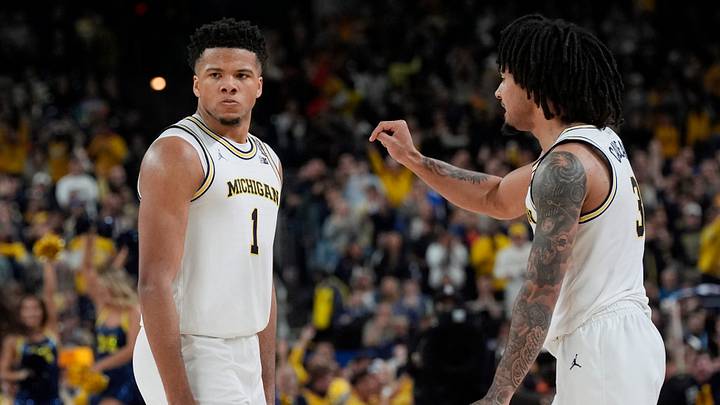
The modern college basketball wing can do a little bit of everything.
The best players at the position aren't simply scorers stationed on the perimeter. They initiate offense, attack mismatches, rebound, defend multiple positions and provide the lineup versatility that becomes especially valuable in March.
That makes this one of the deepest positions in the sport entering 2026-27.
Some players on this list are established stars. Others are freshmen or sophomores we're betting on making significant jumps.
Here are our 25 best wings entering the season.
25. Darren Harris, Indiana
Harris heads to Indiana looking for the expanded opportunity that wasn't always available to him at Duke.
He's an accomplished shooter with good size on the perimeter. If increased playing time leads to increased confidence, Harris could become an important floor-spacing weapon for the Hoosiers.
24. Tate Sage, Iowa
Sage is one of our favorite potential breakout players in the Big Ten.
At 6-foot-7, he has the size to create matchup problems and enough perimeter skill to become a much larger offensive factor. Iowa should give him an opportunity to show it.
23. Davis Fogle, Gonzaga
Fogle showed intriguing flashes during his freshman season.
Now comes the jump.
The 6-foot-7 sophomore should have an opportunity to become a considerably larger part of Gonzaga's offense. His combination of size, athleticism and improving perimeter skill makes him a player worth watching closely.
22. Matt Able, North Carolina
Able moves to North Carolina after showing significant promise as a freshman at NC State.
At 6-foot-9, he gives the Tar Heels another big perimeter player capable of creating matchup problems. His shooting will be particularly important for a North Carolina team entering a new era.
21. Anthony Thompson, Ohio State
Thompson hasn't played a college game yet, but his upside is too substantial to ignore.
The 6-foot-8 freshman has the size and skill to attack several different types of defenders. Ohio State doesn't need him to become a star immediately, but he could grow into one quickly.
20. Bruce Branch III, BYU
BYU's recruiting momentum didn't disappear when AJ Dybantsa left for the NBA.
Branch gives the Cougars another talented young wing with size, athleticism and two-way potential. He doesn't need to become Dybantsa. He simply needs to become the best version of himself.
19. Caleb Gaskins, Miami
Gaskins joins a Miami program with significant expectations.
His strength and versatility make him appealing because he doesn't necessarily need a huge offensive role to contribute. Defend, rebound, run the floor and take advantage of favorable matchups. The scoring opportunities should follow.
18. Abdou Toure, Arkansas
Toure could become one of the most valuable pieces in John Calipari's latest collection of talent.
He's athletic, physical and capable of making an immediate defensive impact. If Toure's perimeter shot develops quickly, his role could become much larger than expected.
17. Ivan Kharchenkov, Arizona
Kharchenkov already brings significant defensive value to Arizona.
The next step is becoming a more consistent offensive threat. If that happens, the Wildcats will have exactly the type of two-way wing that becomes invaluable during an NCAA Tournament run.
16. Coen Carr, Michigan State
Carr's athleticism is ridiculous.
The Michigan State veteran is one of the most explosive finishers in college basketball. If Carr becomes a more reliable perimeter scorer and creator, his ceiling changes considerably.
15. Juke Harris, Tennessee
Harris arrives at Tennessee with proven high-major production.
That's important for Rick Barnes. The Volunteers don't need to wonder whether Harris can produce against quality competition. The question is whether he can translate that production into winning for a program with Final Four aspirations.
14. Cameron Williams, Duke
Williams is another highly talented freshman joining a Duke program that reloads every offseason.
His size and defensive potential could earn him an immediate role. The Blue Devils won't need Williams to force offense, allowing him to impact possessions in other ways.
13. Thijs De Ridder, Virginia
De Ridder brings proven production and versatility to Virginia.
He can score in multiple ways, rebound and create matchup problems with his combination of size and skill. That should make him one of the ACC's most important players.
12. Pryce Sandfort, Nebraska
Sandfort's shooting creates problems before he ever touches the basketball.
Defenders can't wander away from him. That creates space for teammates and changes how opponents defend Nebraska's entire offense.
11. Braylon Mullins, UConn
Mullins already understands what playing meaningful basketball at UConn feels like.
Now he's positioned for a larger sophomore role. His shooting is the obvious attraction, but continued development as a defender and creator could push him into the All-America conversation.
10. Caleb Holt, Arizona
Holt hasn't played a college game yet.
We're still putting him in the top 10.
The Arizona freshman arrives with an impressive combination of strength, athleticism, rebounding and defensive competitiveness. If the offense comes just as quickly, Holt could finish considerably higher than No. 10.
9. Trey McKenney, Michigan
McKenney has the tools to make a massive sophomore jump.
He's strong enough to punish smaller defenders and skilled enough to create from the perimeter. Michigan will give him an opportunity to take on considerably more responsibility.
8. David Mirkovic, Illinois
Mirkovic's versatility is what makes him so valuable.
He can score, rebound and create mismatches without Illinois having to build its entire offense around him. On a roster with Final Four expectations, that's exactly the type of player Brad Underwood needs.
7. Dame Sarr, Duke
Sarr has the physical tools to become one of the best two-way players in the country.
His size gives Duke tremendous lineup flexibility, while his offensive skill allows him to attack multiple types of defenders.
If Sarr finds greater consistency, Duke becomes even scarier.
6. Silas Demary Jr., UConn
Demary is difficult to categorize, and that's part of his appeal.
He can handle the basketball like a guard while using his size and strength like a wing. That gives Dan Hurley plenty of ways to deploy him.
5. Jordan Smith Jr., Arkansas
Smith enters college with enormous expectations.
The freshman has the size, strength and competitive edge to make an immediate impact for Arkansas. His defensive versatility should translate especially quickly.
If Smith adjusts quickly to the college game, he could become one of the best freshmen in America.
4. Amari Allen, Alabama
Allen is positioned for a major sophomore breakout.
He flashed his considerable potential as a freshman, but now the opportunity should become much larger.
That's exciting in Nate Oats' system. Allen has the size and skill to attack in transition, create mismatches and become a more consistent perimeter threat.
3. Andrej Stojakovic, Illinois
Stojakovic enters an ideal situation at Illinois.
He won't have to manufacture every scoring opportunity because the Illini possess plenty of weapons around him.
That should allow Stojakovic to attack mismatches and concentrate on efficiency rather than volume.
2. Tyran Stokes, Kansas
Few freshmen enter college with Stokes' combination of size and skill.
At 6-foot-8 and around 230 pounds, Stokes possesses the ballhandling and playmaking ability of a perimeter player.
Smaller defenders can struggle with his strength. Bigger defenders may struggle to stay in front of him.
There will be freshman mistakes, but the ceiling is enormous. Stokes could finish the season as one of the best players in college basketball.
1. Thomas Haugh, Florida
Haugh gets the top spot because there is considerably less projection involved.
He's already proven he can impact winning at the highest level.
Haugh can handle the basketball, stretch the floor, rebound and defend multiple positions. He's also playing for a Florida team entering the season with legitimate national championship expectations.
Stokes may ultimately possess the greater NBA ceiling.
Entering 2026-27, though, Haugh is the wing we'd trust most in a college basketball game that absolutely has to be won.
That's enough to make him No. 1.
 Add us as a preferred source on Google