

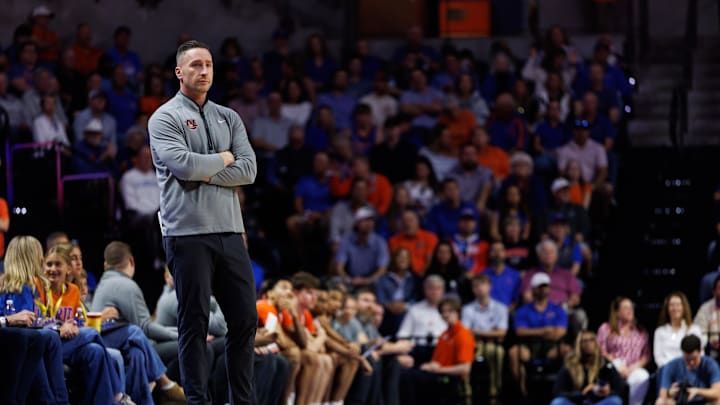
There is something different about the way Auburn approached this offseason. It does not feel like a team scrambling to fix problems. It feels like a program that understood exactly what last season was and what it was not. Yes, Auburn won the NIT and finished 22–16, which matters. But anyone who watched closely could see the gaps, especially in SEC play where depth, size, and consistency showed up as real issues.
This offseason was about answering those questions without tearing everything down. Auburn kept its identity in the backcourt, added size and versatility up front, and found pieces that actually make sense together. For fans, this is the kind of reset that feels intentional instead of rushed. Now that the transfer portal window has closed, here are five things that stand out most about where this roster is heading under head coach Steven Pearl.
1. He rebuilt the frontcourt from the ground up
After a 2025-2026 season that exposed some physical limitations, Pearl made it clear the roster needed size, depth, and versatility up front. Auburn responded by stacking additions like Owen Freeman, Bukola Oboye, Thomas Dowd, and Adam Olsen. That is not just adding bodies. It is a full identity shift. This group brings rebounding, rim protection, and lineup flexibility that simply was not consistent last season.
2. He kept the backcourt intact
In a portal era where continuity is rare, Auburn quietly pulled off something important by retaining Tahaad Pettiford and Kevin Overton. That gives this team a real foundation heading into 2026 to 2027. Last season, both guards carried heavy offensive responsibility during a 22 win run that ended with a trophy. Now, instead of starting over, Pearl is building around proven production. That stability changes everything when it comes to chemistry, late game execution, and leadership.
3. He added scoring punch and depth with transfers
This was not just about replacing departures. Pearl targeted specific production gaps. Auburn leaned into adding players who can create offense and hold up over a long season. Freeman brings frontcourt scoring. Dowd adds versatility and rebounding. Olsen gives lineup flexibility. This is a roster designed to survive the SEC grind, not just flash for a few weeks.
4. George Kimble III may be a dude
Kimble might end up being one of the more interesting pieces on the roster. Before his injury, he was a high usage guard at Eastern Kentucky who averaged 18 points and created problems defensively with his ability to generate steals. That tells you what Auburn is betting on.
He fits as a true combo guard who can back up Pettiford at the point while also playing off the ball. His ability to create offense at multiple levels gives Auburn something it lacked at times last season, especially when possessions broke down. If he is healthy, this is the kind of addition that can quietly change a few games in conference play.
5. He modernized the program behind the scenes
One of the most important moves Pearl made will not show up in a box score. Hiring a general manager signals a shift toward a more professional approach to roster building. In today’s college basketball landscape, that matters. Auburn is investing more into how it evaluates talent, manages the portal, and builds a complete roster. After a transition year that still ended with a title, this offseason feels like a step forward rather than a reset.
This is where things get interesting for Auburn fans. The roster makes more sense. The depth looks better. The pieces fit more naturally. Now it comes down to whether that translates when the SEC schedule starts to test everything Pearl did in the off-season.
 Add us as a preferred source on Google