

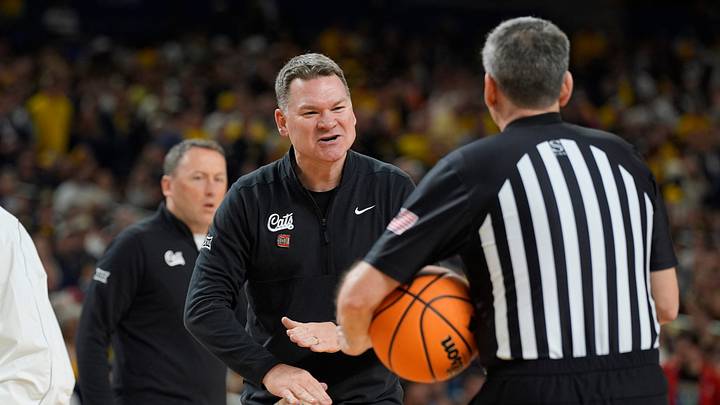
Arizona has become accustomed to entering college basketball seasons with enormous expectations, and the 2026–27 campaign is no different. The Wildcats reached the Final Four last spring and opened the new season ranked among the nation's top five teams, putting them firmly in the national championship conversation. Thursday's home game against Cal Poly might appear to be another opportunity for Arizona to build early momentum, but the opponent arriving in Tucson presents an unusual challenge.
Cal Poly is bringing back almost its entire roster from last season, a remarkable achievement in an era when the transfer portal has made continuity increasingly rare. The Mustangs return 13 players, including four starters and two All-Big West selections, giving head coach Mike DeGeorge one of the country's most experienced groups.
That level of continuity doesn't automatically make Cal Poly a national contender, but it does create an interesting contrast against a highly ranked Arizona program with considerably greater expectations. The Wildcats have more established national credentials, while the Mustangs hope their familiarity and offensive system can help them compete against a stronger opponent.
Cal Poly has accomplished something almost nobody else has
According to Cal Poly's athletic department, only Navy returns more players from its previous roster than the Mustangs. Cal Poly also brings back 83.2% of its scoring production, one of the highest percentages in Division I basketball.
Those numbers stand out because college basketball has changed dramatically in recent years. Programs frequently replace significant portions of their rotations through transfers, creating situations where even successful teams must spend the opening weeks developing chemistry.
Cal Poly has taken a different approach. DeGeorge has lost only one player to the transfer portal during his first two offseasons, allowing the Mustangs to retain players who already understand the program's offensive system and defensive responsibilities.
That familiarity could become especially valuable Thursday. Arizona will be favored to control the game, but Cal Poly's returning players should have a clearer understanding of their individual roles than many teams still adjusting to offseason changes.
The Mustangs also possess an offensive characteristic that could make them difficult to defend. They finished last season ranked 10th nationally with 10.8 made three-pointers per game, demonstrating an ability to generate significant production from the perimeter.
Arizona's defense will face an interesting challenge
Cal Poly's reliance on three-point shooting gives Thursday's game a potentially important tactical element. Teams that consistently create perimeter opportunities can occasionally challenge opponents with superior athleticism, particularly when they make enough early shots to prevent a favorite from establishing control.
The Mustangs won't be able to rely exclusively on shooting, however. Arizona's size, athleticism and defensive pressure will require Cal Poly to protect the basketball and create quality opportunities rather than settling for contested attempts.
The Wildcats also have the advantage of playing at home, where their defensive intensity and transition offense can make life especially difficult for visiting teams. Cal Poly has never defeated Arizona in four previous meetings, including an 82–61 loss during its most recent visit in November 2018.
The programs also met early in the 2013–14 season, when fifth-ranked Arizona defeated Cal Poly 73–62. That result offers an interesting historical reminder that the Mustangs have previously remained competitive against a highly ranked Wildcats team.
For Arizona, Thursday represents an opportunity to demonstrate that its defense can contain an opponent with substantial experience and a proven perimeter-oriented offensive approach.
The Mustangs have already shown they can score
Cal Poly opened its season Monday with a 78–62 victory over Division II Cal State San Marcos, building an 11-point halftime advantage before continuing to control the game after the break.
The victory was an encouraging start for a team hoping to translate its returning experience into improved results in the Big West. Cal Poly produced its highest conference victory total in 13 years last season, and the Mustangs are attempting to continue that progress rather than rebuild.
The step up in competition Thursday will be enormous. Arizona possesses the kind of talent that can punish defensive mistakes and turn a competitive game into a lopsided result in a matter of minutes.
Still, Cal Poly has the benefit of entering the game with an established rotation and considerable experience playing together. Those advantages might not be enough to produce an upset, but they could make the Mustangs more competitive than their national profile suggests.
A useful early measuring stick for both programs
Arizona's expectations extend well beyond November. The Wildcats are attempting to build on last season's Final Four appearance and position themselves for another opportunity to compete for a national championship.
Cal Poly has different objectives, but Thursday's game could still provide valuable information about the Mustangs' potential. Competing effectively against a top-five opponent would be an encouraging sign for a program attempting to establish itself as a serious Big West contender.
The game also illustrates an interesting development in modern college basketball. While many programs continue rebuilding their rosters through the transfer portal, Cal Poly has retained a remarkable amount of experience and continuity.
Thursday will help reveal how much that stability matters when the Mustangs face one of the country's most talented teams.
Arizona remains the clear favorite, but Cal Poly's unusual roster construction gives this game a storyline that deserves attention beyond the expected final result.
 Add us as a preferred source on Google