

Now that the season has concluded, the second season is kicking into full gear. The second season is the season of movement, the season when players, coaches, and teams play musical chairs. The transfer portal opened the day after Michigan cut down the nets, but the coaching carousel has been going round and round since early March. A lot of what has happened in the coaching ranks has taken place at the mid-major level, with a spattering of changes so far at high-major schools. Now that the season is over, expect more action soon with North Carolina leading the way after firing Hubert Davis. The Tar Heels were linked to seemingly every big name in the college game, but ultimately settled on former Denver Nuggets head coach Mike Malone.
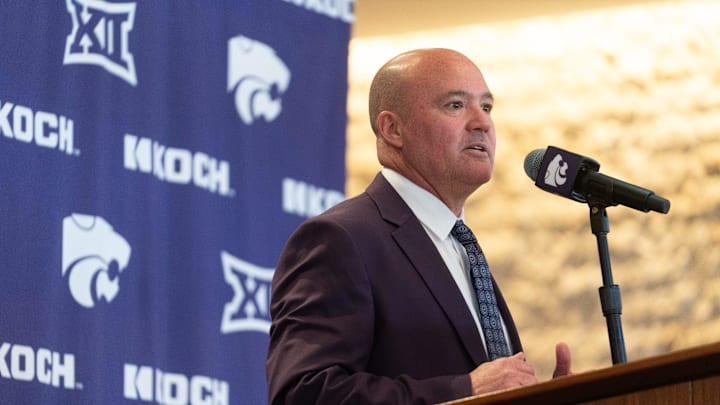
One of the earliest coaching changes at the high-major level took place in Manhattan, Kansas. Kansas State decided to move on from Jerome Tang on February 15th after three-plus seasons. The Wildcats’ search was a swift one. A little more than three weeks later, news broke that they were hiring Belmont head coach Casey Alexander to lead the program into a new era. Kansas State didn’t want to wait for the game of musical chairs; they identified a candidate and didn’t let him get away.
Alexander's coaching pedigree
Coaching Belmont was a full-circle moment for Alexander, who played at the school under legendary coach Rick Byrd. After graduating, Alexander was an assistant on Byrd’s staff until 2011. His first head coaching job was at Stetson, where he spent two seasons. He spent two less-than-successful seasons with the Hatters before returning to Nashville. He would coach Belmont’s rival, Lipscomb, for six seasons. In his last two seasons there, he would go 52-18 with an NCAA Tournament bid and an NIT championship game appearance.
He arrives at Kansas State after seven years at Belmont, where he replaced Byrd. In that time, he compiled a 166-60 record with the Bruins, leading them to a 26-6 record and their first Missouri Valley Conference regular-season title last year. Alexander had successfully continued what Byrd had built over 33 seasons, turning Belmont into a basketball institution at the mid-major level. Now it is time to see if Alexander can bring that success to the high-major level at Kansas State.
Philisophical changes in Manhattan
What can Kansas State fans expect from a Casey Alexander-coached team? The first thing fans are going to notice is, offensively, they are going to score the basketball. They do that by spacing the floor with four or five out on offense and creating mismatches through pick-and-rolls and dribble handoffs. Last season, the Bruins averaged nearly 84 points per game and were the No. 1 team in the country in effective field goal percentage. Another thing fans will notice is that the pace will be faster on the offensive end. Belmont ranked in the top-45 in average possession length in six of his seven seasons. That mark was matched by Tang in his first and last seasons in charge, which coincided with his worst two seasons in Manhattan.
Another big change from Tang to Alexander should be the team’s reliance on the three-point shot. During his tenure at Belmont, no fewer than 41% of his team’s shots came from the three-point line, including 46% last season. They take a lot and also make a lot, ranking in the top-25 nationally in three-point percentage nationally since 2023, where they were at the top of the mountain in that category last season. Being so good from deep often opens things up on the inside, and his teams also take advantage of that. In six previous seasons, his teams were also top-60 in two-point percentage, including four times in the top 5. By contrast, only once did Tang rank in the top 50 in either one of those categories in any of his four years (last year’s 3p% was 44th).
Plenty of changes have already been made
As is par for the course nowadays, roster building is no more at the high-major level. Reloading is now the name of the game, by way of retention and free agency. When it comes to Kansas State, there hasn't been much retention as the squad has lost ten players from last season, giving Alexander a relatively clean canvas to work with. Given that, there has been an expectation and a hope that he might be able to bring over some of his former players, as he did with his coaching staff. So far, that has not been the case. Of the five Bruins to enter the portal, two have found new homes, and none have landed in Manhattan.
Alexander has a reputation for finding players who are under-recruited and getting the most out of them. That's something he made a living doing at Belmont, and his initial work in the portal seems to reflect that. To implement his fast-paced spread-out style, Alexander needs players all over the floor who can shoot it. Last year, Kansas State shot 36% from three, and in Alexander's last four seasons at Belmont, none of his teams shot below 37%. That philosophy is playing out with his portal activity early on.
A couple of add-ons with Virginia Tech ties lead the way. Jaden Schutt shot over 38% for the Hokies last season, and his former teammate, Brandon Rechsteiner, shot 40% in his only season at Colorado State. It’s not just the guards, though, of the seven transfers coming in, five are 6’6 or taller, and each of them has a burgeoning three-point shot that opponents will have to watch for. Dezdrick Lindsay shot 33% on 58 attempts at Oregon, and Isaiah Abraham launched 70 more attempts at Georgetown than he did as a freshman at UConn. Brock Vice (Murray State), JT Rock (New Mexico), and Matt Gilhool (LSU) are all 6’10 or taller and have shown the ability to shoot it from deep.
 Add us as a preferred source on Google