

There’s an easy way to understand where college basketball is headed. Don’t start with rankings or preseason hype. Start with where the money is.
Because when you line up the highest-paid coaches in the sport and compare it to who’s winning in March, the same names keep showing up. Not just programs, but conferences. And right now, two of them are clearly setting the pace.
Big Ten: Winning now, investing to stay there
The Big Ten isn’t just having a moment. It’s stacking advantages in real time.
A men’s national championship. A women’s national championship. A Final Four run from Illinois. Nearly $70 million in NCAA tournament revenue. That’s dominance on the court and leverage off it.
But the deeper story shows up when you look at how the conference is paying to sustain it.
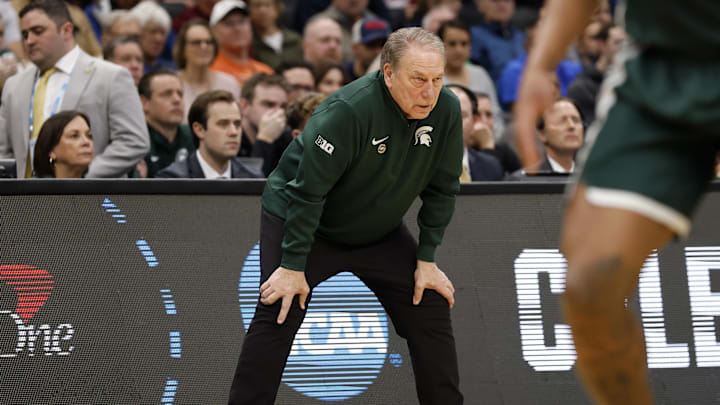
- Tom Izzo — $7.20 million
- Brad Underwood — $5.40 million
- Matt Painter — $4.98 million
- Buzz Williams — $4.88 million
- Mick Cronin — $4.50 million
- Fred Hoiberg — $4.35 million
- Darian DeVries — $4.33 million
- Mike Rhoades — $4.23 million
This is what makes the Big Ten dangerous right now. It’s not just winning. It’s investing across the board. From legacy names to rising program builders, the conference is making sure its infrastructure matches its expectations.
Because the money coming in from March Madness doesn’t just reward success. It reinforces it.
SEC: Spending like it expects to take over
If the Big Ten is stacking results, the SEC is matching it with pure financial aggression.
No conference is pushing harder when it comes to coaching salaries, and it shows in the names:
- John Calipari — $7.75 million
- Rick Barnes — $6.20 million
- Todd Golden — $6.00 million
- Chris Beard — $6.00 million
- Nate Oats — $5.51 million
- Mark Pope — $5.25 million
- Chris Jans — $4.40 million
- Dennis Gates — $4.20 million
The SEC has spent years dominating football, and now it’s clearly applying that same mindset to basketball. It hasn’t fully translated into a men’s title in this cycle, but the strategy is obvious. Spend big, stay relevant, and eventually break through.
Big 12 and Big East: Elite at the top, thinner overall
The Big 12 and Big East still have some of the biggest names in the sport, but the depth tells a different story.
- Bill Self — $8.85 million
- Kelvin Sampson — $5.50 million
- Scott Drew — $5.47 million
- Jamie Dixon — $4.37 million
- TJ Otzelberger — $4.30 million
- Dan Hurley — $8.03 million
- Shaka Smart — $4.09 million
March Madness will always have its chaos, but the deeper you go into the tournament, the more predictable things start to feel, and that’s because the same conferences, the same programs, and the same coaches keep showing up with the same level of financial backing behind them.
That is why the Big Ten and SEC aren’t just winning right now, they’re aligning money, coaching, and results all at once in a way that separates them from the rest of the sport, and when that kind of alignment happens, it usually isn’t temporary.
It's structural, and that’s exactly what college basketball is starting to look like in real time.
 Add us as a preferred source on Google