

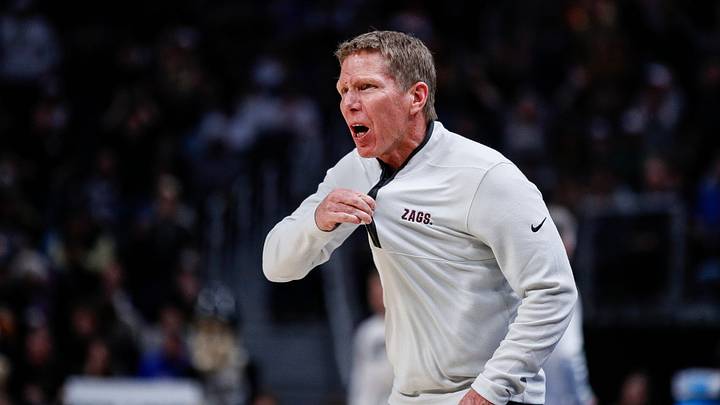
July 1 came and went without a buzzer-beater or a championship celebration, but it may end up being one of the most important dates of the 2026-27 college basketball season.
A total of 27 Division I programs officially changed conferences, reshaping the map of college basketball from the power leagues down through the mid-major ranks. Some of the moves have been years in the making, but now they're finally official, and the ripple effects could impact everything from NCAA Tournament bids to conference title races and future recruiting battles.
While Gonzaga's long-awaited move to the Pac-12 naturally grabbed the headlines, the bigger story is how one conference decision triggered changes across nearly every level of Division I basketball.
The new Pac-12 is finally here
For the first time since its near-collapse, the Pac-12 officially begins its new era.
The rebuilt conference won't resemble the league that once featured UCLA, Arizona, Oregon and USC, but it has quietly assembled one of the strongest basketball collections outside of the traditional power conferences.
The new Pac-12 includes:
- Gonzaga
- San Diego State
- Boise State
- Colorado State
- Utah State
- Fresno State
- Oregon State
- Washington State
- Texas State
That lineup immediately gives the conference credibility.
Gonzaga arrives as one of the nation's preseason favorites, while San Diego State has become one of college basketball's most consistent postseason programs over the last decade. Boise State, Colorado State and Utah State have all become regular NCAA Tournament contenders, giving the league quality from top to bottom.
Instead of trying to compete with the SEC or Big 12 overnight, the Pac-12 may have found a more realistic identity: the premier basketball-focused conference outside the traditional power structure.
Gonzaga's move changes everything
No single move carries more significance than Gonzaga leaving the West Coast Conference.
For more than two decades, the Bulldogs defined the WCC. Every season began with one question: Could anyone challenge Gonzaga?
Now that question disappears entirely.
Mark Few's program enters a league that should provide far more opportunities for Quad 1 and Quad 2 victories while also preparing the Bulldogs for March in ways the WCC often couldn't. The nightly competition becomes tougher, but so does Gonzaga's résumé.
The Bulldogs didn't simply join a new conference. They gave the Pac-12 an immediate national brand.
The Mountain West isn't disappearing
Losing five cornerstone programs would cripple most conferences.
Instead, the Mountain West responded quickly by adding Hawaii, UC Davis and UTEP.
No, those additions don't immediately replace Gonzaga's new conference mates, but they keep the league stable while preserving its standing as one of the nation's strongest mid-major basketball conferences.
The Mountain West may take a temporary step backward, but don't expect it to disappear from the NCAA Tournament conversation.
The domino effect reaches every level
Realignment didn't stop with the Pac-12 and Mountain West.
The West Coast Conference begins life after Gonzaga by adding Denver, with UC San Diego and UC Santa Barbara set to arrive next season.
The former WAC has officially become the United Athletic Conference, welcoming several former ASUN members and creating an entirely different league identity.
Meanwhile, the ASUN shrinks to eight schools, creating one of the smallest Division I conference races in the country. With fewer teams competing for an automatic NCAA Tournament berth, every conference game suddenly carries even greater significance.
Elsewhere, Northern Illinois joins the Horizon League, Cal Baptist and Utah Valley head to the Big West, Tennessee Tech moves into the Southern Conference, and several other leagues receive fresh faces that could quickly alter their competitive balance.
March Madness could look different because of these moves
Conference realignment isn't just about logos on a scoreboard.
It affects NET rankings, scheduling opportunities, NCAA Tournament résumés, television exposure, recruiting pipelines and coaching expectations.
Programs like Gonzaga will play stronger conference schedules. Schools entering new leagues must adjust to unfamiliar travel, new rivalries and different styles of play. Coaches will have to rebuild scouting reports while athletic departments adapt to entirely new competitive landscapes.
Some programs will immediately benefit. Others may need several seasons before they fully adjust.
One thing is certain: the conference map that college basketball fans knew just a few years ago continues to evolve.
The 2026-27 season won't simply introduce new players and new rankings. It will introduce an entirely different version of college basketball, and the effects of these 27 conference changes could be felt long after this season ends.
 Add us as a preferred source on Google