

Meta description:
College basketball fans recognize programs by their school colors, mascots and nicknames.
The Syracuse Orange, St. John's Red Storm and Marquette Golden Eagles are familiar names throughout the sport.
However, those identities haven't always existed.
Several recognizable college basketball programs previously competed under entirely different nicknames. Some changes resulted from concerns about cultural representation, while others reflected university branding decisions or attempts to create a more distinctive athletic identity.
One school even briefly adopted a new nickname before reversing course following considerable opposition.
Here are five college basketball programs with fascinating nickname histories that many fans might not know.
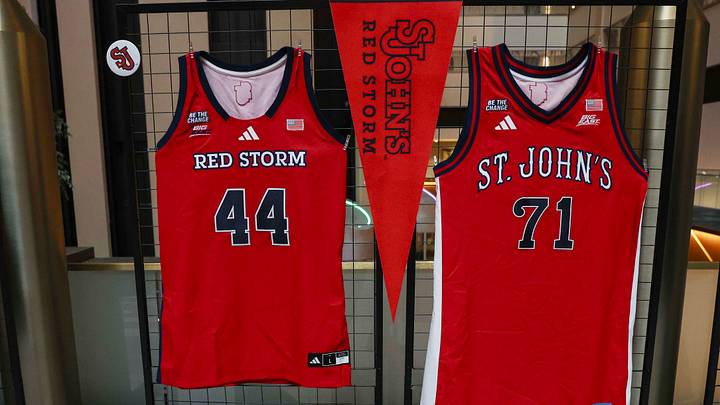
1. St. John's: From Redmen to Red Storm
St. John's has one of the most recognizable identities in Big East basketball.
The Red Storm nickname is closely associated with Madison Square Garden, New York City and the program's longstanding basketball tradition.
However, the university competed for decades under a different name.
St. John's athletic teams were previously known as the Redmen.
According to the university's official mascot history, the nickname originally developed because athletes wore red uniforms.
Over time, however, the name became associated with Native American imagery and symbols.
The university eventually decided to make a change.
In 1994, St. John's officially adopted the Red Storm nickname, retaining its traditional color while establishing a new identity.
The change came after the program had already experienced some of its greatest basketball accomplishments.
Chris Mullin starred for St. John's during the 1980s, helping the Redmen reach the 1985 Final Four.
Years later, the Red Storm identity became familiar to a new generation of fans.
The university also introduced its Johnny Thunderbird mascot in 2009 following a fan voting process.
The nickname change represents an important chapter in the history of one of college basketball's most recognizable programs.
2. Marquette: The school that briefly became the Gold
Marquette's nickname history includes one of the strangest branding episodes in college athletics.
The university competed as the Warriors from 1954 through 1994.
That identity included some of the greatest accomplishments in program history.
Marquette captured the 1977 NCAA national championship under legendary coach Al McGuire while competing as the Warriors.
In 1994, the university changed its nickname to the Golden Eagles.
The decision followed concerns about the use of Native American imagery associated with the previous identity.
However, the story didn't end there.
In May 2005, Marquette announced another nickname change.
For a brief period, the university adopted the name Gold.
The decision generated considerable criticism and opposition.
Marquette eventually reconsidered its direction, and on June 29, 2005, the university officially restored the Golden Eagles nickname.
The sequence created an unusual moment in the school's history.
Marquette had moved from Warriors to Golden Eagles, briefly attempted to become the Gold and then returned to Golden Eagles.
Today, the Golden Eagles nickname is firmly established, but the university's archived records preserve the unusual story of its short-lived alternative.
3. Syracuse: Why the Orangemen became the Orange
Syracuse basketball fans have long associated the program with its distinctive orange uniforms.
However, the university previously used separate nicknames for its men's and women's athletic teams.
Men's teams were known as the Orangemen, while women's teams competed as the Orangewomen.
That changed in May 2004.
Syracuse announced that all its athletic programs would use the unified nickname Orange.
The decision was part of a broader athletic branding initiative developed with Nike.
The university also introduced a new interlocking SU logo and a consistent visual identity across its athletic programs.
Unlike some other nickname changes, Syracuse's decision primarily involved creating a unified identity for its men's and women's teams.
The timing was especially interesting for basketball fans.
Syracuse had captured the 2003 NCAA national championship with Carmelo Anthony while the men's team was still known as the Orangemen.
The following year, the university adopted the nickname fans recognize today.
Syracuse's orange identity actually dates back much further, with the university selecting orange as its official color in 1890.
The 2004 decision therefore represented both a modernization of the athletic department and a return to one of the university's oldest traditions.
4. Miami University: From Redskins to RedHawks
Miami University in Ohio has one of the most significant nickname histories in college athletics.
The school previously competed under the Redskins nickname.
However, the university maintained a longstanding relationship with the Miami Tribe of Oklahoma, whose concerns eventually played a central role in changing the athletic identity.
In 1996, the Miami Tribe formally withdrew its support for the nickname and requested that the university discontinue its use.
Miami's Board of Trustees responded by beginning the process of selecting a replacement.
The university adopted the RedHawks nickname for the 1997-98 academic year.
The change reflected the school's decision to respect the tribe's position while establishing a new athletic identity.
Miami's basketball program soon produced one of its most memorable seasons under the new name.
Led by Wally Szczerbiak and coach Charlie Coles, the RedHawks advanced to the Sweet 16 of the 1999 NCAA Tournament.
The team defeated Utah in the second round, creating one of the most memorable victories in program history.
That success helped introduce the RedHawks identity to a national basketball audience.
The university's nickname history remains an important example of how relationships between institutions and Native American communities have influenced college athletics.
5. Arkansas State: A basketball halftime ceremony marked the end of an era
Arkansas State's transition from Indians to Red Wolves included an especially memorable basketball connection.
The university competed under the Indians nickname for 77 years.
However, concerns surrounding Native American imagery and NCAA policies eventually led Arkansas State to consider a different athletic identity.
A university committee reviewed potential replacements before recommending a wolf-related nickname.
The transition reached a significant moment on February 28, 2008.
During halftime of a men's basketball game against Louisiana-Monroe, Arkansas State officially retired its Indians nickname and associated mascot imagery.
The university unveiled its new Red Wolves identity during a ceremony on March 13.
Arkansas State began competing under the Red Wolves nickname during the 2008-09 academic year.
The change affected every athletic program, including men's basketball.
For longtime supporters, it represented the end of a familiar era.
For younger fans, the Red Wolves identity has become the only nickname they have known.
The basketball halftime ceremony remains a distinctive part of the university's athletic history.
College basketball traditions continue to evolve
College basketball programs develop identities through generations of players, coaches and supporters.
Nicknames become associated with unforgettable victories, legendary athletes and the traditions surrounding a university.
However, these five schools demonstrate that athletic identities can change significantly over time.
St. John's, Miami and Arkansas State adopted new nicknames after reconsidering the use of Native American references and imagery.
Syracuse unified its men's and women's athletic identities, while Marquette experienced an unusually brief experiment with the Gold nickname.
Despite those changes, the basketball traditions associated with each university continued.
The players, coaches and historic accomplishments remained part of the programs' legacies.
For fans entering the 2026-27 season, these stories offer an interesting reminder that even the most familiar college basketball identities have histories worth exploring.
 Add us as a preferred source on Google