

College basketball has become increasingly focused on offensive production. Teams want shooters, versatile playmakers and athletes who can create advantages in transition. Those qualities are important, but they don't guarantee postseason success, particularly when the NCAA Tournament arrives and opponents have additional time to prepare.
Familiar offensive actions become easier to anticipate, transition opportunities can disappear and teams must find ways to win when shots aren't falling. That is when defense becomes particularly important. Several recognizable programs enter the 2026-27 season with questions about their ability to consistently prevent opponents from scoring.
Some play at exceptionally fast tempos, which naturally increases the number of points allowed. Others struggled with rebounding, perimeter defense or maintaining consistent defensive intensity. These five programs aren't necessarily the worst defensive teams in college basketball, but they have meaningful expectations and specific concerns that deserve attention before the season begins.
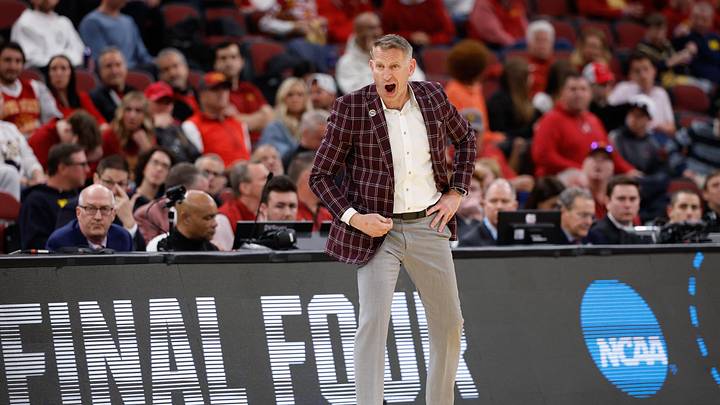
Alabama: Can the Crimson Tide win when the offense slows down?
Alabama averaged an impressive 91.2 points per game during the 2025-26 season, helping Nate Oats' program remain among the SEC's most dangerous teams. However, the Crimson Tide also allowed 83.4 points per game. Alabama plays at a fast pace, so raw scoring averages don't provide a complete picture of its defensive quality because more possessions generally produce more points for both teams.
Still, the numbers reveal an important challenge. Opponents shot 43.3 percent from the field against Alabama and collected 40.3 rebounds per game. The Crimson Tide averaged 40.6 rebounds themselves, producing only a narrow advantage on the glass and suggesting that defensive rebounding and preventing efficient interior opportunities should remain important priorities.
Alabama's offensive approach can overwhelm opponents when the team is making perimeter shots. But March Madness frequently produces games in which even elite offenses experience prolonged scoring droughts, and the Crimson Tide need to demonstrate that they can consistently create defensive stops during those stretches. If Alabama becomes more reliable defensively without sacrificing its offensive identity, its championship potential becomes considerably more interesting.
Georgia: Will the Bulldogs' fast pace create too many defensive problems?
Georgia was another exceptionally productive offensive team last season, averaging 89.4 points per game while allowing 79.8. Mike White's team finished 22-11 overall and earned another NCAA Tournament appearance. The challenge involves understanding how Georgia's aggressive approach influences the other end of the floor.
The Bulldogs forced 453 turnovers last season and averaged 8.4 steals per game, demonstrating their ability to create disruption and generate transition opportunities. However, opponents also shot 44.3 percent from the field. Georgia's defensive pressure can create easy baskets when it works, but opponents capable of handling that pressure may find opportunities against an unsettled defense.
The Bulldogs also finished with only a slight rebounding advantage, creating another important question about their defensive consistency. Can Georgia maintain its aggressive identity while becoming more effective at preventing quality shots after opponents break the initial pressure? White has assembled a program capable of competing in the SEC, but postseason success will require more than simply generating turnovers.
Memphis: Can Penny Hardaway establish a more dependable defensive identity?
Memphis enters the season attempting to recover from a disappointing 13-19 campaign. The Tigers averaged 75.2 points while allowing 76.7 during the 2025-26 season, numbers that reveal how difficult it became to consistently control games. Memphis forced turnovers and generated steals, averaging 8.4 steals per contest, but its defensive effectiveness varied significantly depending on the location.
Late last season, Memphis reported that opponents were averaging 82.8 points in 11 road games compared with 69.2 points in 15 home games. That difference illustrates one of the most important challenges facing Penny Hardaway. Memphis must become more dependable away from FedExForum because a team that defends effectively only when supported by its home crowd will struggle to develop the consistency necessary for a successful postseason run.
The Tigers also allowed opponents to attempt 809 free throws last season while attempting 682 themselves. That disparity raises questions about defensive discipline and the ability to avoid unnecessary fouls. Memphis needs to establish an identity built around consistent effort, controlled aggression and improved execution, or even an improved offense might not be enough to produce the turnaround fans expect.
Ole Miss: Can Chris Beard fix a rebounding problem that keeps returning?
Ole Miss finished 15-20 last season, including a 4-14 record in SEC competition. The Rebels averaged 75.9 points per game while allowing 76.1, suggesting the program wasn't completely incapable of competing offensively. The bigger issue involved maintaining enough consistency to finish games successfully.
One defensive concern stands out because Ole Miss averaged 34.3 rebounds per game while allowing opponents to collect 37.1. That 2.8-rebound disadvantage might not appear overwhelming, but it becomes important when games are decided by a handful of possessions. Every defensive rebound prevents an additional scoring opportunity, while every offensive rebound allowed gives the opponent another chance to convert a missed shot.
The Rebels also allowed opponents to attempt 841 free throws, compared with 698 attempts of their own. When a team struggles to finish defensive possessions and repeatedly sends opponents to the foul line, it becomes difficult to establish control. Chris Beard has previously demonstrated that he can build highly competitive defensive teams, and restoring that identity in Oxford could make the Rebels considerably more competitive without requiring an extraordinary offensive transformation.
North Carolina: Can the Tar Heels become more disruptive?
North Carolina's defensive questions are different from those facing several other teams on this list. The Tar Heels allowed 71.6 points per game last season and limited opponents to 41.9 percent shooting, which are respectable figures. However, North Carolina also allowed opponents to make 34.7 percent of their three-point attempts, an area worth watching as the program attempts to compete with the ACC's strongest teams.
The Tar Heels averaged only 5.4 steals per game while forcing 9.4 turnovers. Those figures suggest North Carolina wasn't consistently creating additional possessions through defensive disruption. There is nothing inherently wrong with a conservative defensive approach because teams can succeed by protecting the paint, controlling the glass and forcing difficult shots without generating many steals.
However, Hubert Davis must determine whether the Tar Heels can create enough defensive advantages against elite opponents. North Carolina averaged 79.7 points last season, demonstrating that the program had sufficient offensive production to compete. Improving perimeter coverage while maintaining strong interior protection would provide an important foundation for making the defensive side equally dependable.
Defense could separate contenders from pretenders
These five programs face different challenges. Alabama must become more reliable when its offense isn't dominating, Georgia needs to balance pressure with half-court execution, and Memphis must establish consistency, particularly away from home. Ole Miss needs to improve its rebounding and defensive discipline, while North Carolina has an opportunity to become more disruptive and effective against perimeter shooting.
None of those improvements requires a complete philosophical transformation. They require better execution and a commitment to maintaining defensive standards regardless of how the offense is performing. The most successful teams in March aren't always the ones that score the most points in November, and for these five programs, that distinction could determine whether the 2026-27 season becomes memorable for the right reasons.
 Add us as a preferred source on Google