

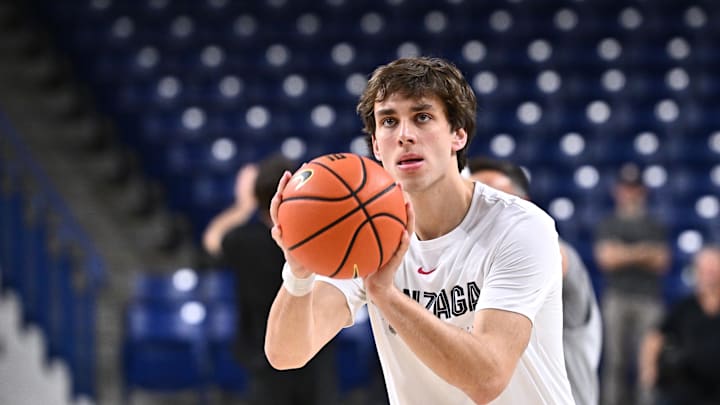
Gonzaga’s season hit an unexpected speed bump this week after learning that forward Braden Huff will miss four to eight weeks with a left knee injury suffered during practice.
The Bulldogs remain one of the top teams in the country, but there is no question this loss changes the outlook in the short term. Huff was a key part of Gonzaga’s identity, especially on offense, and replacing what he brought to the floor will not be easy.
With conference play ramping up and March inching closer, Gonzaga now enters a stretch that will test its depth, flexibility, and mental toughness.
Why Huff’s Absence Matters So Much
Huff had turned into one of the most reliable players in college basketball this season. The 6-foot-10 junior was averaging 17.8 points and 5.6 rebounds per game while shooting better than 66 percent from the field, an elite number for a high-usage frontcourt player.
He was not just scoring on dump-offs or put-backs. Huff ran the floor, finished through contact, and punished smaller defenders inside. He scored 20 or more points eight times and capped a dominant December stretch with a 37-point performance that showed just how difficult he had become to guard.
Alongside Graham Ike, Huff gave Gonzaga a steady inside presence that forced defenses to pick their poison. That balance is now gone, at least for the next several weeks.
What Gonzaga Looks Like Without Him
Head coach Mark Few now has some real decisions to make. The most obvious change is that Graham Ike becomes the clear centerpiece of the offense. Ike has been excellent all season, but without Huff next to him, defenses can key on him more aggressively.
Gonzaga does have options, even if none fully replace Huff’s production. Jalen Warley is likely to see a bigger role, especially in lineups focused on defense and rebounding. Tyon Grant-Foster becomes even more important as a scorer who can create his own shot and help carry the offense when Ike sits.
There is also the size factor. Ismaila Diagne has not played heavy minutes this season, but his presence could matter against bigger teams, especially later in conference play when matchups tighten.
Timing Is Everything as March Approaches
The wide recovery window adds uncertainty. If Huff returns closer to the four-week mark, he could be back before the regular season wraps up. If it stretches toward eight weeks, Gonzaga may not see him again until the NCAA Tournament, if at all.
That makes the next month critical. Gonzaga showed maturity with a strong road win at Washington State shortly after the news broke, but tougher games are ahead. They are at Seattle on Saturday, before hosting Pepperdine, San Francisco and Saint Mary's to finish the month.
The Bulldogs will need consistent contributions across the lineup and steady leadership to avoid slipping while Huff recovers.
For now, Gonzaga moves forward knowing the goals have not changed, even if the path looks different. How the Bulldogs handle life without Braden Huff may ultimately shape how far this team can go when March arrives.
 Add us as a preferred source on Google