

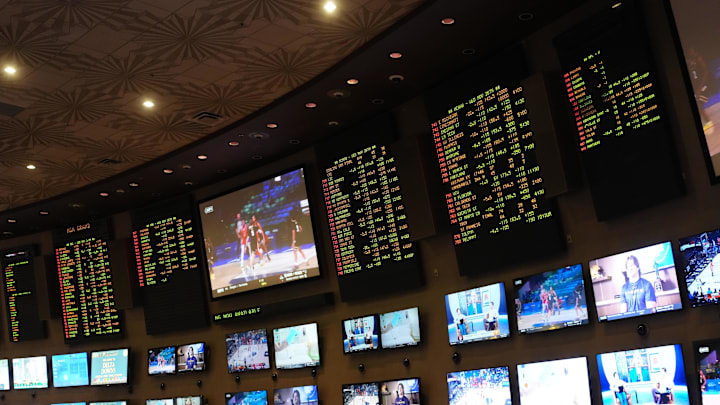
College basketball woke up to some very uncomfortable news this week, the kind that forces everyone around the sport to think a little. A newly unsealed federal indictment outlines a sweeping point shaving operation that allegedly reached deep into Division I programs, involving dozens of players and dozens of games over multiple seasons. It is a reminder that the game’s biggest challenges are not longer limited to what happens on the court
Federal prosecutors say the case centers on a betting scheme that pulled in more than 39 college players from at least 17 Division I teams. According to court documents, the activity led to nearly 30 games being manipulated, not to determine winners, but to quietly influence point spreads. The indictment was unsealed Thursday in Pennsylvania and immediately sent shockwaves through college basketball circles.
Schools included in the indictment: Nicholls State, Tulane, Northwestern State, St. Louis, La Salle, Fordham, DePaul, Robert Morris, Southern Miss, North Carolina A&T, Kennesaw State, Coppin State, New Orleans, Abilene Christian, Eastern Michigan and Alabama State. https://t.co/2NFaCGzVtZ
— Pete Thamel (@PeteThamel) January 15, 2026
The quiet manipulation behind the bets
Unlike classic game fixing, this scheme allegedly focused on margins. Players were not asked to lose games outright. Instead, they were accused of doing just enough to swing a betting line. A missed free throw here, a careless turnover there, or a late defensive lapse could be all it took.
Prosecutors say players were paid anywhere from $10,000 to $30,000 for their involvement. Those payments were allegedly tied to bets placed on games the group believed were safely influenced. To the casual fan or bettor, the games looked normal. The manipulation was designed to blend in.
Updating story on college basketball point-shaving indictments unsealed today: https://t.co/NponXwhyib
— David Payne Purdum (@DavidPurdum) January 15, 2026
From overseas to college gyms
According to the indictment, the operation did not begin in college basketball. Investigators say it started overseas in 2022, focusing on games in the Chinese Basketball Association. From there, the group allegedly shifted its attention to American college basketball, where large betting markets and limited player pay created new opportunities.
That transition marked a big-time turning point. Once college games became the target, the number of players involved reportedly grew, along with the number of games flagged by investigators.
BREAKING | NBC News: 20 people have been charged with rigging college basketball and Chinese Basketball Association games as result of a sweeping FBI investigation, according to a copy of a federal indictment just unsealed by federal prosecutors in Philadelphia.
— Tom Winter (@Tom_Winter) January 15, 2026
Players and organizers named
Fifteen of the men charged played college basketball during the past two seasons, with some allegedly still active this year. Two of the players had already drawn NCAA penalties months ago after being linked to fixed games involving New Orleans, a detail that now appears to be part of a much larger picture.
Five other defendants are described as organizers who handled payments and betting logistics. Two of those individuals were previously charged in a separate federal case connected to NBA-related gambling schemes, suggesting a pattern that crossed multiple levels of basketball.
A former NBA player was also mentioned in the indictment but was not charged in this case. Prosecutors noted that he faces charges elsewhere.
Why this case hits differently
The language used by prosecutors is blunt. They argue that the scheme cheated sportsbooks and everyday bettors alike by corrupting games that were supposed to be decided by honest effort and fair competition. That accusation cuts to the heart of what college sports sell to fans.
As legal betting continues to grow, this case highlights how vulnerable college athletes can be to outside influence. Despite increased education and monitoring from schools and conferences, the indictment suggests those efforts are being tested in real time.
What the fallout could look like
This case is still unfolding, and the legal process could stretch on for months or longer. More details are expected to emerge, and additional penalties from the NCAA are likely. Lifetime bans are on the table for players found to be deeply involved.
Beyond individual punishments, the bigger impact may be felt across the sport. Trust, once shaken, is difficult to restore. As college basketball pushes forward this season, the shadow of this investigation will linger, serving as a long-lived cautionary tale about the cost of compromised integrity in the game.
 Add us as a preferred source on Google