

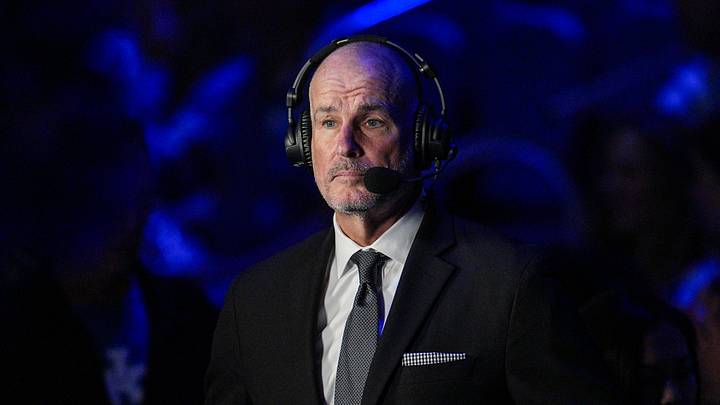
The longtime ESPN analyst continues to push back against the panic surrounding NIL, transfer portal movement and rising roster costs, and honestly, a lot of his arguments are getting harder to dismiss.
College basketball has spent the last several years in a nonstop identity crisis. Every offseason seems to bring another wave of complaints about NIL money, transfer portal chaos, tampering accusations and ballooning roster costs. Coaches complain publicly. Fans talk about the sport being “ruined.” Television debates turn into hour-long arguments about whether players are making too much money.
Then Jay Bilas shows up and says the part many people in college basketball still refuse to admit.
The sport might actually be better now.
That is what makes Bilas such a fascinating voice in this era. While much of college basketball clings emotionally to an older version of the sport, Bilas keeps looking directly at the realities of modern athletics and asking a simple question: why are players the only people everyone suddenly wants to limit financially?
His comments this week hit that exact nerve again.
When discussing the rising cost of college basketball rosters, Bilas pointed out something almost absurdly obvious once you hear it out loud. Coaching staffs at major programs often make more money than the players themselves. Yet nobody treats those salaries like a threat to the integrity of the sport.
That contrast sits at the center of nearly every modern college basketball debate.
The sport never had a problem with money until the players got some
What makes this conversation uncomfortable for many fans is that college sports has always been built on enormous amounts of money. The NCAA tournament became a billion-dollar television machine years ago. Conference television contracts exploded. Coaches became multimillionaires. Facilities turned into luxury resorts. Athletic departments spent aggressively for decades without much public outrage.
The money itself was never the issue.
The issue was who controlled it.
For generations, the structure of college sports allowed nearly everybody to profit except the athletes driving the business. Coaches could leave for bigger contracts whenever they wanted. Schools openly poached coaches from other programs. Television executives made fortunes. Administrators expanded departments and facilities endlessly.
Players, meanwhile, were told compensation would somehow damage the purity of the game.
That argument looks weaker every single year.
Bilas has consistently challenged that hypocrisy better than almost anyone covering the sport nationally. He keeps coming back to the same point: if a musician, actor or entrepreneur can profit from their talent while in school, why were athletes the only students expected to operate under completely different rules?
The more you sit with that question, the harder it becomes to defend the old system.
Older players are making the basketball better
One of the most interesting parts of Bilas’ argument is that he believes NIL has actually improved the on-court product.
And honestly, there is evidence everywhere.
For years, college basketball constantly lost elite players after one season because there was little financial incentive to stay in school. Rosters turned over rapidly. Teams often spent half the season trying to figure themselves out before March arrived.
Now players can make real money without immediately leaving for professional basketball.
That changes everything.
Experienced guards stay longer. Big men develop over multiple seasons. Coaches can retain star players instead of constantly rebuilding from scratch. Teams look older, tougher and more polished than they did during the peak one-and-done era.
Bilas sees that as a massive positive for the sport.
The irony is that many fans asking for players to “stay in school longer” are now criticizing the exact system that finally made that possible.
The coaching hypocrisy might be the biggest issue of all
The part of Bilas’ argument that probably hits most with players is his stance on coaches.
College basketball has spent the last several years obsessing over transfer portal tampering while openly accepting coach movement as completely normal business behavior. Every spring, programs pursue coaches under contract. Agents leak interest to the media. Coaches leverage openings into raises and extensions.
Nobody questions the morality of it.
Nobody accuses coaches of lacking loyalty.
But when players transfer for more opportunity, better fits or bigger NIL deals, the reaction suddenly changes. Fans complain about commitment. Media personalities question character. Entire debates emerge about whether athletes are becoming too empowered.
Bilas sees the double standard clearly.
And honestly, he is right to call it out.
If coaches are allowed to maximize career opportunities without criticism, it becomes difficult to argue players should operate under stricter emotional expectations.
College basketball is not going backward
There is still a group of fans hoping college basketball eventually returns to what it used to be. That version of the sport is gone.
Roster construction now looks much closer to professional free agency. International recruiting is exploding. NIL collectives operate almost like salary structures. Veteran players move strategically between programs looking for the best basketball and financial situations available.
The sport already crossed into a professional era. Everyone just keeps arguing about how honest they want to be about it.
Bilas understands that reality better than most.
That does not mean every part of the system works perfectly. There are obvious problems that still need structure and regulation. Tampering concerns are real. Some roster spending has become excessive. The portal creates instability every offseason.
But the larger point still stands.
College basketball did not suddenly become corrupted because players gained financial leverage. The sport is simply adjusting to a world where the athletes finally have power they were denied for decades.
And that adjustment is making a lot of people uncomfortable.
 Add us as a preferred source on Google