

There are few games in college basketball capable of attracting national attention simply because of the names on the uniforms. Kansas against Kentucky is one of them.
The Jayhawks and Wildcats meet Tuesday at 9:30 p.m. ET in the second game of the Champions Classic at Chicago's United Center. The contest follows Duke against Michigan State, completing a doubleheader featuring four programs responsible for 19 NCAA championships.
Kansas and Kentucky enter the event with a rivalry built on extraordinary tradition. The Jayhawks have won four national championships, while the Wildcats lead the group with eight. Both programs have helped define college basketball's national identity through generations of celebrated players, coaches and postseason success.
Tuesday's meeting offers another chapter, but it also presents a more immediate question: Which program is better prepared to compete against elite opposition during the opening weeks of the 2026–27 season?
Kansas has set the Champions Classic standard
Kansas enters Tuesday with a 9–5 record in the Champions Classic, the best mark among the event's four participating programs. That success reflects the Jayhawks' ability to perform in high-profile early-season environments under Bill Self.
The event has never been an easy assignment. Each edition requires the participating programs to face another national power before teams have fully established their rotations and offensive chemistry.
Kansas has repeatedly navigated that challenge, using the event to develop confidence and identify the combinations most likely to succeed later in the season.
Self's program has also benefited from a tradition of experienced leadership and demanding defensive standards. Those qualities are especially valuable in November, when even talented teams can struggle with communication, turnovers and shot selection.
The Jayhawks won't win Tuesday simply because of their event history. However, their record demonstrates that the program understands the demands of this stage.
Kentucky has an opportunity to change its Champions Classic narrative
Kentucky enters with a 6–8 record in the event, a surprising figure considering the Wildcats' national stature and championship history.
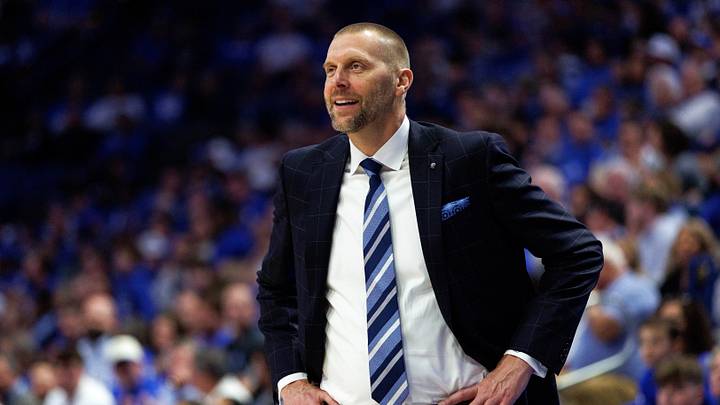
That record doesn't diminish the program's accomplishments, but it creates an interesting storyline for Mark Pope. The Wildcats have an opportunity to improve their Champions Classic standing while securing an important early victory against one of the country's most respected programs.
Kentucky's challenge will involve maintaining offensive balance against a Kansas team capable of making possessions difficult. The Wildcats cannot afford to rely exclusively on individual shot-making if the Jayhawks establish defensive control.
Equally important will be Kentucky's ability to handle the game's emotional swings. High-profile neutral-site contests often produce sudden scoring runs, and teams that remain composed during those stretches tend to give themselves a better opportunity to win.
Pope has emphasized the importance of building a team capable of competing at the highest level. Tuesday provides an early chance to measure that ambition against a program with comparable expectations.
The rivalry is bigger than one November result
The Champions Classic has featured Duke, Kansas, Kentucky and Michigan State since 2011, creating an annual opportunity for some of college basketball's most recognizable brands to share the national stage.
The event is scheduled to continue through 2028, with each participating team rotating opponents so that it faces the other three programs once every three years.
That structure gives Kansas–Kentucky additional significance. Their meeting isn't an ordinary annual conference game, and another Champions Classic encounter between the programs is not guaranteed in the immediate future.
The venue adds another layer of tradition. The United Center is hosting the event for the fifth time, joining Madison Square Garden as its most frequent location.
The result will matter to the national conversation, particularly as analysts begin evaluating which teams possess the depth, discipline and talent required for a deep NCAA Tournament run.
November offers a glimpse, not a final verdict
A Champions Classic victory can provide confidence and an impressive early résumé result, but it doesn't guarantee anything about March. The four participating programs have each reached the Final Four during the event's history, and their postseason accomplishments extend well beyond their November records.
That is precisely what makes Tuesday interesting. Kansas and Kentucky are programs accustomed to being judged by championships, yet they must first determine how their current teams perform against opponents with comparable resources and expectations.
Kansas has the stronger Champions Classic record. Kentucky has an opportunity to narrow that gap and establish early momentum under Pope.
When the ball goes up in Chicago, those historical numbers will become background information. What matters most is which team executes when the game becomes difficult.
For college basketball fans, the opportunity to watch that question unfold is reason enough to make Kansas–Kentucky one of Tuesday's must-see games.
 Add us as a preferred source on Google