

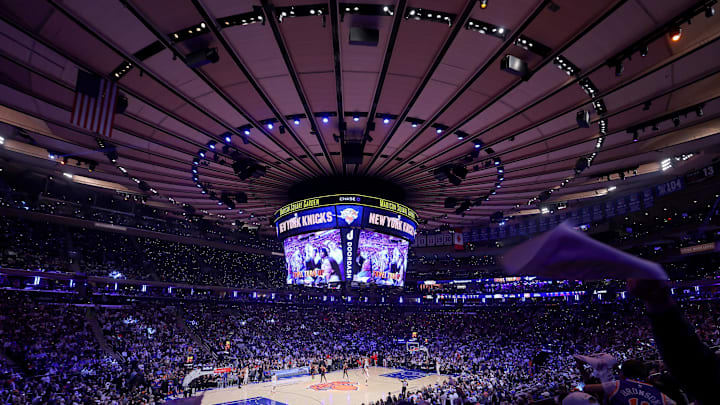
There are bigger arenas across the country. There are louder student sections and newer buildings designed with every modern advantage. But when college basketball wants to feel important, truly important, it still ends up in one place: Madison Square Garden.
This week delivered another reminder.
Two marquee non-conference games were added to the 2026-27 calendar. Arizona Wildcats will meet St. John's Red Storm in December, while Michigan Wolverines will take on Duke Blue Devils later that month in a high-profile showcase.
Different programs. Different stakes. Same stage.
That’s not by accident.
The Garden isn’t just a venue, it’s part of the moment
You can schedule these games anywhere. Las Vegas. Atlanta. Even on-campus sites with packed student sections.
But Madison Square Garden changes the tone.
The lighting feels tighter. The court looks cleaner. Every possession seems to carry a little more weight. It is one of the few places in the sport where a December game can feel like something much bigger than it is.
That’s why programs keep coming back.
Arizona and St. John’s could have played a traditional home-and-home. Michigan and Duke could have met in another neutral event. Instead, they chose the one place that guarantees attention.
These matchups are built for a stage like this
Arizona entering a national spotlight game in New York carries a different kind of pressure. This is a program that expects to compete deep into March, and games like this help shape that identity early.
For St. John’s, it’s even more personal. The Garden is part of the program’s identity. Big games are not just opportunities, they are expectations.
Then there’s Michigan and Duke, a matchup that already brings history and brand power. Put that game at Madison Square Garden and it instantly becomes one of the most anticipated non-conference showdowns of the season.
The building amplifies everything.
The Garden still creates moments that last
What separates Madison Square Garden is not just tradition, it is memory.
This is where players introduce themselves to the national audience. Where teams prove they belong. Where early-season performances can follow a program all the way into March.
A big night here travels differently. It sticks.
For players, it is a chance to have that moment. For coaches, it is a measuring stick. For fans, it is a reminder of what college basketball looks like when everything feels just a little bigger.
Even in December, it feels like March
College basketball spends months building toward the NCAA Tournament. But Madison Square Garden has a way of speeding that process up.
The urgency feels real. The atmosphere feels elevated. The games feel meaningful before the calendar says they should.
You do not need elimination stakes to feel it. The setting takes care of that.
In a changing sport, this hasn’t changed
College basketball is changing quickly. The sport is experimenting with new venues, international games, and streaming-first showcases. The way fans watch and experience the game is shifting.
But through all of that, one thing remains steady.
When the sport wants a game to feel big, it still goes to Madison Square Garden.
Arizona vs. St. John’s will make sure it hits. Michigan vs. Duke will too.
Because no matter how much changes around the sport, the formula for a marquee moment hasn’t.
Put great teams on the floor.
Give them a national stage.
And when it really matters, bring them to the Garden.
 Add us as a preferred source on Google