

The landscape of college basketball is constantly evolving. There have never been more ways to build a winning roster, and every program approaches roster construction differently. The transfer portal, NIL, and the rise of international recruiting have shattered much of the sport's normalcy.
Traditional powerhouses like Kansas, Kentucky, North Carolina, and UCLA have all been absent from the last four Final Fours dating back to 2023, a sign that name recognition alone no longer generates as much success as it used to.
Using transfer data sourced from Verbal Commits, the table below highlights the explosive growth of the transfer portal in recent years:
Season (heading into) | Number of Transfers | Year-Over-Year Increase |
|---|---|---|
2025-26 | 2,652 | 27.07% |
2024-25 | 2,087 | 20.99% |
2023-24 | 1,725 | 4.54% |
2022-23 | 1,650 | -0.24% |
2021-22 | 1,654 | 71.04% |
2020-21 | 967 | 1.04% |
2019-20 | 957 | N/A |
In just a handful of years, the portal has gone from a secondary thought to the primary driver of roster construction. Each team made it to Indianapolis in a slightly different way, but they all centered around a philosophy that's become essential to winning at the highest level: balance.
The core philosophy: Balance
In today's college basketball landscape, the most successful teams aren't built through one pipeline. Instead, they're built through all of them, each one offering its own unique advantages.
The talent pool available to teams has never been larger. Maximizing every avenue of recruiting gives programs access to the deepest talent pool while creating extra flexibility, considering that each pipeline requires different efforts and timelines.
Different paths, similar results
Looking at the Final Four teams this season, there is a mix of all three recruiting spots. While each team prioritized balance, each leaned into specific strengths.
UConn: Develop and reinforce
UConn continues to shine in high school recruiting and development. After a second season in Storrs, Tarris Reed has turned into a beast, and Dan Hurley rounded out the roster with two portal guards in Silas Demary and Malachi Smith. Rather than overhauling the roster, UConn fills gaps precisely while maintaining a powerful form of continuity.
Illinois: Embracing international recruiting
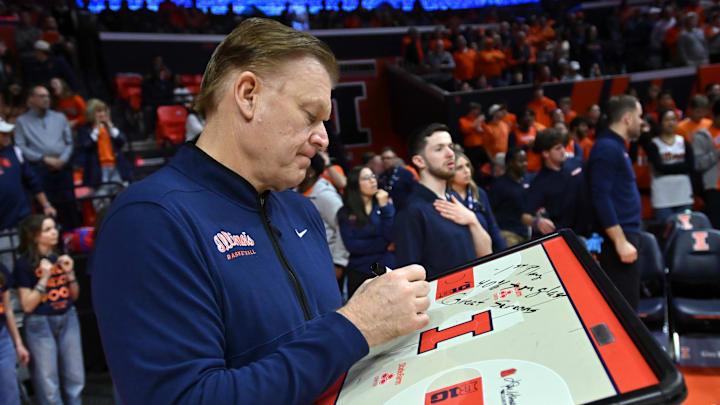
Illinois has pioneered and legitimized international recruiting. Brad Underwood and the Fighting Illini have established themselves far and above every other program in the country in a new pool of players to recruit. Aside from Keaton Wagler, many players in their rotation have had international experience or have stuck with the program for multiple years after transferring. Illinois became the most fundamentally unique team in the country this season, which made them one of the best when firing on all cylinders.
Arizona: Blending youth and experience
Arizona has core players like Tobe Awaka, Jaden Bradley, and Anthony Dell'Orso who transferred over with multiple years of eligibility remaining. Their four explosive freshmen (two having prior international experience) complemented an older core perfectly, which has allowed Arizona to be an unstoppable force throughout the entire season.
Michigan: Mastering the portal
Dusty May mastered the portal this past season. He stayed committed to Yaxel Lendeborg all the way through his NBA draft testing. He perfectly identified and developed Elliot Cadeau and Aday Mara into studs. He even acquired Morez Johnson Jr. from Big Ten rival Illinois. May hit home runs on every swing he took. Their experience within the program came through their role players like Roddy Gayle, Nimari Burnett, and LJ Cason. Michigan identified the talent that fit, which makes their roster turnover feel more like a strength than a risk in hindsight.
What this means for the sport
There is no longer one blueprint to win, but the biggest mistake a program can make is limiting its approach. In today's game, a mix is required to gain any sort of advantage.
Programs like Michigan State and Marquette have remained committed to one method, which hasn't produced the same level of results as it once did, considering how good their coaching is. Any miss or slow development on a high schooler is much harder to fix when a team isn't as open to the portal. Tom Izzo is an elite enough coach to get the most out of what he has, but if he opened himself up to the portal just a little more, he could easily jump back into annual championship contention.
Even with Duke's consistent influx of the best freshman classes in the country, the risks of leaning too heavily that way have shown in recent tournaments. Talent alone isn't always enough. Without more balance, even Duke's most gifted rosters can fall short in crucial moments.
So what does it take?
This year's Final Four offers a clear framework to build an elite team:
- Transfers with multi-year value, not just one year production
- High-ceiling freshmen with NBA potential, including international prospects
- Prioritizing retention whenever possible, for leadership and culture-building
These principles aren't easy to execute, but the teams that do this will put themselves in the best position. It's no longer a choice between the portal, high school recruiting, or international scouting- it's a requirement to embrace everything. As the sport continues to change, that will only become more necessary.
 Add us as a preferred source on Google