

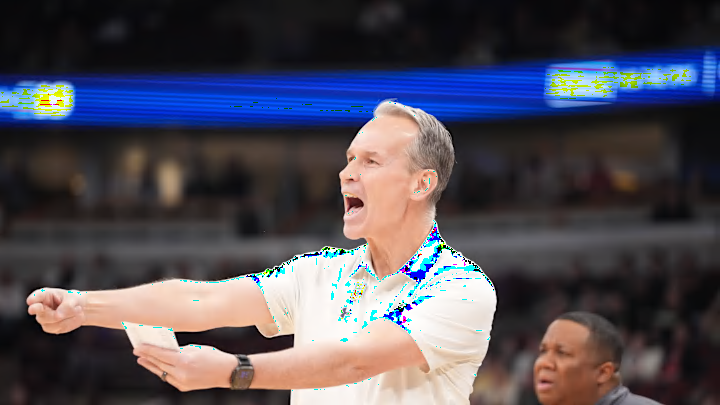
It has been a busy and, at times, chaotic offseason for the Northwestern Wildcats, and that reality shows up clearly in the transfer portal. After missing the postseason for a second straight year, head coach Chris Collins has gone heavily into the portal to change up the roster.
The result is a group that will look noticeably different next season. There is more size, more shooting, and a clear effort to add experienced college production across multiple positions. At the same time, the number of departures means this is closer to a reset than a simple reload.
Transfers in bring scoring, size, and versatility
Northwestern’s six incoming transfers each address a specific need, starting with scoring on the wing.
Jack Karasinski arrives after one of the most productive seasons in the country at Bellarmine, where he averaged 21.7 points per game while shooting efficiently from both the field and beyond the arc. His ability to create offense should immediately help replace lost production.
In the frontcourt, Luke McEldon and Colin Smith give the Wildcats two different but complementary options. McEldon is a high-efficiency interior presence who shot 64.5% from the field, while Smith stretches the floor after hitting more than 40% from three at UC Santa Barbara. Okku Federiko adds another layer of versatility, bringing starting experience and the ability to contribute on both ends.
The backcourt additions focus on depth and shooting. LA Pratt, who averaged double figures the previous season before an injury-shortened year, gives Northwestern a bigger guard who can handle and score. Aleksej Kostic showed late-season growth at BYU and provides perimeter shooting, something the staff clearly prioritized.
Departures highlight the scale of the reset
While the additions are important, the number of outgoing players tells the bigger story.
Northwestern lost at least nine players to the portal, including key contributors like Tre Singleton, Arrinten Page, and Jayden Reid. Singleton was a freshman starter with long-term upside, while Page and Reid were major pieces in the rotation this past season.
That level of turnover creates challenges beyond just replacing stats. It impacts continuity, chemistry, and experience within the program. Several role players and depth pieces also moved on, leaving few holdovers from last year’s rotation.
What it means moving forward
The early picture of Northwestern’s roster suggests a team built differently than last season’s group. There is more emphasis on size across the frontcourt and more proven shooting on the perimeter.
At the same time, this is a roster that will need time to come together. With so many new pieces arriving at once, how quickly the group develops cohesion will be one of the biggest factors in determining how the 2026 to 2027 season unfolds.
 Add us as a preferred source on Google