

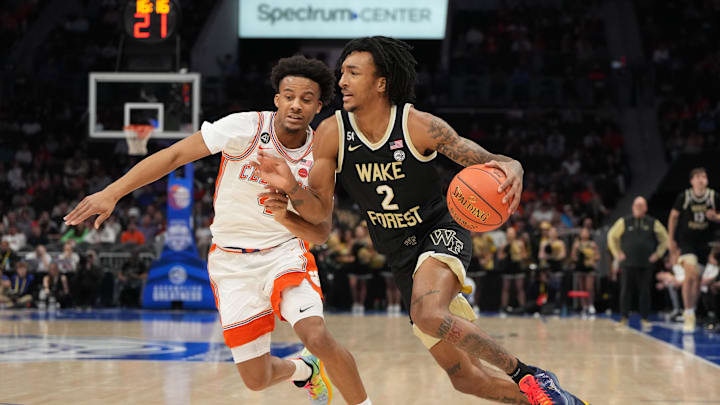
When Rick Barnes talks about breaking through in March, it usually comes down to one thing: having enough offense when it matters most. For years, Tennessee has been tough, disciplined, and defensively elite. What they have not always had is a go-to scorer who can take over a game when the tournament slows down. That might be changing in a real way.
Juke Harris gives Tennessee the scoring punch it has been missing
The addition of Juke Harris from Wake Forest is not just another portal win. It is the kind of move that can raise expectations for this program. Harris is coming off a breakout sophomore season where he averaged 21.4 points and 6.5 rebounds per game while starting all 35 games. He made one of the biggest jumps in the country, going from a complementary freshman piece to a primary option who could carry an offense for long stretches.
NEWS: Wake Forest transfer guard Juke Harris has committed to Tennessee, he told @On3.
— Joe Tipton (@JoeTipton) May 4, 2026
The 6-7 sophomore averaged 21.4 points and 6.5 rebounds per game this season. Harris, who has been projected as an early second-round pick, tells @On3 he will also be withdrawing from the NBA… https://t.co/cBkEKLoNKf pic.twitter.com/cmDuVxI53b
That growth showed up in more than just numbers. Harris became a confident shot creator, someone defenses had to account for every possession. His ability to score in bunches is exactly what Tennessee has lacked in key tournament moments, when halfcourt execution becomes everything and games tighten up late.
A fit that makes sense in multiple ways
Harris brings versatility more than anything else, and that is where the fit becomes especially interesting. At 6 foot 7, he can operate as a wing scorer, run off screens, handle the ball in pick and roll situations, or simply isolate and create when the offense breaks down. Tennessee has not consistently had that kind of offensive flexibility, and it changes how opponents will have to prepare.
He is not a traditional facilitator, but he plays under control and does not force mistakes. He rebounds at a high level for his position and competes defensively, which will matter in a system that demands accountability on that end. Even his perimeter shooting, which sits around the low 30s, comes with volume and confidence, two traits that often translate well once players settle into a structured system like Barnes runs.
Why this move feels bigger than just another transfer
Tennessee’s recent success tells the story. Three straight Elite Eight appearances show a program that knows how to win, defend, and handle March pressure. But they also highlight what has been missing in those final steps. The Vols have not always had the player who can take over when everything else stalls.
That is why this addition stands out. Harris is not just another piece. He is a direct answer to the biggest question surrounding Tennessee’s ceiling. If he can be the player who creates offense late in games, the kind of player who forces defenses to react instead of dictate, then this roster looks different in a meaningful way.
For Tennessee, the goal is no longer just getting back to where they have been. It is about finally pushing through. Harris gives them a real chance to do exactly that.
 Add us as a preferred source on Google