

There was a time when Tennessee women’s basketball didn’t need context. It didn’t need projections or preseason rankings to validate it. Under Pat Summitt, the Lady Vols were the measuring stick. Eight national championships, 18 Final Fours, and a presence in every NCAA tournament since its inception created something bigger than just a program. It became the foundation of the sport itself.
That consistency wasn’t accidental. Summitt’s teams played the toughest schedules, embraced pressure, and built identities around toughness and discipline. Players like Chamique Holdsclaw, Tamika Catchings, and Candace Parker didn’t just win titles, they defined eras. Tennessee wasn’t chasing greatness. It was greatness.
The slow drift away from the top
Since the last championship in 2008, the program hasn’t disappeared, but it has changed. Tennessee has remained relevant with consistent tournament appearances and occasional deep runs, yet the dominance that once felt inevitable has faded. The sport evolved, and other programs adapted faster.
The rise of programs like South Carolina, combined with the sustained excellence of UConn Huskies, shifted the national landscape. Tennessee was no longer the center of it. Instead, it became one of many teams trying to break through in a much more competitive and balanced era.
That shift matters because it redefines expectations. For most programs, staying in the Top 25 is success. For Tennessee, it still feels like a step short.
A complete reset, not a reload
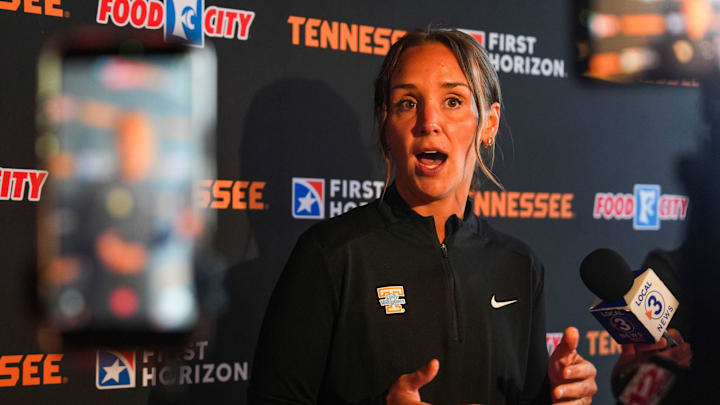
That context makes what’s happening now even more striking. Under Kim Caldwell, Tennessee isn’t tweaking its roster. It’s rebuilding from scratch. Entering the 2026-27 season, there are no returning players from last year’s team. Not one.
In today’s transfer portal era, that kind of turnover is possible, but it’s still rare. Caldwell leaned into it, bringing in a wave of transfers and new additions to construct a roster built around pace, spacing, and effort. Players like Avery Mills, Aaliyah Moore, Kaylene Smikle, and Jada Eads headline a group designed to fit a specific identity rather than simply collect talent.
It’s a bold approach. It also comes with obvious challenges. Chemistry has to be built quickly, roles need to be defined on the fly, and expectations don’t pause just because the roster is new.
What this team might actually be
Projecting Tennessee this season isn’t simple. On one hand, the talent is good enough to justify a Top 25 ranking. On the other, continuity is nonexistent, and that usually matters more than anything else in college basketball.
This team could be dangerous if things click early. The style Caldwell wants to play, fast, aggressive, and spacing-oriented, can give opponents problems. But it also requires discipline and cohesion, things that usually take time to develop.
That tension is what makes Tennessee so intriguing. There’s a real ceiling here, but there’s also a wide range of possible outcomes.
You can’t rebuild Tennessee without its history
Even with a completely new roster, the past doesn’t disappear. Tennessee still carries one of the most decorated legacies in the sport. The banners, the players, the expectations all remain part of the identity.
That creates pressure, but it also creates purpose. This isn’t just about building a competitive team for one season. It’s about reconnecting with what made Tennessee special in the first place while adapting to what the sport has become.
The path forward won’t look like the past. It can’t. But the goal still echoes the same idea that defined the program for decades.
Be relevant in March. Compete at the highest level. Matter when it counts.
This version of Tennessee is starting over, but it’s doing so with a clear understanding of what it’s trying to get back to.
 Add us as a preferred source on Google