

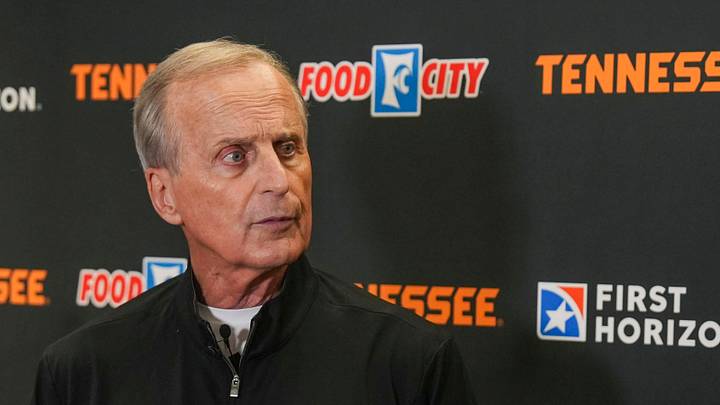
Tennessee’s season has not started, but Rick Barnes already must rethink part of his frontcourt plan.
Freshman forward Ralph Scott will undergo surgery Thursday for a left knee injury and is expected to miss six to eight months.
Rick Barnes has announced that Ralph Scott will be out for the next 6-8 months.
— Tennessee Basketball (@Vol_Hoops) September 2, 2026
Scott is set to undergo surgery to repair a left knee injury. pic.twitter.com/gNUqowZgpf
That recovery timetable likely removes Scott from meaningful consideration for the 2026-27 season.
The immediate loss is unfortunate. The larger concern is what it removes from Tennessee’s long-term development.
Ralph Scott offered Tennessee a different kind of upside
Scott arrived as a 6-foot-8 forward from Bermuda with the size and versatility to grow into several roles.
He was not necessarily expected to become Tennessee’s leading scorer immediately. He offered Barnes a developmental piece capable of defending multiple frontcourt positions and earning a larger place as the season progressed.
That gradual growth now must wait.
Barnes said Scott had been eager to begin his college career and emphasized that Tennessee would support him throughout the recovery. The program did not reveal when or how the injury occurred.
The Volunteers still possess enough established talent to build a productive rotation. Scott’s absence does not automatically derail their season.
It does reduce their flexibility.
SEC is a grind
Frontcourt depth becomes especially valuable during conference play, when foul trouble, minor injuries and difficult matchups can force coaches to expand their rotations unexpectedly. Scott might have provided energy, length and another defensive option in those situations.
Tennessee now must ask more from the remaining forwards.
The coaching staff also will need to decide how Scott’s rehabilitation fits into his longer eligibility timeline. A medical redshirt should preserve the season, but the more important objective is avoiding any pressure to accelerate a return.
Six to eight months extends into the spring. Even the optimistic end of that range would leave Scott attempting to regain conditioning and confidence after much of the season had passed.
The best decision is also the least exciting one. Tennessee should treat 2026-27 as a recovery year, allow Scott to rebuild carefully and preserve the talent that made him an intriguing addition in the first place.
 Add us as a preferred source on Google