

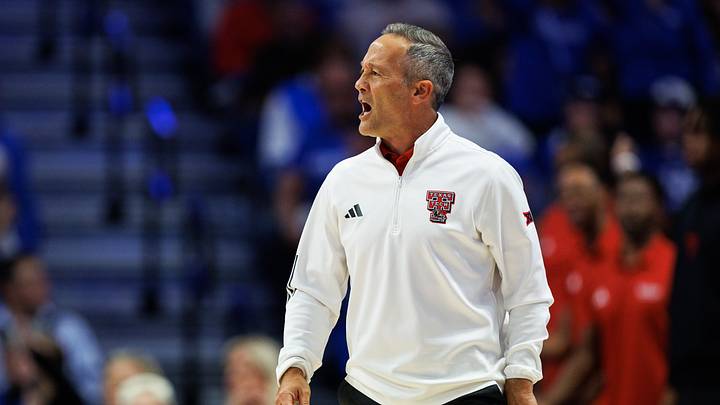
Illinois entered Tuesday night ranked third nationally and carrying considerable expectations into its first significant road test of the season. The Fighting Illini had overwhelmed their opening two opponents, but a visit to No. 16 Texas Tech provided a dramatically different challenge against a program capable of competing with the nation's best. By halftime, the Red Raiders had delivered an emphatic reminder that early-season rankings mean very little when a talented opponent establishes control in a difficult road environment.
Texas Tech built a 49–29 halftime advantage and eventually survived a furious Illinois comeback to secure an 84–78 victory at United Supermarkets Arena. The Red Raiders improved to 3–0 and extended their remarkable nonconference home winning streak to 49 games, while Illinois fell to 2–1 after suffering its first defeat of the season. Although the final margin was only six points, the game featured two dramatically different halves that revealed important information about both programs.
The result strengthened Texas Tech's credentials as a legitimate national contender, particularly because the Red Raiders controlled the opening half against one of the country's highest-ranked teams. Illinois, meanwhile, demonstrated considerable resilience after falling behind by as many as 22 points, but its inability to complete the comeback exposed several areas that Brad Underwood will need to address. For both teams, Tuesday offered the kind of demanding examination that can prove valuable long before March arrives.
Texas Tech overwhelmed Illinois before halftime
The Red Raiders established their advantage through aggressive defense, strong rebounding and the ability to capitalize on Illinois mistakes. Texas Tech used a decisive 21–3 run during the first half to turn a competitive contest into a commanding advantage, eventually leading by 22 points before the break. The Fighting Illini struggled with turnovers and perimeter shooting during that stretch, allowing the home team to establish the pace and build momentum in front of its crowd.
Cruz Davis played a major role in Texas Tech's impressive start, scoring 13 of his team-high 20 points during the opening half. Former Illinois guard Dra Gibbs-Lawhorn also contributed 13 first-half points and finished with 15, adding another compelling storyline to a game that already carried significant national attention. Their production helped Texas Tech establish offensive rhythm while the Red Raiders' defensive pressure prevented Illinois from responding consistently.
Illinois committed 11 turnovers during the opening half, and Texas Tech converted those mistakes into 22 points. The Red Raiders also controlled the glass, establishing an advantage that would remain important throughout the contest. For an Illinois team that had enjoyed considerable success during its opening two games, the combination of turnovers, rebounding problems and defensive breakdowns created a deficit that appeared almost impossible to overcome.
Illinois nearly completed a remarkable comeback
The Fighting Illini responded after halftime with a dramatically improved offensive performance, gradually reducing Texas Tech's advantage and forcing the Red Raiders into a tense finish. Illinois shot 58% from the field during the second half and began generating the efficient scoring opportunities that had been missing earlier in the game. Quentin Coleman and Andrej Stojakovic led the resurgence, combining for 37 points overall and repeatedly making important plays as the deficit narrowed.
Coleman finished with a team-high 19 points, including five three-pointers on six attempts, while Stojakovic contributed 18 points and scored 14 after halftime. Their production helped Illinois transform what appeared to be a comfortable Texas Tech victory into a contest that remained uncertain during the final minutes. The Fighting Illini eventually reduced the deficit to 65–64 with 5:37 remaining, completing an extraordinary turnaround after trailing by 22 points late in the first half.
However, Illinois couldn't find the decisive possession needed to take the lead. Damarion Dennis answered with a three-pointer for Texas Tech, and the Red Raiders followed with one of the game's most important sequences. After collecting three offensive rebounds on a single possession, Texas Tech finally converted when Donovan Atwell made a three-pointer to extend the advantage to 71–66 with just over four minutes remaining.
That sequence illustrated the difference between nearly completing a comeback and actually finishing one. Illinois had worked its way back into contention through improved offensive execution, but its inability to secure a defensive rebound allowed Texas Tech to generate multiple additional opportunities. The Red Raiders capitalized, regained control and eventually protected their advantage with timely scoring and free throws.
Rebounding and free throws became the difference
Texas Tech finished with a 43–32 rebounding advantage, including an 18–10 edge on the offensive glass. That disparity proved especially important because Illinois actually shot a higher percentage from the field, finishing at 50% compared with Texas Tech's 40%. The Red Raiders compensated for their less efficient shooting by generating additional possessions and capitalizing on opportunities created through offensive rebounding.
JaMicheal Stillwell provided an important boost in his season debut, recording 11 points and 13 rebounds in 26 minutes off the bench. His performance gave Texas Tech another physical presence around the basket and contributed directly to the team's rebounding advantage. Atwell added 13 points and five steals, demonstrating the kind of defensive activity and timely scoring that helped the Red Raiders withstand Illinois' second-half surge.
The Fighting Illini also struggled at the free-throw line, making just eight of 19 attempts. Those missed opportunities became particularly costly during a game decided by six points, especially considering how close Illinois came to erasing its enormous deficit. Against nationally ranked competition, those details frequently determine whether a team completes a memorable comeback or leaves wondering what might have been.
Both teams learned something important about their championship potential
Texas Tech's victory represents one of the most impressive results of the opening week because it came against a top-three opponent and required the Red Raiders to withstand significant adversity. The team demonstrated that it can establish control through defensive pressure, rebounding and balanced offensive contributions, even without injured All-American JT Toppin. However, the second-half struggles also provide an area for improvement as Texas Tech prepares for a demanding Big 12 schedule.
Illinois has equally important lessons to take from the defeat. The Fighting Illini demonstrated impressive resilience by nearly overcoming a 22-point deficit, and their second-half offense showed why they entered the season with substantial national expectations. Nevertheless, their opening-half turnovers, rebounding difficulties and missed free throws created problems that cannot be ignored simply because the comeback was impressive.
The Fighting Illini return home to face Sam Houston on Friday before another major test against Duke on November 17. Those games will provide opportunities to determine whether Tuesday's experience leads to meaningful improvement, particularly in the areas that contributed to their early deficit. Illinois doesn't need to abandon its championship ambitions after one defeat, but it must become more consistent if it hopes to compete with the nation's strongest programs.
For Texas Tech, the victory offers an early statement that the Red Raiders belong in the national conversation. For Illinois, the comeback provides encouragement, but the defeat serves as a reminder that playing one excellent half isn't always enough against elite competition. Both teams have considerable potential, and Tuesday's game showed exactly why their development will be worth following throughout the season.
 Add us as a preferred source on Google