

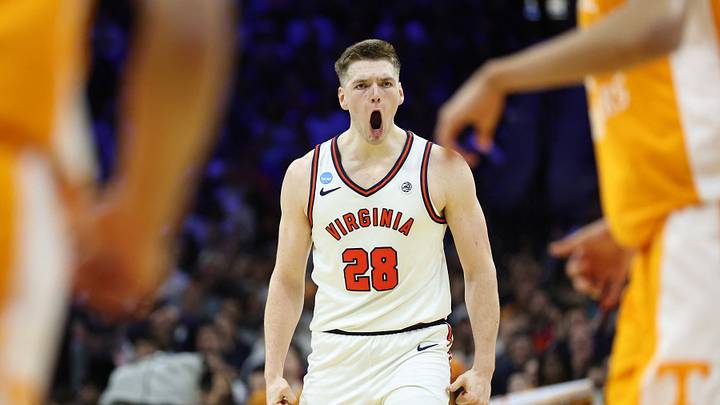
The ACC enters the 2026-27 college basketball season looking considerably different from the conference fans watched last March.
There are new coaches, major transfers and talented freshmen arriving throughout the league. Duke remains the preseason favorite, but Virginia, Louisville and Miami have assembled rosters capable of making the conference race much more interesting than a simple coronation.
The individual talent is equally fascinating.
John Blackwell arrives at Duke after becoming one of the Big Ten's most productive guards. Flory Bidunga gives Louisville a proven defensive force. Virginia returns a forward who already earned first-team All-ACC honors, while Miami has assembled a promising combination of young guards and athletic frontcourt players.
For this ranking, we're weighing proven production, projected roles, two-way impact and the ability to influence winning. Incoming transfers are evaluated using their previous college performances, while freshmen receive credit for their potential without being treated as established stars.
Here are the 25 best ACC players entering the 2026-27 season.
No. 25: Garwey Dual, Syracuse
Syracuse has undergone a significant transformation under new coach Gerry McNamara, and Dual gives the Orange an experienced guard capable of helping that transition. He arrives after playing at McNeese, where he averaged 8.4 points, 4.4 assists and 1.6 steals last season.
Dual's value extends beyond scoring. At 6-foot-5, he provides defensive size in the backcourt and can help organize an offense that includes several newcomers. Syracuse needs stability as much as it needs individual scoring, making Dual an important piece of the rebuilding effort.
No. 24: Anthony Robinson II, Florida State
Robinson brings valuable experience to Florida State after spending three seasons at Missouri. He averaged 8.9 points, 3.0 assists and 1.6 steals last season, establishing himself as a dependable guard who contributes without needing to dominate possession.
The Seminoles are attempting to build consistency under Luke Loucks, and Robinson's ability to manage the offense should help. His defensive activity and willingness to distribute the basketball give Florida State a useful foundation. If his scoring becomes more consistent, Robinson could outperform this position.
No. 23: Jaden Toombs, SMU
Toombs showed promising development during his freshman season, averaging 8.3 points and 4.6 rebounds while playing behind more established frontcourt contributors. His performances late in the year suggested that he could handle a considerably larger role.
The 6-foot-10 sophomore gives SMU a physical interior presence with the potential to become a dependable scoring option. His rebounding and finishing should become increasingly important as the Mustangs establish their new rotation. Toombs is one of the ACC's more intriguing breakout candidates.
No. 22: Baye Ndongo, Pittsburgh
Pittsburgh needed proven ACC production after rebuilding almost its entire roster, and Ndongo provides exactly that. The former Georgia Tech forward averaged 11.8 points, 8.1 rebounds and 2.4 assists last season.
Ndongo has started throughout his college career and understands the physical demands of ACC basketball. His rebounding and interior scoring should translate immediately, even as Pittsburgh works through the challenges associated with extensive roster turnover. He might not produce spectacular scoring numbers, but his consistency should matter.
No. 21: Rowan Brumbaugh, SMU
Brumbaugh arrives at SMU after averaging 19.2 points, 4.9 rebounds and 3.5 assists at Tulane. Those numbers demonstrate his ability to create offense while carrying significant responsibility.
The question is how efficiently that production translates against ACC competition. Brumbaugh won't necessarily need to shoulder the same workload he handled in the American, but SMU will depend on his experience and shot creation. He has the potential to become one of the conference's more productive newcomers.
No. 20: Gavin Doty, Syracuse
Doty followed Gerry McNamara from Siena to Syracuse after averaging 18.0 points and 6.9 rebounds last season. The 6-foot-5 guard gives the Orange an established scorer who already understands his coach's expectations.
His transition to the ACC will present a significant challenge, particularly against bigger and more athletic defenders. However, Doty's production at Siena suggests that he can contribute in several ways rather than relying exclusively on perimeter shooting. Syracuse needs a dependable offensive leader, and Doty has an opportunity to become one.
No. 19: Nick Townsend, Stanford
Townsend might be one of the most overlooked transfers in the conference. He averaged 16.3 points, 7.4 rebounds and 4.3 assists at Yale while shooting 46.3 percent from three-point range.
That combination of scoring, rebounding and passing is unusual for a 6-foot-7 forward. Stanford will ask Townsend to operate against considerably stronger competition, but his versatility gives him several ways to remain productive. He could become one of the ACC's most difficult matchup problems.
No. 18: Neo Avdalas, North Carolina
North Carolina added an intriguing offensive talent when Avdalas transferred from Virginia Tech. The 6-foot-9 guard averaged 12.1 points and 4.6 assists as a freshman, demonstrating impressive passing ability for his size.
Avdalas can create advantages over smaller defenders while seeing passing lanes that aren't available to most guards. His efficiency must improve, but his combination of size and playmaking makes him an important piece of North Carolina's new-look offense. His ceiling is considerably higher than this ranking.
No. 17: Cameron Williams, Duke
Williams arrives at Duke with enormous expectations after establishing himself as one of the country's premier recruits. At 7 feet tall, he possesses the size to influence games around the basket while offering the offensive versatility associated with modern forwards.
The challenge is translating that potential into consistent production against experienced college opponents. Duke already has established contributors in the frontcourt, which should allow Williams to develop without carrying the entire offense. If his shooting and defensive instincts translate quickly, he could climb this ranking dramatically.
No. 16: Cayden Boozer, Duke
Boozer returns for his sophomore season after averaging 7.7 points and 3.0 assists as a freshman. His first year was often overshadowed by the extraordinary production of his brother Cameron, but Cayden still gained valuable experience in meaningful games.
The upcoming season presents an opportunity to establish his own identity. Duke will have several players capable of scoring, making Boozer's decision-making and ability to control possessions particularly important. His improvement could determine how smoothly the Blue Devils' new pieces fit together.
No. 15: Dame Sarr, Duke
Sarr averaged 6.4 points and 3.8 rebounds during his first college season, but those numbers don't fully capture his potential. The 6-foot-8 wing gained extensive experience while competing for one of the country's strongest programs.
His length and defensive versatility make him valuable regardless of his scoring role. Duke will need Sarr to become more assertive offensively while maintaining his ability to guard multiple positions. A substantial sophomore improvement would give the Blue Devils another dangerous weapon.
No. 14: Ben Hammond, Virginia Tech
Hammond emerged as one of the ACC's most productive guards last season, averaging 13.2 points while shooting 43.1 percent from three-point range. He also averaged 2.0 steals, demonstrating that his contributions extend well beyond perimeter scoring.
Virginia Tech will depend on Hammond to create offense and establish defensive pressure. His ability to shoot efficiently while handling significant responsibility makes him especially valuable. If he continues developing as a distributor, the Hokies could have one of the league's more complete guards.
No. 13: Johann Grünloh, Virginia
Grünloh doesn't need to score 20 points to influence a game. The 7-foot center averaged 2.2 blocked shots last season, providing Virginia with one of the conference's most effective interior defenders.
His presence changes how opponents approach the basket. Virginia can pressure perimeter players knowing that Grünloh offers protection behind the initial defense. His offensive development remains important, but his shot-blocking ability already makes him one of the ACC's most valuable specialists.
No. 12: Seth Trimble, Louisville
Trimble arrives at Louisville after spending four seasons at North Carolina. He averaged 14.0 points, 3.8 rebounds and 3.0 assists during his senior campaign, providing the Cardinals with an experienced guard capable of contributing at both ends.
Louisville has assembled a talented collection of transfers, but somebody must establish defensive intensity and dependable decision-making. Trimble can fill that role while providing additional scoring when needed. His experience against ACC opponents should make the transition considerably easier.
No. 11: Somto Cyril, Miami
Cyril arrives from Georgia after establishing himself as one of the country's most efficient interior finishers. He averaged 9.3 points, 5.4 rebounds and 2.2 blocked shots while shooting an extraordinary 75.9 percent from the field.
Miami should benefit immediately from his ability to protect the rim and finish opportunities created by its guards. Cyril doesn't need a complicated offensive role to become effective. If his rebounding and defensive discipline continue improving, he could become one of the ACC's most influential centers.
No. 10: Amani Hansberry, Virginia Tech
Hansberry averaged 14.3 points and 7.4 rebounds last season while earning honorable mention All-ACC recognition. The versatile forward also contributed as a passer and defender, giving Virginia Tech production in several important areas.
His ability to operate inside while occasionally stretching the floor makes him difficult to defend. Hansberry should remain a central figure in the Hokies' offense, particularly when opponents attempt to limit their perimeter shooters. He has the experience and versatility to challenge for all-conference honors.
No. 9: Jackson Shelstad, Louisville
Shelstad arrives from Oregon after an injury-interrupted season in which he averaged 15.6 points and 4.9 assists across 12 appearances. When healthy, he has demonstrated the ability to create shots and organize an offense against high-level competition.
Louisville won't need Shelstad to carry the same offensive burden he handled at Oregon. That could help him become more efficient while sharing the floor with several talented teammates. His health remains an important consideration, but his upside is substantial.
No. 8: Paul McNeil Jr., NC State
McNeil established himself as one of the ACC's most dangerous perimeter shooters last season. He averaged 13.8 points while connecting on 105 three-pointers at a 42.7 percent rate.
Those numbers become even more impressive when considering the defensive attention he regularly attracted. McNeil should have considerable offensive responsibility for NC State this season, giving him opportunities to increase his scoring production. Few ACC players can change a game as quickly from beyond the arc.
No. 7: Chance Mallory, Virginia
Mallory averaged 9.3 points, 3.4 assists and 1.6 steals as a freshman, immediately becoming an important part of Virginia's rotation. His ability to control tempo and create opportunities should become even more valuable with another season of experience.
At 5-foot-10, Mallory faces physical disadvantages against bigger guards. However, his quickness, defensive activity and decision-making help compensate for that limitation. He could emerge as one of the ACC's most important breakout players.
No. 6: Shelton Henderson, Miami
Henderson averaged 13.7 points and 4.9 rebounds as a freshman while shooting 56.7 percent from the field. His ability to finish efficiently and defend multiple positions makes him one of Miami's most valuable returning contributors.
The Hurricanes have added several talented players, but Henderson provides continuity and proven ACC production. His offensive role could expand considerably as he becomes more comfortable creating his own opportunities. He has the physical tools to become one of the league's best two-way wings.
No. 5: Acaden Lewis, Miami
Lewis arrives from Villanova after producing one of the most impressive freshman seasons in the Big East. He averaged 12.2 points and 5.3 assists while establishing school freshman records with 176 assists and 63 steals.
Miami is gaining much more than a scoring guard. Lewis can organize an offense, create opportunities for teammates and generate defensive pressure. His combination of playmaking and competitiveness makes him a strong candidate for immediate all-conference recognition.
No. 4: Patrick Ngongba II, Duke
Ngongba averaged 10.1 points, 5.8 rebounds and 1.1 blocked shots last season while shooting better than 60 percent from the field. His production came while sharing the frontcourt with Cameron Boozer, leaving room for a larger offensive role.
The 6-foot-11 center gives Duke a dependable interior presence who can finish efficiently and protect the basket. His development as a scorer will be particularly important now that the Blue Devils have a different offensive structure. Ngongba has the potential to become the conference's most dominant traditional center.
No. 3: Flory Bidunga, Louisville
Bidunga arrives from Kansas after averaging 13.3 points, 9.0 rebounds and 2.6 blocked shots last season. He also shot 64 percent from the field, demonstrating exceptional efficiency around the basket.
Louisville gains an established defensive anchor who can influence games without requiring a steady supply of offensive touches. His rebounding and rim protection should make the Cardinals considerably more difficult to attack inside. Bidunga has a legitimate opportunity to become the ACC's best defensive player.
No. 2: John Blackwell, Duke
Blackwell gives Duke an experienced offensive leader after averaging 19.1 points, 5.1 rebounds and 2.3 assists at Wisconsin. He also shot 38.9 percent from three-point range, making him a dangerous option both off the dribble and away from the basket.
The transition to Duke will bring a different supporting cast and potentially fewer shot attempts. However, Blackwell's ability to create efficient offense against strong competition should translate immediately. He enters the season as one of the leading candidates for ACC Player of the Year.
No. 1: Thijs De Ridder, Virginia
De Ridder earns the top position after an outstanding first season at Virginia. The 6-foot-9 forward averaged 15.6 points and 6.2 rebounds while shooting 50.8 percent from the field and earning first-team All-ACC honors.
His combination of size, skill and efficiency makes him one of the conference's most difficult offensive matchups. De Ridder can score inside, stretch defenses and contribute on the glass without needing to dominate every possession. With another year in Virginia's system, he has an opportunity to become one of college basketball's most complete forwards.
The ACC Player of the Year race could be outstanding
The ACC has several legitimate candidates to become its most valuable player.
De Ridder brings proven all-conference production. Blackwell offers elite scoring experience. Bidunga and Ngongba could dominate around the basket, while Lewis and Henderson give Miami an intriguing combination of young talent.
Duke might begin the season as the favorite to win the conference, but the individual awards race appears considerably more open.
That's one reason the ACC should be fascinating to follow throughout 2026-27.
 Add us as a preferred source on Google