

Every college basketball fan knows about Duke, Kentucky, Kansas and North Carolina. Their championships, legendary coaches and unforgettable March Madness moments have helped define the sport for generations. But some of college basketball's most fascinating stories belong to programs that rarely receive national attention.
Welcome to the 2026-27 preseason edition of The Basement 10, where we take a different look at the teams occupying the bottom 10 positions in the final NCAA NET rankings from the previous season.
These programs finished the 2025-26 campaign ranked between No. 356 and No. 365 among 365 Division I teams. Their combined overall record was 59-255, including games against non-Division I opponents. That's a winning percentage below 19 percent.
Those numbers tell one story. History tells another.
One program once stunned Kentucky inside Rupp Arena. Another reached the Elite Eight long before most of today's players were born. One pulled off an NCAA Tournament upset that remains among the most memorable in March Madness history. Another played an NCAA Tournament game with the president of the United States watching from the stands.
Being near the bottom of the NET rankings doesn't erase decades of basketball history. And as another season approaches, these 10 programs provide a reminder that college basketball's most interesting stories aren't always found in the Top 25.
No. 356: South Carolina State Bulldogs (10-22)
South Carolina State's 2025-26 season ended with a 10-22 overall record and a No. 356 NET ranking. For a program with considerable basketball history in the Mid-Eastern Athletic Conference, the finish was another reminder of how difficult sustained success can be at the Division I level.
The Bulldogs have appeared in five NCAA Division I Tournaments, qualifying in 1989, 1996, 1998, 2000 and 2003. That history includes matchups against some of the sport's biggest names. South Carolina State faced Duke in 1989, Kansas in 1996 and Kentucky in 1998, giving the program opportunities to compete on the national stage against powerhouse opponents.
Perhaps the most interesting part of South Carolina State's story is how much its history contrasts with its current ranking. The Bulldogs were once a regular contender for MEAC championships, and the program's five NCAA appearances remain an accomplishment that many Division I schools have never matched.
The challenge entering 2026-27 is finding a path back toward that level of conference competitiveness. South Carolina State doesn't need to become a national powerhouse to create a meaningful turnaround. It simply needs to begin rebuilding the kind of consistency that once made the Bulldogs a familiar name in March.
No. 357: Rider Broncs (4-25)
Rider finished 2025-26 with just four victories and a No. 357 NET ranking, but the Broncs have experienced considerably better days.
The New Jersey program reached the NCAA Tournament in 1993 and 1994, giving Rider consecutive appearances on college basketball's biggest stage. In 1993, the Broncs faced Kentucky. A year later, they met Connecticut in the opening round, losing 64-46.
Those appearances came during a period when Rider was competing in the Northeast Conference, before its move to the Metro Atlantic Athletic Conference. The back-to-back tournament trips remain an important chapter in the program's history.
What makes Rider's current situation particularly interesting is the contrast between those tournament seasons and a 2025-26 campaign that produced only four wins. For a program that once found a way to reach March Madness in consecutive years, the immediate goal is far more modest.
Rider enters 2026-27 needing to restore competitiveness before it can realistically think about another postseason breakthrough. Still, its history offers proof that a smaller program can build something memorable when the right pieces come together.
No. 358: Kansas City Roos (4-27)
Kansas City finished 2025-26 with a 4-27 overall record, but the number becomes even more striking when examining games against Division I opponents. The Roos managed just one Division I victory during the season.
That makes Kansas City one of the most intriguing rebuilding situations in the country entering 2026-27.
Unlike several other programs in The Basement 10, Kansas City has never appeared in the NCAA Division I Men's Basketball Tournament. The program has spent decades attempting to reach the national stage, first as UMKC and now under the Kansas City athletic identity.
The Roos have competed in multiple conferences during their Division I history, including the Western Athletic Conference and Summit League. Those moves have brought changing opponents and different competitive challenges, but the ultimate goal has remained the same: winning the conference tournament and earning that elusive NCAA invitation.
For Kansas City, the story entering the new season isn't about recapturing a famous tournament moment. It's about trying to create the first one.
There is something compelling about that possibility. Every March, another program experiences its first trip to the NCAA Tournament. Kansas City continues chasing the opportunity to join that group.
No. 359: VMI Keydets (6-26)
Here's where The Basement 10 gets especially interesting.
VMI finished the 2025-26 season with six victories and a No. 359 NET ranking. Yet this same program once advanced to the Elite Eight of the NCAA Tournament.
That's right. The Elite Eight.
In 1976, VMI produced one of the most remarkable postseason runs in school history, reaching the regional final before losing to Rutgers. The Keydets were among the final eight teams remaining in the national championship race, an achievement that still stands out nearly half a century later.
VMI returned to the NCAA Tournament in 1977, giving the program consecutive appearances during one of its greatest basketball eras.
For a school known for its demanding military environment and relatively small enrollment, that history is particularly impressive. The Keydets demonstrated that a program outside the traditional power structure could compete deep into March.
Now consider the contrast. A program that once stood one victory away from the Final Four entered the 2026-27 preseason ranked No. 359 in the NET.
That's what makes college basketball history so fascinating. The standings change. Conferences evolve. Coaches and players come and go. But the accomplishments remain.
VMI's 1976 run is a reminder that even a program near the bottom of today's rankings can own a place in the sport's postseason history.
No. 360: Binghamton Bearcats (8-23)
Binghamton's 8-23 finish placed the Bearcats at No. 360 in the final NET rankings. But the New York program has experienced a moment that many schools would gladly trade years of rebuilding for.
In 2009, Binghamton reached the NCAA Tournament for the first time in its Division I history.
The Bearcats won the America East Tournament championship and earned a No. 15 seed, setting up a first-round matchup against second-seeded Duke. The Blue Devils won 86-62, ending Binghamton's tournament run, but the appearance represented a major milestone for the program.
Binghamton's rise was especially noteworthy because the school had joined Division I earlier in the decade. Reaching March Madness so quickly was a significant achievement.
The years that followed were far more difficult. The program endured turmoil and struggled to regain the momentum that produced its breakthrough season.
That makes Binghamton's place in The Basement 10 a particularly interesting reminder of how quickly fortunes can change in college basketball.
The Bearcats have already experienced the excitement of hearing their name called on Selection Sunday. The question entering 2026-27 is whether they can begin moving toward another opportunity.
No. 361: Gardner-Webb Runnin' Bulldogs (4-29)
If you're looking for the most surprising individual result associated with this year's Basement 10, Gardner-Webb has a strong argument.
On November 7, 2007, Gardner-Webb walked into Rupp Arena and defeated Kentucky 84-68.
It wasn't a last-second miracle. It wasn't a one-point escape. Gardner-Webb beat one of college basketball's most recognizable programs by 16 points on Kentucky's home floor.
The result immediately became one of the biggest early-season upsets in college basketball. For Gardner-Webb, it was a defining moment that introduced the program to a national audience.
That history makes the Runnin' Bulldogs' 2025-26 finish even more striking. Gardner-Webb went 4-29 and finished No. 361 in the NET rankings, a difficult season for a program that has demonstrated its ability to compete against major-conference opponents.
Gardner-Webb also reached the NCAA Tournament in 2019, earning its first Division I appearance after winning the Big South Tournament championship. The Runnin' Bulldogs faced eventual national champion Virginia in the opening round and lost 71-56.
Those two moments, the Kentucky upset and the 2019 NCAA appearance, offer a reminder that Gardner-Webb has experienced genuine national relevance.
The challenge now is getting the program back on solid footing. A four-win season can feel like a long way from Rupp Arena celebrations, but the history remains part of the program's identity.
No. 362: Delaware State Hornets (8-23)
Delaware State finished 2025-26 with an 8-23 overall record and a No. 362 NET ranking. But the Hornets have their own NCAA Tournament story, one involving a matchup with one of college basketball's most recognizable coaches.
In 2005, Delaware State earned its first NCAA Division I Tournament appearance after winning the MEAC championship.
Its reward was a first-round meeting with top-seeded Duke, coached by Mike Krzyzewski.
The Hornets entered the matchup as a No. 16 seed and faced an enormous challenge against a Blue Devils team that had just won the ACC Tournament. Yet Delaware State remained competitive, eventually losing 57-46.
An 11-point defeat against a No. 1 seed might not sound extraordinary, but for a program making its NCAA Tournament debut, staying within striking distance of Duke was a meaningful accomplishment.
The game also connected Delaware State to an important moment in Krzyzewski's career. With the victory, the Duke coach tied Dean Smith for the most NCAA Tournament coaching wins at that time.
For Delaware State, the 2005 season remains a reminder of what a successful conference tournament run can mean. The Hornets don't need to dominate the national rankings to make another appearance in March Madness. They need to become competitive enough in the MEAC to give themselves a chance.
No. 363: Coppin State Eagles (7-24)
Of all the programs on this list, Coppin State might own the greatest NCAA Tournament upset.
On March 14, 1997, the 15th-seeded Eagles defeated second-seeded South Carolina 78-65 in Pittsburgh.
South Carolina entered the tournament ranked No. 6 nationally, but Coppin State refused to follow the expected script.
Danny Singletary scored 22 points, while Antoine Brockington added 20. The Eagles pulled away in the closing minutes and delivered a result that stunned the college basketball world.
At the time, Coppin State became just the third No. 15 seed to defeat a No. 2 seed in NCAA Tournament history. It was also the first NCAA Tournament victory by a MEAC program.
The Eagles nearly made the story even more remarkable two days later, losing 82-81 to Texas in the second round.
Think about that for a moment. A program that finished the 2025-26 season ranked No. 363 once came within a single point of reaching the Sweet 16 after knocking off one of the tournament's top seeds.
The 1997 team, coached by Fang Mitchell, remains one of the great underdog stories in college basketball history.
Coppin State's current challenge is considerable after a 7-24 campaign, but few programs near the bottom of the rankings can point to a March Madness moment as significant as the Eagles' victory over South Carolina.
No. 364: Western Illinois Leathernecks (5-26)
Western Illinois finished 2025-26 with five wins and a No. 364 NET ranking, placing the Leathernecks just one position above the bottom of Division I.
For a program that has spent decades trying to establish itself as a consistent contender, the latest finish illustrates the difficulty of building sustained success at the mid-major level.
Western Illinois has never reached the NCAA Division I Men's Basketball Tournament. That absence remains one of the defining facts of the program's basketball history.
The Leathernecks have experienced competitive seasons and postseason opportunities, but the breakthrough that would put Western Illinois on the national March Madness bracket has remained elusive.
The program's conference history adds another layer. After spending many years in the Summit League, Western Illinois moved to the Ohio Valley Conference, creating a new competitive environment and a different path toward the NCAA Tournament.
For Western Illinois, entering 2026-27 near the bottom of the NET rankings is a difficult starting point. But the program's story is far from finished.
The Leathernecks are still chasing something that would immediately become one of the most important accomplishments in school basketball history: their first NCAA Division I Tournament appearance.
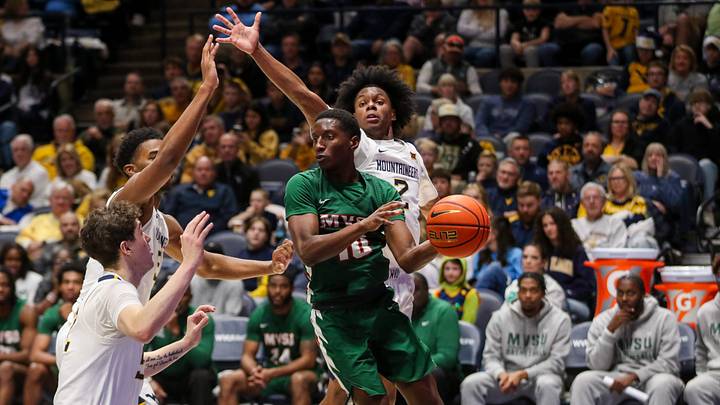
No. 365: Mississippi Valley State Delta Devils (3-30)
Somebody has to finish last in the NET rankings, and in 2025-26 that distinction belonged to Mississippi Valley State.
The Delta Devils went 3-30 and finished No. 365, the lowest-ranked program in Division I men's basketball.
But if you think that makes Mississippi Valley State's history uninteresting, consider what happened in March 1986.
The Delta Devils entered the NCAA Tournament as a No. 16 seed and faced top-seeded Duke, one of the favorites to win the national championship.
Mississippi Valley State gave the Blue Devils an unexpected battle before falling 85-78. Duke eventually reached the national championship game, making the Delta Devils' seven-point defeat even more noteworthy.
The program has another unusual NCAA Tournament connection.
In 2012, Mississippi Valley State faced Western Kentucky in a First Four game in Dayton, Ohio. President Barack Obama and British Prime Minister David Cameron attended the contest together, giving the matchup an audience unlike almost any other game in NCAA Tournament history.
Western Kentucky won 59-58, but the image of two world leaders watching the Delta Devils compete became part of the event's history.
Those stories make Mississippi Valley State a fitting conclusion to the inaugural preseason Basement 10 feature.
The Delta Devils finished last in the NET rankings, but their history includes an unexpectedly close game against a national championship contender and an NCAA Tournament appearance watched by two of the world's most prominent political leaders.
Not bad for a program currently sitting at No. 365.
The Basement 10 is about more than losing
The final 2025-26 NET rankings placed these 10 teams at the bottom of Division I basketball. That's the reality heading into the new season, and the numbers cannot be ignored.
But college basketball has never been just about the teams competing for national championships.
It's also about programs trying to reach their first NCAA Tournament, schools hoping to recapture past success and players who dream of creating moments that will be remembered long after their college careers end.
Coppin State will always have its victory over South Carolina. Gardner-Webb will always have that unforgettable night at Rupp Arena. VMI will always have its Elite Eight appearance. And Mississippi Valley State will always have its remarkable collection of NCAA Tournament memories.
Those accomplishments don't disappear because of one difficult season.
As the 2026-27 campaign approaches, the Basement 10 programs have plenty of work ahead. Some will improve significantly. Others may endure another difficult year. Perhaps one will surprise everyone and climb far beyond its preseason position.
That's part of the beauty of college basketball.
The next unforgettable story could come from a program almost nobody is watching.
 Add us as a preferred source on Google