

The Big Ten Conference officially revealed each team’s home-and-away opponents for the 2026-27 men’s basketball season on Tuesday, and the immediate takeaway was impossible to ignore. This conference has become an absolute monster.
With 18 teams spread across multiple time zones and every program playing a 20-game conference slate, the Big Ten is no longer just about surviving tough road environments in January. Now it is about surviving travel, schedule imbalance, rivalry protection and cross-country scheduling stretches that can completely reshape a season.
Every team will face three conference opponents twice while seeing the remaining 14 teams only once. That alone has transformed the race for the regular-season championship into something much more unpredictable than the league’s old balanced format.
And after seeing the draws certain contenders received, some programs clearly have a steeper climb than others.
Purdue and Michigan State may have landed the toughest roads
Purdue once again looks like a national contender entering the season, but Matt Painter’s team drew one of the league’s more difficult conference paths.
The Boilermakers will face Indiana, Illinois and Rutgers Scarlet Knights twice. Indiana will always remain protected, but Illinois and Rutgers both add major difficulty to Purdue’s schedule.
The road-only slate makes things even tougher with trips to Michigan, Michigan State, Oregon and Wisconsin.
Michigan State may have an even more complicated setup.
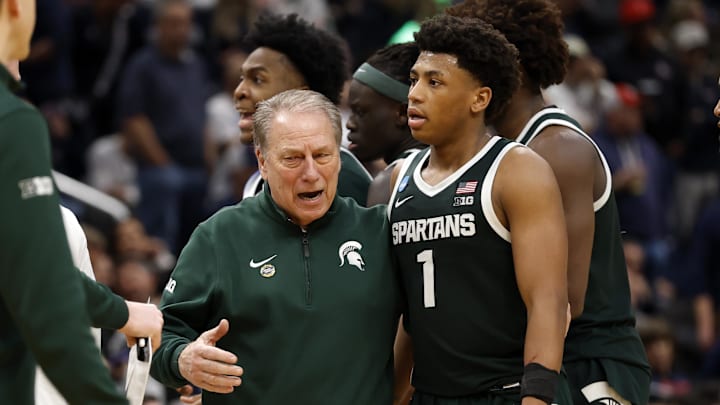
Tom Izzo’s group plays Michigan, Nebraska and Maryland twice while also drawing difficult road-only games against Illinois, Indiana, UCLA and USC. The Spartans once again face a difficult West Coast swing, something that has quickly become one of the defining challenges of modern Big Ten basketball.
Travel fatigue is no longer theoretical in this conference. It is real, and it is impacting how schedules are viewed before the season even starts.
The West Coast trips are becoming the conference’s biggest wildcard
When the Big Ten expanded west, everyone understood the television value. Now teams are fully experiencing the basketball consequences.
Programs across the Midwest and East must regularly travel to Los Angeles, Eugene and Seattle during conference play, creating stretches that look more like NBA travel than traditional college basketball scheduling.
Ohio State Buckeyes will travel to both UCLA and USC this season after hosting those teams a year ago. Michigan State faces another difficult California road trip. Other programs will deal with Pacific Northwest swings involving Oregon and Washington.
Those trips matter far beyond mileage.
Recovery windows shrink. Preparation becomes harder. Turnaround games become more dangerous. Coaches now openly discuss travel management as part of roster strategy during conference play.
The Big Ten may still technically be one league, but geographically it now feels like multiple conferences stitched together.
Rivalries are still shaping the conference schedule
Despite expansion, the Big Ten clearly prioritized preserving several marquee rivalry series.
Ohio State and Michigan successfully lobbied to remain a home-and-home matchup. Purdue and Indiana will continue seeing each other twice annually. Other traditional regional pairings remain protected because the league understands those games still drive the conference’s identity.
That matters because expansion naturally threatens familiarity.
Fans already worry that an 18-team conference dilutes rivalries and weakens scheduling consistency. Keeping certain annual matchups intact helps preserve some version of the old Big Ten while the league continues evolving nationally.
But it also creates unavoidable imbalance.
Some teams receive brutal protected rivals. Others get significantly more manageable double-play opponents. In a conference where one or two games often separate first place from sixth, that difference becomes enormous.
There may never be another “easy” Big Ten champion
The old Big Ten schedule already demanded physicality and depth.
This version demands endurance.
Winning the conference now requires navigating national travel, elite coaching, deep rosters and one of the sport’s most unforgiving schedules. There are very few nights off, and even the lower half of the standings includes NCAA Tournament-level talent.
That reality could make the Big Ten race more entertaining than ever.
It also could make predicting the standings almost impossible.
The best team in the league may not finish first. The healthiest team might. Or maybe the team with the most favorable travel setup survives long enough to steal the title.
That is now life in the Big Ten.
And after Tuesday’s schedule release, the 2026-27 season already feels like it is setting up to become one of the most chaotic conference races college basketball has seen in years.
 Add us as a preferred source on Google