

By late December, college basketball stops being theoretical. Teams have real wins, real losses, and enough data for the NET to tell a meaningful story. What follows is not about hype or brand value. It is about how many teams each conference places near the top of the NET, how consistent those teams have been, and how coaching continuity is shaping results heading into January.
1. Big 12
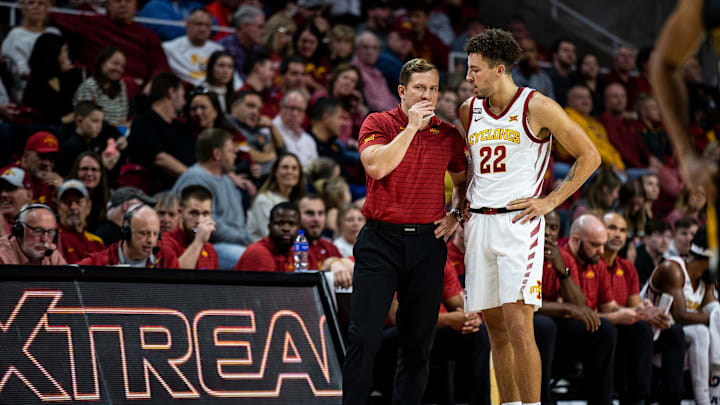
The Big 12 remains the most complete conference in the country, both at the top and across the middle. Arizona is No. 2 in the NET at 12-0 and looks every bit like a one seed under Tommy Lloyd. Iowa State sits No. 5 at 12-0, continuing to win with defense and discipline under T.J. Otzelberger.
Houston checks in at No. 14 with an 11-1 record, and even without the same national buzz as past seasons, Kelvin Sampson still has the Cougars built for March. BYU is No. 9 at 12-1 and continues to play at a high offensive level, with an elite freshman. Kansas remains No. 16 despite injuries and a challenging December.
Depth is where the Big 12 separates. Texas Tech at No. 24, Baylor at No. 38, UCF at No. 33, Colorado at No. 60, and Oklahoma State at No. 72 all project as teams capable of beating anyone on a given night. When league play begins, this conference will generate a steady flow of high value NET games that protect resumes even in losses.
2. Big Ten
The Big Ten’s case is built around volume near the very top of the NET. Michigan is No. 1 at 11-0 and has been one of the most consistent teams in the country under Dusty May. Purdue follows at No. 7 with an 11-1 record, once again looking strong and efficient under Matt Painter.
The next tier is just as impressive. Nebraska is No. 11 at 12-0, Michigan State No. 13 at 11-1, Illinois No. 10 at 9-3, and Iowa No. 12 at 10-2. That gives the Big Ten six teams inside the top 13 of the NET, which is difficult for any conference to match.
Further down, Indiana at No. 32, UCLA at No. 35, USC at No. 39, Ohio State at No. 43, and Wisconsin at No. 67 make sure there are very few nights without consequence. The Big Ten’s depth, combined with veteran coaching across the league, makes it one of the most resume friendly conferences in the country.
3. SEC
The SEC’s profile is built on balance rather than dominance. Vanderbilt has been one of the season’s biggest surprises, sitting No. 6 in the NET at 12-0. Alabama is No. 19 at 9-3 and continues to post strong offensive stats under Nate Oats.
Georgia at No. 21, Tennessee at No. 25, Florida at No. 22, Kentucky at No. 26, Arkansas at No. 29, and LSU at No. 40 all fall in a range that suggests NCAA Tournament ability. The SEC may not have a clear top two team yet, but it has more teams clustered in the top 40 than nearly anyone.
That depth matters. The league schedule is going to produce wins and losses across the board, but very few games will damage a resume. By March, the SEC may not have the flashiest top seed, but it is positioned to put a large number of teams safely into the field.
4. ACC
The ACC’s recovery continues to show up in the numbers. Duke is No. 3 in the NET at 11-1 and looks like a legitimate title contender under Jon Scheyer. North Carolina is No. 15 at 12-1, while Louisville sits No. 17 at 10-2 after a strong nonconference stretch.
Virginia at No. 23, Clemson at No. 38, NC State at No. 31, SMU at No. 36, and Miami at No. 35 round out a middle tier that is far more competitive than in recent seasons. While the ACC still lacks the depth of the Big 12 or Big Ten, its top six to eight teams are solidly positioned for postseason consideration.
5. Big East
The Big East continues to be defined by its anchor. UConn is No. 8 in the NET at 12-1 and remains one of the most reliable teams in the country under Dan Hurley. Villanova checks in at No. 20, Butler at No. 42, Seton Hall at No. 44, and St. John’s at No. 30.
Those teams give the Big East multiple tournament level profiles, but the drop off after the top group is noticeable. Creighton at No. 58 and Xavier at No. 121 reflect some inconsistency that has limited the league’s overall ceiling. Even so, having UConn near the top of every metric ensures the conference remains nationally relevant.
Taken together, the NET rankings show what December basketball has been on the floor. The Big 12 and Big Ten sit in a tier of their own, both in elite teams and overall depth. The SEC offers volume and nightly difficulty, the ACC has stabilized with credible contenders, and the Big East remains strong at the top. As conference play begins, the order may shift, but the foundation for each league is already firmly in place.
Happy Holidays and let's get some January College Basketball!
 Add us as a preferred source on Google