

College basketball changed forever when NIL money became a legitimate alternative to turning pro. For years, the decision was simple. If the NBA called, players answered.
Today, returning to school can mean earning $3 million, $4 million or even more while starring on national television and potentially improving draft stock. Yet every offseason, a handful of players still decide to leave despite uncertain projections.
The 2026 NBA Draft served as another reminder that getting the right information matters as much as having NBA talent. Several players who entered the draft reportedly turned down massive NIL opportunities, only to watch their names fall much later than expected.
Here are five players who probably should have spent one more season in college basketball.
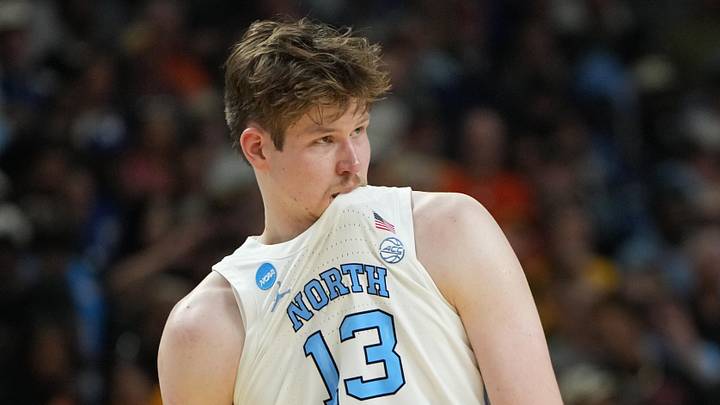
Henri Veesaar, North Carolina
Veesaar was one of the biggest surprises of the draft process.
After transferring from Arizona to North Carolina, the talented 7-footer reportedly had an NIL package worth roughly $4 million available if he returned to Chapel Hill. Instead, he stayed in the draft believing he could secure first-round money.
That never happened.
Instead of becoming one of the faces of college basketball next season while continuing to develop offensively, Veesaar slid into the second round and now enters the NBA without the financial security that comes with a guaranteed first-round contract.
Considering another season under Hubert Davis could have elevated him into the lottery conversation in 2027, it's difficult not to wonder what might have been.
Isaiah Evans, Duke
Few players had more to gain from returning than Evans.
The former five-star recruit flashed elite shot-making ability in limited minutes at Duke and appeared poised for a breakout sophomore campaign after the Blue Devils lost several key contributors.
Instead, Evans left despite reportedly turning down an NIL package worth around $4 million.
A starring role at Duke would have given him the chance to showcase his scoring ability every night against elite competition while potentially climbing into the lottery next year.
Instead, he'll have to fight for minutes while trying to prove he belonged higher than where he was ultimately selected.
Tahaad Pettiford, Auburn
Pettiford's decision was understandable because NBA teams love dynamic scoring guards.
Still, another year at Auburn could have done wonders for his draft stock.
With Johni Broome gone, Pettiford was positioned to become Bruce Pearl's unquestioned offensive centerpiece. He likely would have entered the season as an All-American candidate while competing for SEC Player of the Year honors.
Instead of leading one of the nation's top teams, he'll begin the difficult climb of earning a consistent NBA role.
Labaron Philon, Alabama
Philon enjoyed an outstanding freshman season and showed plenty of NBA potential.
The question wasn't whether he could eventually play in the NBA. It was whether another season running Nate Oats' offense would have transformed him from a developmental prospect into a clear first-round pick.
As Alabama's lead guard, Philon could have dramatically improved his outside shooting, decision-making and leadership while competing deep into March.
Sometimes waiting one more year pays enormous dividends.
Alex Condon, Florida
Condon's situation is a little different because he seriously explored the draft before eventually returning to Florida.
His decision may end up becoming the blueprint for future college stars.
Rather than forcing the issue, Condon gathered feedback, evaluated his draft position and recognized that another season with the defending national champions could substantially improve both his game and his long-term NBA value.
His choice highlights exactly why staying in school is becoming the smarter business decision for so many players.
The NIL era has completely changed the math
There was a time when every draft declaration made sense because even late first-round contracts offered life-changing money.
That's no longer true.
Elite college players can now earn millions while improving their draft stock, gaining another year of development and becoming household names during March Madness.
The 2026 draft showed that leaving too early can carry a significant financial cost. For players projected outside the lottery, returning to college is no longer a fallback plan.
In many cases, it's simply the smarter investment.
 Add us as a preferred source on Google