

If the new NCAA rule actually goes through, the biggest shift won’t be on paper. It’ll show up in the decisions players make. Guys who normally would be moving on will suddenly have a real reason to stay, and in some cases, staying might be the smarter move.
Here are some of the names that could feel that impact the most.
Veteran guards who could run it back one more time
Start with Braden Smith.
He’s already done everything you could ask from a college point guard. Production, leadership, consistency, it’s all there. If he had the option to return to Purdue for another year, it wouldn’t just be a feel-good story. It would instantly make Purdue relevant at the top again instead of heading into a reset.
Then there’s Jaden Bradley with the Arizona Wildcats. What he showed during that Final Four run wasn’t flashy, but it was reliable. Coaches trust guards like that, and if he gets another year, he’s the kind of player programs would build around again without hesitation.
Big men who could become even more valuable
Players who control the paint are always in demand, and that only increases in this kind of system.
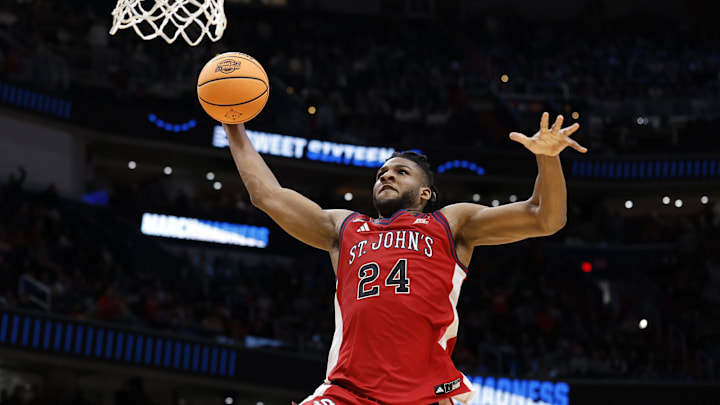
Zuby Ejiofor turned himself into one of the toughest matchups in the country at St. John's. He already proved he can dominate physically. With another year on the table, he wouldn’t just be coming back to improve, he’d likely be one of the most sought-after players in the sport.
The same goes for Tarris Reed Jr. from the UConn Huskies. His NCAA Tournament run showed what he can do when the lights are brightest. That kind of momentum usually pushes players toward the NBA, but now there’s a real argument for staying and capitalizing on it right away.
Players stuck in the middle finally get options
This might be where the rule really changes things.
Players like Otega Oweh at Kentucky have the talent to go pro, but not always the certainty. Another year gives them a chance to be the main option, make more money, and sharpen their game before taking that next step.
Joshua Jefferson with the Iowa State Cyclones falls into that same group. He can do a little bit of everything, which makes him valuable, but also harder to project at the next level. Having the choice to stay changes the entire conversation around his future.
Experienced guards who could shift entire rosters
Some players don’t just help a team, they change how a roster looks.
Bruce Thornton has already logged a long college career with the Ohio State Buckeyes. If he comes back, it’s not just about adding a veteran. It reshapes the entire backcourt and forces the staff to rethink how everything fits together.
Then there’s Ryan Conwell wih the Louisville Cardinals. Shooting like his doesn’t come around often. In a system where spacing matters as much as ever, a player like that instantly becomes one of the most valuable pieces on the board.
Players coming off injuries get a real second chance
This rule could matter even more for players trying to bounce back.
Richie Saunders from the BYU Cougars was putting together a strong season before his injury. Without extra eligibility, there’s pressure to move on quickly. With it, he gets time, time to get healthy, find his rhythm again, and finish things the way he wants.
Why does any of this matter?
What makes this different is simple. These players aren’t guessing anymore. They’ve already shown what they can do.
That’s why a fifth year changes everything. Instead of being pushed out by eligibility rules, they get to decide what’s best for them. Stay and lead. Stay and earn. Or still go pro on their own terms.
If this rule happens, it won’t just impact a handful of players. But this group is where you’ll feel it first.
 Add us as a preferred source on Google