

Arizona entered the 2026–27 college basketball season with legitimate national championship expectations. The Wildcats were ranked No. 5 nationally, had the talent to compete with almost anybody and were hoping to build on another successful season under Tommy Lloyd.
Their first game provided an unexpected reminder that preseason expectations don't guarantee anything.
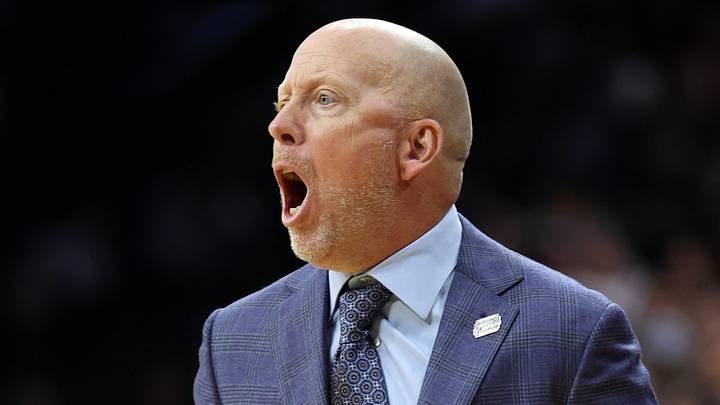
No. 22 UCLA defeated Arizona 84–75 on Monday night in Las Vegas, overcoming an extraordinary individual performance from Ivan Kharchenkov and holding off a furious second-half comeback.
Kharchenkov finished with a career-high 38 points and 10 rebounds. Normally, that kind of performance would be enough to carry a team to victory. Instead, Arizona left the Hall of Fame Series with its first season-opening defeat in 20 years and some legitimate questions about its offensive balance.
DOWN GOES NO. 5 ARIZONA 😮
— SportsCenter (@SportsCenter) November 3, 2026
This is the 3rd time in the AP Poll era (since 1948-49) that UCLA has opened its season with a win over a ranked opponent! pic.twitter.com/TCw0yaSi8U
One incredible performance wasn't enough
Kharchenkov was easily Arizona's most effective offensive player. He made 12 of his 20 field-goal attempts and converted 12 free throws, repeatedly finding ways to score against a UCLA defense that made life difficult for everybody else.
Derek Dixon contributed 18 points, but the rest of the Wildcats combined for just 19.
That is a remarkable imbalance for a team with championship aspirations.
Arizona shot only 36.7% from the field and made seven of its 30 three-point attempts. The Wildcats struggled to establish a consistent offensive rhythm, particularly during a first half in which UCLA built a 43–29 advantage.
Kharchenkov scored 18 points before halftime, but Arizona couldn't generate enough production elsewhere to keep pace.
That doesn't mean the Wildcats lack talent. It does suggest their offensive identity remains a work in progress, especially with roster uncertainty affecting their available options.
UCLA showed why depth can matter more than star power
The Bruins didn't have anybody approach Kharchenkov's scoring total, but they received contributions from several important players.
Trent Perry led UCLA with 21 points, while Jaylen Petty and Eric Dailey Jr. scored 13 apiece. Petty also contributed seven rebounds and seven assists, giving the Bruins another reliable source of offense beyond their leading scorer.
UCLA shot only 38% from the field, so this wasn't a victory built around spectacular offensive efficiency.
Instead, the Bruins created additional opportunities through rebounding, made important shots when Arizona threatened and received meaningful contributions throughout the lineup.
Their 16 offensive rebounds produced 19 second-chance points, a significant advantage in a game where both teams struggled to shoot consistently.
That ability to win without relying on one dominant scorer is an encouraging sign for Mick Cronin's team.
Arizona's comeback made the ending interesting
The Wildcats could have disappeared after falling behind by 16 points. Instead, they fought back and gave themselves a legitimate opportunity to steal the game.
Kharchenkov helped Arizona cut the deficit to 71–70 with just over three minutes remaining, turning what had looked like a comfortable UCLA victory into a tense finish.
But the Bruins responded.
Xavier Booker made an important three-pointer, and UCLA followed with enough defensive stops and late scoring to protect its lead.
Perry's composure was especially important. He made all 11 of his free-throw attempts, providing reliable scoring in a game where every possession became more valuable down the stretch.
Arizona demonstrated resilience, but the Wildcats had already put themselves in a difficult position through poor shooting and inconsistent production.
Arizona has an early problem to solve
There is no reason to overreact to one loss against a nationally ranked opponent. UCLA is talented, experienced and capable of competing with the best teams in the country.
But Arizona's first performance exposed something worth monitoring.
The Wildcats cannot expect Kharchenkov to score nearly half their points every time they face quality competition.
They need more consistent offensive production from their supporting cast, better perimeter shooting and a stronger collective effort on the glass.
For UCLA, the result provides an immediate boost to its national credentials. The Bruins defeated a top-five opponent without playing a perfect offensive game, demonstrating that their defense, rebounding and depth can carry them through difficult stretches.
Arizona still has months to develop into the team many expect it to become.
UCLA, meanwhile, already owns one of the most impressive victories of the young season.
 Add us as a preferred source on Google