

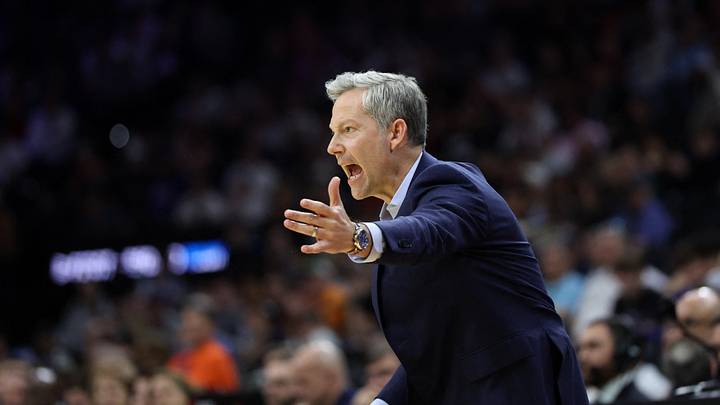
Virginia entered the 2026–27 college basketball season with substantial expectations after winning 30 games last year. The Cavaliers were ranked No. 9 nationally, returned several important contributors and were widely expected to compete near the top of the ACC.
Their opening performance provided an early glimpse of why.
Virginia defeated Drexel 89–60 on Tuesday, but the final margin wasn't the most interesting number from the game. The Cavaliers recorded 18 steals, forced 21 turnovers and repeatedly converted defensive pressure into easy scoring opportunities.
It was the kind of performance that can establish a team's identity before the schedule becomes significantly more difficult.
First win ✅#GoHoos pic.twitter.com/CjLqSjVN4m
— Virginia Men's Basketball (@UVAMensHoops) November 4, 2026
Virginia's defense created offense everywhere
The Cavaliers didn't simply force Drexel into difficult shots. They consistently disrupted possessions before the Dragons could establish their offense.
Virginia's 18 steals were a John Paul Jones Arena record, according to reporting on the game. Those takeaways helped the Cavaliers generate 25 points off turnovers and establish a 29–7 advantage in fast-break scoring.
That is an important distinction for a program historically associated with deliberate offensive possessions and defensive discipline.
Under Ryan Odom, Virginia has demonstrated a willingness to create scoring opportunities through pressure, activity and transition basketball.
The Cavaliers jumped ahead 25–4 early and carried a 51–27 advantage into halftime. Drexel struggled to recover from that opening surge, particularly because Virginia's defense repeatedly prevented the Dragons from establishing a comfortable rhythm.
It was an impressive performance, even allowing for the difference in talent between the teams.
Thijs De Ridder showed why he matters so much
Virginia's defense attracted attention, but Thijs De Ridder provided the offensive production that helped the Cavaliers take control.
The preseason ACC Player of the Year scored 24 points on nine-of-15 shooting and grabbed nine rebounds. He was particularly effective early, scoring 12 of Virginia's first 14 points.
Sam Lewis added 20 points and made four three-pointers, giving the Cavaliers another dependable scoring option.
Johann Grünloh contributed 11 points and nine rebounds, while Chance Mallory helped generate defensive pressure with four steals.
Virginia's returning players provided the foundation for the victory, demonstrating the value of continuity in a sport where rosters can change dramatically from one season to the next.
That experience should become increasingly important as the Cavaliers begin facing stronger competition.
There were still some concerns
Virginia's opening performance wasn't flawless.
The Cavaliers committed 13 turnovers, and their offensive execution wasn't always as sharp after halftime. Drexel reduced the deficit during the second half before Virginia responded with another decisive run.
The level of competition also matters. Drexel was not expected to challenge Virginia the way the ACC's strongest teams will.
Still, the Cavaliers demonstrated a defensive ceiling that should attract attention.
Forcing 21 turnovers is impressive against almost any opponent, and the ability to generate offense from those mistakes can become particularly valuable when perimeter shots aren't falling.
Virginia won't record 18 steals every night. The challenge is maintaining enough defensive pressure to influence games consistently.
Arkansas will provide the next major test
Virginia's early schedule becomes much more demanding with a game against Arkansas on Sunday.
The Razorbacks opened their season with a 106–61 victory over Arkansas-Pine Bluff, displaying the athleticism and offensive talent that could make them a difficult opponent.
That game should reveal much more about Virginia's defensive capabilities.
The Cavaliers won't be able to assume they can force turnovers at the same rate against stronger guards and more experienced offensive players.
But Tuesday's performance provided an encouraging starting point.
Virginia already has the experience, size and offensive contributors needed to compete nationally. If its defense can consistently create turnovers and easy scoring opportunities, the Cavaliers may become one of the ACC's most difficult opponents.
After one game, that possibility looks considerably more realistic.
 Add us as a preferred source on Google