

There’s no avoiding it. Losing John Blackwell changes everything for Wisconsin Badgers. He was the engine. The guy who could break down a defense late in the shot clock, create his own shot, and carry the offense when things stalled. Players like that don’t just get replaced. They leave a gap that usually takes months to figure out.
But here’s where things get interesting.
Wisconsin’s first move in the portal suggests this team isn’t trying to replace Blackwell. They’re trying to evolve.
Trey Autry gives Wisconsin a clear identity shift
The addition of Trey Autry might not grab headlines nationally, but it tells you exactly where this is headed. Autry is a high-volume shooter who hit nearly 39 percent from three while taking more than six attempts per game. That’s not a complementary skill. That’s a weapon.
He doesn’t need isolation. He doesn’t need to dominate the ball. He spaces the floor and forces defenses to stay honest, possession after possession. That’s something Wisconsin didn’t consistently have at this level last season.
This offense could look very different
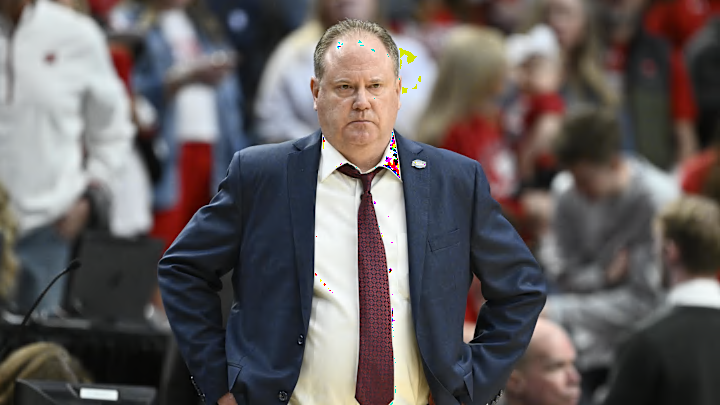
Head coach Greg Gard now has a decision, and early signs point toward a clear direction.
Instead of building around one primary scorer, this roster is shaping up to lean into spacing, ball movement, and shooting.
With Owen Foxwell expected to take on a larger role as a facilitator and experienced frontcourt pieces like Nolan Winter and Austin Rapp likely returning, the Badgers can spread the floor and create more efficient looks.
Autry fits perfectly into that structure. He’s the type of player who makes everything else work better without needing the spotlight.
The biggest question still hasn’t been answered
All of this sounds good on paper, but there’s one issue that hasn’t gone away.
Who’s the closer?
Blackwell was the guy you gave the ball to when you needed a bucket. That role is now wide open, and until someone proves they can handle it, it’s the biggest unknown on the roster.
That could come from within. It could come from another portal addition. But it has to come from somewhere.
Because in March, every team needs one.
Why this might work better than expected
Here’s the part that makes Wisconsin intriguing.
They still have structure. They still have experience. And now, they’re adding shooting that fits exactly where the game is trending.
Instead of relying on one player, this team could become more balanced, more efficient, and harder to scout.
That doesn’t always show up in preseason rankings. But it’s the kind of profile that can quietly win games in the Big Ten and stick around longer than expected in the postseason.
Wisconsin lost its star. That part is real.
But this move shows they’re not panicking. They’re adjusting.
And if it works, the Badgers might not look the same. They might actually be tougher to stop.
 Add us as a preferred source on Google