

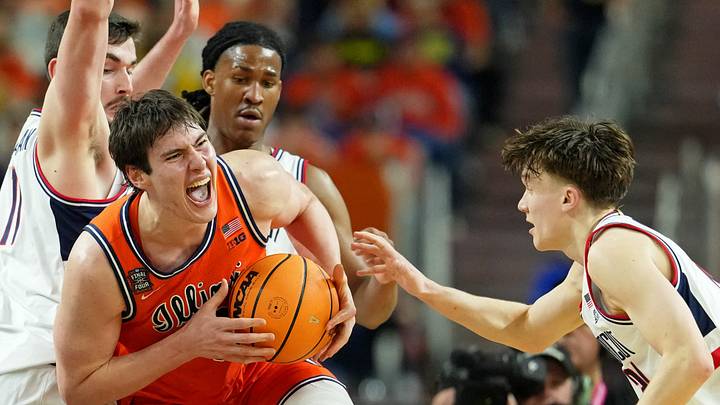
Every college basketball season creates a new collection of stars. Some enter November already carrying enormous expectations, while others spend the first few months turning potential into production before introducing themselves to a much larger audience during March Madness.
The 2026-27 season has plenty of candidates from both groups. Florida's Thomas Haugh already owns a significant national profile after emerging as one of the country's best players, while Michigan State's Jeremy Fears Jr. has established himself as one of the nation's premier point guards. Illinois' David Mirkovic could become one of the sport's most recognizable big men after helping the Illini reach the Final Four.
There are newcomers worth watching, too. Kansas freshman Tyran Stokes arrives with enormous expectations, Arizona's Caleb Holt could quickly become must-watch television and Duke once again has elite talent joining an already loaded roster.
Here are 25 players with an opportunity to become household names during the 2026-27 college basketball season.
1. Thomas Haugh, Florida
Haugh isn't exactly anonymous anymore, but by March he could be one of the faces of the sport. The Florida forward averaged 17.1 points and 6.1 rebounds last season while starting all 34 games, and his combination of size, skill and versatility makes him difficult to defend regardless of matchup.
His reputation extends well beyond Florida. Nearly 100 Division I coaches were surveyed by CBS Sports about the best player in college basketball entering this season, and Haugh received 43% of the vote. That's an enormous endorsement in a sport with this much returning talent. With Florida entering the season as a national championship favorite, Haugh should have one of the biggest platforms in college basketball.
2. Jeremy Fears Jr., Michigan State
Point guards become particularly memorable when they're leading Tom Izzo teams through March, and Fears has an opportunity to become the next one. He enters the season as the engine of a Michigan State team returning substantial production from a Sweet 16 appearance.
Fears received 15% of the vote in CBS Sports' coaches survey of the country's best player, trailing only Haugh. His combination of creation, toughness and experience gives Michigan State something every contender wants: a proven guard capable of controlling important possessions. If the Spartans make another deep postseason run, Fears should become one of the most recognizable players in the Big Ten.
3. David Mirkovic, Illinois
Mirkovic is built for attention. He's skilled, expressive and playing for an Illinois team with legitimate national championship expectations after reaching the Final Four last season.
The 6-foot-9 forward is capable of functioning as an oversized creator rather than simply a traditional post player. Illinois can put the ball in his hands, allow him to attack mismatches and use his versatility to create opportunities for teammates. His health following offseason foot surgery deserves attention, but if Mirkovic is fully available, his sophomore season could push him into the national spotlight.
4. Tyler Tanner, Vanderbilt
Don't overlook Tanner simply because Vanderbilt isn't traditionally placed alongside Duke, Kentucky or Kansas when discussing national stars. Coaches certainly aren't overlooking him.
Tanner received 14% of the vote in CBS Sports' survey asking Division I coaches to identify the best player in the country, placing him third behind Haugh and Fears. Vanderbilt should have plenty of opportunities to play meaningful games in an SEC filled with nationally relevant opponents. If the Commodores remain in the conference race, Tanner will have repeated chances to prove those coaches right.
5. John Blackwell, Duke
Blackwell arrives at Duke after averaging 19.1 points at Wisconsin, giving Jon Scheyer something particularly valuable on another loaded roster: proven high-major scoring and experience.
The appealing part of Blackwell's move is that he doesn't need to carry every possession. He can attack favorable matchups while playing alongside Caleb Foster, Dame Sarr and Duke's latest collection of elite young talent. A productive guard playing major minutes at Duke doesn't remain outside the national spotlight for very long, and Blackwell has the production necessary to become one of the Blue Devils' defining players.
6. Tyran Stokes, Kansas
There may not be a freshman with a better opportunity to become a national name immediately. Stokes arrives at Kansas with elite physical tools, enormous expectations and one of the biggest platforms in college basketball.
Kansas will need him to matter right away. Bill Self has reconstructed the roster around transfers, young talent and returning pieces, but Stokes possesses the kind of ability around which an offense can eventually revolve. If he adjusts quickly to the physicality and demands of college basketball, Stokes could become much more than one of the nation's best freshmen.
7. Motiejus Krivas, Arizona
Defense doesn't always create household names, but Krivas could become an exception. The Arizona center enters the season with a legitimate argument as one of the best defensive big men in college basketball after helping anchor a Wildcats team that reached the Final Four.
His offensive development could determine how large his national profile becomes. Arizona doesn't necessarily need Krivas to become a high-volume scorer, but improved production around the basket combined with elite rim protection would make him difficult to ignore. Another deep Arizona run would provide him with an enormous stage.
8. Braylon Mullins, UConn
UConn and March exposure have become an effective combination for creating national stars. Mullins averaged 12.0 points last season and returns to a program that has established itself as one of the sport's standards under Dan Hurley.
His shooting already gives UConn an important weapon, but his opportunity extends beyond spot-up production. A larger role could allow Mullins to show more creation and scoring versatility. If UConn remains near the top of the national rankings, Mullins should receive plenty of opportunities to turn a strong sophomore season into national recognition.
9. Flory Bidunga, Louisville
Bidunga's game is built for highlights. He finished last season with 82 dunks at Kansas before transferring to Louisville, and now he joins a Cardinals program with rapidly increasing expectations under Pat Kelsey.
Reducing Bidunga to a lob threat would undersell his potential impact. He can finish above the rim, protect it defensively and create momentum-changing plays with his athleticism. If Louisville becomes a legitimate ACC and national championship contender, Bidunga has the style and role necessary to become one of the faces of that resurgence.
10. Milan Momcilovic, Kentucky
Making 136 3-pointers tends to get people's attention. Momcilovic did exactly that last season at Iowa State, and now he'll bring his shooting ability to one of the largest stages in college basketball.
His fit in Mark Pope's offense could be particularly dangerous. At 6-foot-8, Momcilovic can stretch defenses well beyond the arc, opening driving lanes and interior space for everyone around him. A shooter capable of producing enormous scoring runs while wearing Kentucky blue has every opportunity to become nationally recognizable.
11. Alex Condon, Florida
Condon would be the centerpiece of plenty of frontcourts. At Florida, he's part of something even more intimidating alongside Haugh and Rueben Chinyelu.
His passing has developed into an important component of Florida's offense, while his mobility gives the Gators another big who can impact the game outside the paint. Haugh may receive the largest share of preseason attention, but Condon has enough talent and versatility to play his way into significant national awards consideration of his own.
12. Rueben Chinyelu, Florida
Chinyelu is the third Florida player on this list, which says plenty about the Gators' frontcourt. He is an elite rebounder and interior defender who doesn't require plays to be called for him to control stretches of games.
Those players sometimes receive less attention than high-volume scorers, but championship runs have a way of changing that. If Florida spends the season near No. 1 and plays deep into March, casual fans will quickly learn how important Chinyelu is to everything the Gators do.
13. Andrej Stojakovic, Illinois
Stojakovic averaged 13.5 points and 4.5 rebounds last season while shooting 50% from the field, showing an ability to score efficiently without dominating every possession.
That could become even more valuable this season because Illinois has enough size and skill around him that opponents can't simply build their defensive game plan around stopping Stojakovic. If he becomes a more assertive scorer while maintaining his efficiency, another Illinois Final Four push could significantly elevate his national profile.
14. Jackson Shelstad, Louisville
Shelstad averaged 15.6 points and 4.9 assists through 12 games at Oregon before a hand injury disrupted his season. Now he gets a fresh start at Louisville and, just as importantly, an impressive collection of talent around him.
Bidunga gives Shelstad a dangerous interior target, while Louisville's other additions should prevent defenses from loading up on the Cardinals' lead guard. Shelstad has the opportunity to become both the organizer and one of the primary scorers for a nationally relevant team. If Louisville meets its preseason expectations, he could become the face of the program's return to prominence.
15. Isaiah Johnson, Texas
Johnson didn't need long to show he belonged in college basketball. He scored 24 points in his collegiate debut at Colorado and eventually produced nine 20-point performances during his freshman season.
Now he moves to Texas and a significantly larger national stage. Sean Miller needs perimeter creation after considerable roster turnover, and Johnson has the talent to become one of the Longhorns' primary offensive weapons. Texas enters the season with serious expectations, giving Johnson plenty of opportunities to turn strong production into national attention.
16. Silas Demary Jr., UConn
Demary averaged 10.1 points and 5.9 assists last season, and the assist number may ultimately be the more important one for UConn. He'll have plenty of weapons around him, which gives him an opportunity to become one of the country's premier table-setters.
Lead guards on championship contenders naturally become more visible as the season progresses. If UConn makes another deep March run, Demary will have the ball in his hands for many of its most important possessions. That's an excellent formula for becoming a national name.
17. Braden Huff, Gonzaga
Huff's season was interrupted by injury, but when available he demonstrated why he's capable of becoming one of the nation's premier offensive big men. His touch around the basket and ability to score in multiple ways make him particularly valuable in Gonzaga's system.
The first requirement is health. If Huff can stay on the floor for a full season, he should have enough opportunities to produce major numbers for Mark Few. Gonzaga remains one of college basketball's most visible programs, and a healthy Huff could become the centerpiece of another nationally relevant Bulldogs team.
18. Caleb Holt, Arizona
Holt arrives at Arizona with enormous upside and the advantage of joining a program that reached last season's Final Four. That means he doesn't need to rescue a rebuilding roster or manufacture attention on his own.
Tommy Lloyd can integrate Holt into an established structure featuring veteran talent around him. If Holt handles the transition quickly, his athleticism and two-way potential could make him one of the most impactful freshmen in the country and another major reason Arizona remains in the championship conversation.
19. Meleek Thomas, Arkansas
Thomas averaged 15.6 points, 3.8 rebounds and 2.5 assists as a freshman while shooting 41.6% from 3-point range. Those aren't merely promising freshman numbers. They're the foundation for potential stardom.
His 82 made 3-pointers and ability to score against SEC competition already established Thomas as one of the country's better young guards. Another developmental jump, particularly as a creator, could move him into All-America discussions and make him one of the SEC's most recognizable players.
20. JT Toppin, Texas Tech
Toppin enters another season as the central figure for Texas Tech after already demonstrating the ability to produce against high-level Big 12 competition.
The next step is connecting that individual production to team success. If Toppin can keep putting up major numbers while pushing Texas Tech toward the top of the Big 12 standings, national awards attention will follow. The conference schedule will provide more than enough opportunities for him to make his case.
21. Dame Sarr, Duke
Sarr could become one of the most fascinating players on Duke's roster because his size and versatility give Scheyer options all over the perimeter.
The challenge will be opportunity. Duke has numerous players who deserve touches, so Sarr may not produce huge numbers immediately. However, if he becomes one of Scheyer's most trusted two-way players, Duke's enormous national platform will do the rest. Significant minutes on a championship contender have a way of turning talented players into familiar names.
22. Stefan Vaaks, Illinois
Vaaks arrives from Providence with an opportunity to become an important perimeter creator for a Final Four contender. That's a substantial responsibility, but Illinois' roster should also make his transition easier.
The Illini's size should provide Vaaks with favorable spacing, screening and passing options. He doesn't have to create everything by himself. If he adjusts smoothly to Brad Underwood's system and establishes himself as one of Illinois' primary ball handlers, Vaaks could become one of the Big Ten's biggest breakout names.
23. Caleb Foster, Duke
It's easy to get distracted by Duke's newest stars, but Foster shouldn't be forgotten. His familiarity with Scheyer's system matters on a roster incorporating Blackwell and another elite freshman class.
Experienced guards tend to become increasingly important as the season progresses because coaches know what they can trust in difficult situations. Foster has an opportunity to become exactly that player for Duke. He may not lead the Blue Devils in scoring, but his importance could become particularly obvious in February and March.
24. Robert Wright III, BYU
BYU has established itself as a program willing to think big, and Wright gives the Cougars an experienced guard around whom they can build.
Playing in the Big 12 guarantees him opportunities against ranked opponents and nationally relevant programs throughout conference play. If BYU remains in the league race, Wright will have a significant platform to expand his reputation beyond the audience that already follows the conference closely.
25. Jason Crowe Jr., Missouri
Crowe is the wildcard of this group. The highly regarded freshman arrives at Missouri with the scoring talent to become one of the SEC's most exciting newcomers, but freshmen are never guaranteed immediate stardom.
The opportunity should be there. Missouri could use another dynamic offensive weapon, and Crowe may have the ability to command substantial responsibility quickly. If his scoring translates immediately against SEC competition, his rise could happen considerably faster than expected.
The season will create stars we don't see coming
This list won't look perfect by March, and that's part of what makes college basketball compelling. Some established players will make another leap, some freshmen will require more time than expected and somebody barely discussed in September will inevitably become a national name.
For now, Haugh begins closest to the center of the spotlight, while Fears, Mirkovic, Tanner and Blackwell aren't far behind. Then comes an enormous collection of returning players, transfers and freshmen waiting for the games to begin.
By March, we'll know which of them seized the opportunity.
 Add us as a preferred source on Google