

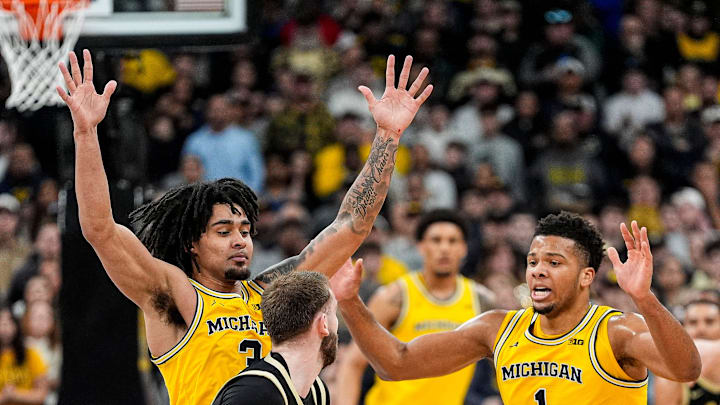
For a long time, the Big Ten carried a strange label. It was always big, always loud, and always powerful when it came to TV deals and fan support. But every March, there was that lingering question about whether the results actually matched the reputation. That question is gone now.
Domination
In 2026, the Big Ten didn’t just show up. It owned the moment. Michigan won the men’s national championship. UCLA broke through for a historic women’s title. Illinois made a deep Final Four run. And when everything wrapped up, the conference walked away with more than just trophies. It walked away with nearly $70 million.
That number matters, not just because it’s big, but because of what it represents moving forward. March Madness has always been about surviving and advancing, but behind the scenes, every win carries real financial weight. Each game played earns what’s called a “unit,” and the deeper a team goes, the more those units stack up. Over time, those units turn into millions of dollars paid back to the conference.
Big Season for Big Ten
This year, no one stacked more than the Big Ten. Nine men’s teams made the tournament. Twelve women’s teams got in. Games piled up. Wins piled up. And the money followed. Michigan’s title run alone brought in roughly $14.7 million. Illinois added a huge share with its Final Four push. Even teams that didn’t reach the final weekend still helped build the total just by getting there and winning a game or two. That’s how the Big Ten reached $69.4 million, with about $63 million coming from the men’s tournament alone.
And the most important part is what happens next. That money doesn’t just sit there. It gets shared across the conference. It helps fund facilities, support staff, recruiting efforts, and everything else that goes into building a winning program. In other words, winning now makes it easier to win later.
The Others
Other conferences still made plenty of money. The SEC brought in over $56 million. The Big 12 and ACC weren’t far behind in the bigger picture. But the Big Ten wasn’t just first. It was clearly ahead. And when you zoom out, this isn’t happening in isolation. Indiana just added another College Football Playoff title. Programs across the conference are winning in multiple sports. The Big Ten isn’t just having a good basketball year. It’s stacking success everywhere, and that kind of momentum is hard to slow down.
What makes this even more important is that it doesn’t feel temporary. This isn’t one magical tournament run that fades the next season. The Big Ten has built something that feeds itself. More money leads to better resources. Better resources lead to better players. Better players lead to more wins. And those wins bring even more money back in. It’s a cycle that keeps building.
Going Forward
Michigan already looks like a contender again after winning it all. Illinois has proven it can play deep into March. UCLA just showed it can win a title on the women’s side. There’s no easy out anymore when teams face the Big Ten, and that’s a reality the rest of the sport is starting to feel.
That’s where things get interesting moving forward. Because this isn’t just about one season. It’s about direction. The Big Ten is moving forward with momentum, money, and results all lining up at the same time. And in today’s version of college basketball, that combination is hard to beat.
Other conferences will still compete. They’ll still produce great teams. But right now, the Big Ten has something extra. It has separation. And after a March like this, that gap doesn’t look like it’s closing anytime soon.
 Add us as a preferred source on Google