

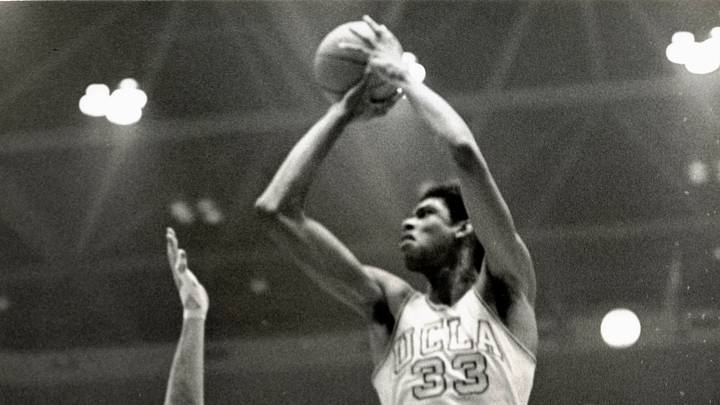
College basketball history is filled with legendary teams, unforgettable players and championship performances, but some of the sport's most remarkable seasons have gradually disappeared from the national conversation. Most fans remember UCLA's dynasty under John Wooden, Indiana's undefeated 1976 championship and the remarkable success of Duke, Kentucky and North Carolina. Far fewer remember how close Drake came to defeating UCLA in 1969, how Jacksonville reached the national championship game in 1970 or how Idaho became one of the country's best teams in 1982. Those accomplishments deserve renewed attention, particularly because they demonstrate that extraordinary college basketball teams haven't always come from the sport's most recognizable programs.
Some of these teams came remarkably close to changing the sport's history, while others established records that still stand decades later. Their success often emerged from circumstances that would seem almost impossible in today's college basketball environment, especially considering the enormous financial differences between major-conference programs and smaller schools. The following five seasons, presented chronologically rather than as a power ranking, highlight remarkable achievements that deserve a larger place in college basketball history. Each provides a reminder that the sport's most compelling stories aren't always connected to national championships.
1. Drake's 1968-69 team nearly changed college basketball history
The 1968-69 Drake Bulldogs produced one of the most remarkable turnarounds in college basketball history, emerging as a national contender only two years after finishing last in the Missouri Valley Conference. Under head coach Maury John, the Bulldogs developed into an outstanding team that finished 26-5 and advanced to the Final Four. Their greatest achievement nearly came against one of the most dominant programs the sport has ever seen. Drake faced UCLA in the national semifinals, challenging a Bruins team led by Lew Alcindor that was pursuing its third consecutive national championship. The Bulldogs pushed UCLA throughout the contest before suffering an 85-82 defeat, finishing just three points away from one of college basketball's greatest upsets.
Drake responded to that disappointment by defeating North Carolina 104-84 in the national third-place game, providing a remarkable conclusion to an extraordinary season. Willie McCarter scored 28 points and distributed 10 assists in the victory, while Willie Wise and Dolph Pulliam also played significant roles throughout the team's historic campaign. Their accomplishments helped establish a standard that remains important to Drake basketball decades later. Although the Bulldogs never captured the national championship, their performance against UCLA demonstrated that they belonged among the nation's elite. The fact that Drake came so close to defeating Alcindor's Bruins makes the season even more fascinating in retrospect.
2. Jacksonville's 1969-70 team reached the national championship game
Jacksonville University isn't typically associated with college basketball's national championship conversation, but the Dolphins were one victory away from winning the title in 1970. Led by head coach Joe Williams and legendary center Artis Gilmore, Jacksonville finished 27-2 and advanced to the national championship game against UCLA. The accomplishment was particularly remarkable because the program had only recently transitioned into Division I competition. Jacksonville defeated several nationally recognized opponents during its historic campaign, including top-ranked Kentucky in the NCAA Tournament. The Dolphins then defeated St. Bonaventure in the national semifinals, securing a place in the championship game against one of college basketball's greatest dynasties.
Although UCLA ultimately captured the championship, Jacksonville had already accomplished something extraordinary. The Dolphins remain the smallest school ever to reach the NCAA men's basketball national championship game, a distinction that emphasizes just how unusual their achievement was. Gilmore dominated opponents throughout the season, averaging 23.2 points and 22.2 rebounds while establishing himself as one of the sport's most imposing players. Jacksonville also featured talented contributors such as Rex Morgan and Pembrook Burrows, giving Williams a roster capable of competing against established national powers. More than five decades later, the Dolphins' remarkable journey remains one of the strongest examples of a smaller program reaching college basketball's biggest stage.
3. VMI's 1976-77 team won 26 games and reached the Sweet 16
The Virginia Military Institute has experienced plenty of difficult basketball seasons, but the Keydets were once among the nation's most surprising postseason contenders. Their 1976-77 team finished 26-4, establishing a school record for victories while advancing to the NCAA Tournament's Sweet 16. The accomplishment followed another extraordinary campaign, as VMI had reached the Elite Eight in 1976 after defeating Tennessee and DePaul before falling to undefeated Rutgers. Rather than disappearing after that unexpected tournament run, the Keydets returned with another outstanding team. Their ability to sustain success across consecutive seasons made the achievement even more remarkable.
Under head coach Charlie Schmaus, VMI captured its second consecutive Southern Conference championship and defeated Duquesne in the NCAA Tournament before losing to Kentucky. The Keydets finished the season ranked No. 20 in the Associated Press poll, marking the first national basketball ranking in school history. Their success also extended to an extraordinary home-court advantage, as VMI assembled a 36-game home winning streak that continued into the 1978-79 season. That remarkable stretch demonstrated how difficult the program had become to defeat in Lexington, Virginia. VMI hasn't consistently competed at that national level in subsequent decades, making its accomplishments during the 1970s an especially interesting chapter in college basketball history.
4. DePaul's 1979-80 team went 26-2 but never reached the Final Four
Modern college basketball fans might be surprised to learn how powerful DePaul once was, particularly during the late 1970s and early 1980s. Under legendary head coach Ray Meyer, the Blue Demons became one of the nation's most recognizable programs, regularly competing against nationally ranked opponents while attracting enormous attention in Chicago. The 1979-80 season represented one of the program's most impressive regular-season performances, as DePaul finished 26-2 behind future NBA stars Mark Aguirre and Terry Cummings. Aguirre averaged 26.8 points per game, while Cummings contributed 14.2 points during his freshman season. The roster also included Skip Dillard, Clyde Bradshaw and James Mitchem, providing Meyer with an exceptional combination of scoring ability and experience.
DePaul established itself as a legitimate national championship contender during the regular season, including a victory over UCLA that reinforced the team's national standing. However, the Blue Demons suffered a disappointing NCAA Tournament defeat against the Bruins, ending their championship hopes much earlier than expected. That contrast between regular-season dominance and postseason disappointment makes the campaign especially memorable. DePaul was unquestionably one of the country's most talented teams, yet its extraordinary season ended without a Final Four appearance. The program's later struggles have made Meyer's greatest teams feel increasingly distant, but the 1979-80 Blue Demons remain an important reminder of just how powerful DePaul basketball once was.
5. Idaho's 1981-82 team became a national powerhouse almost overnight
Idaho basketball experienced one of the most remarkable transformations in Division I history under Don Monson, who inherited a program coming off a 4-22 season when he arrived in 1978. Four years later, the Vandals were among the nation's best teams, finishing the 1981-82 campaign with a 27-3 record and establishing a school record for victories. Idaho captured the Big Sky Conference championship and climbed as high as No. 6 in the national rankings, an extraordinary accomplishment for a program that had struggled so badly just a few seasons earlier. The Vandals developed a reputation for disciplined defensive basketball, frustrating opponents with an approach that emphasized positioning, communication and limiting easy scoring opportunities. They allowed just 57.5 points per game, helping establish one of the nation's most effective defensive identities.
Idaho entered the NCAA Tournament as the No. 3 seed in the West Region and faced Iowa in a memorable matchup at Washington State's Beasley Coliseum. Brian Kellerman delivered the decisive basket in overtime, sending the Vandals to the Sweet 16 and creating one of the most celebrated moments in school history. Idaho eventually lost to Oregon State, ending its remarkable season, but the team's accomplishments had already transformed the program's national reputation. Monson earned national coaching honors for his work, while the Vandals established a standard that remains an important part of Idaho basketball history. More than four decades later, their rise from conference struggles to national prominence remains one of college basketball's most impressive rebuilding stories.
College basketball history is bigger than the traditional powerhouses
These five programs represent different eras and circumstances, but their accomplishments share an important theme. Drake nearly defeated UCLA in the Final Four, Jacksonville reached the national championship game and VMI produced consecutive extraordinary NCAA Tournament runs. DePaul assembled one of the nation's most talented teams, while Idaho transformed itself into a national contender after years of struggles. None of those stories requires a national championship to demonstrate how remarkable the teams were. Their success illustrates the unpredictable nature of college basketball and the possibility that extraordinary seasons can emerge from unexpected places.
As another college basketball season approaches, these forgotten accomplishments provide a valuable reminder about the sport's history. A program doesn't need decades of national championships or enormous financial resources to produce a team worth remembering. Sometimes an exceptional coach, a talented collection of players and the right circumstances create a season that deserves attention long after the final game. The next remarkable team could emerge from a school that rarely receives national coverage, just as these programs did decades ago. That's part of what makes college basketball so fascinating, and why its overlooked history deserves to be remembered.
 Add us as a preferred source on Google