

The conversation around college basketball jobs has changed dramatically over the last decade, and nowhere is that more evident than in the Southeastern Conference. Facilities and tradition still matter, but money, NIL infrastructure, and institutional commitment now drive the pecking order. That reality sits at the center of a new SEC basketball job rankings release from Jeff Goodman as part of his ongoing series with The Field of 68.
🔥 SEC JOB RANKINGS 🔥
— The Field of 68 (@TheFieldOf68) February 4, 2026
We anonymously polled coaches and asked them to rank every job in the league! 👀
RANKINGS HERE ⬇️https://t.co/Anm4hH640y pic.twitter.com/sb6GllR1Wk
Rather than relying on public perception, Goodman anonymously polled veteran head coaches and assistants across the league, allowing them to define their own criteria. The result is a revealing snapshot of how coaches truly view SEC jobs in 2026. While some traditional powers remain near the top, the growing gap between resource-rich programs and the rest of the league is impossible to ignore. In an era dominated by NIL budgets and aggressive investment, these rankings show which schools are built to compete nationally and which face a much steeper climb.
Kentucky Still Sits Alone at the Top
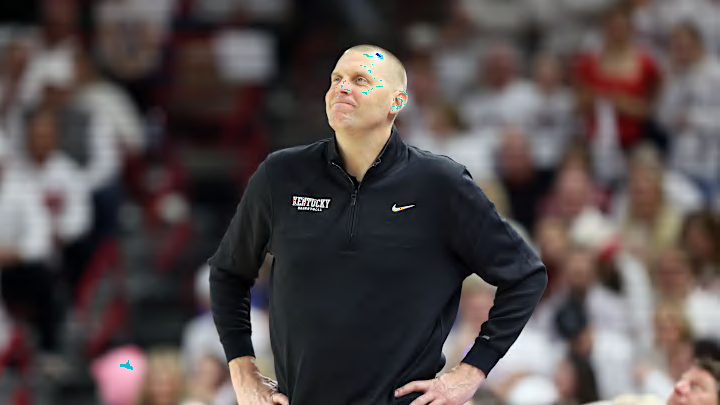
At the top of the list sits Kentucky Wildcats, far ahead of the field. Coaches polled for the rankings described Kentucky not only as the best job in the SEC, but potentially the best job in all of college basketball. The combination of elite resources, unmatched fan support, and a massive NIL operation continues to separate Lexington from the rest of the league.
Multiple coaches pointed to Kentucky’s reported $20 million commitment and the fact that basketball is the undisputed priority within the athletic department. In a conference dominated by football brands, Kentucky’s singular focus on basketball remains a major advantage.
Texas and Arkansas Powered by Resources and Buy-In
Behind Kentucky, Texas Longhorns and Arkansas Razorbacks round out the top three. Texas ranked highly almost entirely because of financial muscle. While it may not be a traditional basketball-first school, coaches acknowledged the Longhorns’ ability to fund NIL deals and attract elite talent when leadership commits to the sport.
Arkansas earned its spot for a different reason. Coaches cited deep fan passion, consistent administrative support, and a willingness to spend. The Razorbacks’ environment and basketball culture continue to resonate strongly across the league.
Tennessee, Florida, and the Middle Tier of Contenders
Tennessee Volunteers and Florida Gators followed closely behind, forming a second tier of strong jobs. Both programs benefit from strong facilities and consistent investment, even if basketball occasionally shares the spotlight with football.
Programs like Texas A&M, Alabama, Missouri, and Auburn filled out the middle of the rankings, reflecting solid support and competitive potential, but not quite the same level of certainty coaches see at the very top.
The Bottom of the League Faces an Uphill Climb
At the bottom of the rankings sat programs such as Vanderbilt, Ole Miss, Oklahoma, Mississippi State, and South Carolina. For these schools, coaches pointed to limited NIL resources, inconsistent administrative commitment, or the challenge of competing in football-dominated environments.
While any SEC job carries inherent advantages, the gap between the top and bottom of the league has widened considerably in the NIL era. Without a significant shift in investment or leadership priorities, climbing the conference ladder remains difficult.
Full SEC Basketball Job Rankings
- Kentucky
- Texas
- Arkansas
- Tennessee
- Florida
- Texas A&M
- Alabama
- Missouri
- Auburn
- LSU
- Georgia
- Vanderbilt
- Ole Miss
- Oklahoma
- Mississippi State
- South Carolina
As college basketball continues to evolve, these rankings offer a reminder that success is no longer driven only by history or tradition. In the SEC, resources, NIL commitment, and institutional buy-in now define which jobs truly stand above the rest.
 Add us as a preferred source on Google