

College basketball’s eligibility rules have rarely appeared more flexible, with players winning additional seasons and even returning from professional basketball. Noam Yaacov did not receive the same favorable outcome, leaving Utah without the player expected to lead its backcourt.
Mark Mitchell is going to Kentucky. RJ Luis Jr. has been cleared to join LSU despite signing multiple NBA contracts. Other players continue to seek extra seasons through courtrooms across the country.
Noam Yaacov was not as fortunate.
The NCAA denied the Israeli guard’s eligibility waiver and subsequent appeal, ending his plans to play for Utah during the 2026-27 season. The university confirmed that the appeal was denied on Aug. 20, although it did not disclose the reasoning behind the decision.
That lack of explanation only adds to the confusion surrounding an eligibility system that appears to be producing a different answer with every case.
Yaacov will now pursue opportunities outside college basketball, while Utah must replace the player it expected to become the centerpiece of its offense.
Utah loses much more than another incoming transfer
Yaacov was not coming to Utah as a developmental prospect.
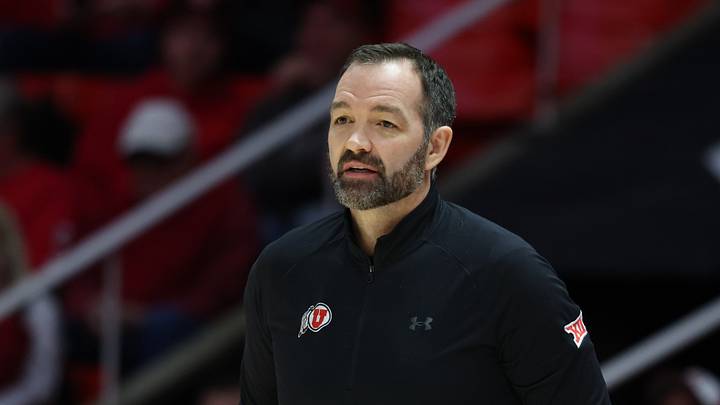
The 6-foot-1 guard was expected to take immediate control of the Runnin’ Utes’ backcourt during Alex Jensen’s second season as head coach. CBS Sports analyst Isaac Trotter previously identified Yaacov as a potential All-Big 12 player and the engine who could drive Utah’s offense.
His production in Europe supported those expectations.
Yaacov averaged 17.4 points, 5.8 assists, 3.9 rebounds and 1.1 steals for Filou Oostende during the 2025-26 season. He shot 46% from the field and 38.3% from beyond the arc while emerging as one of three finalists for the BNXT League MVP award.
He also helped Oostende reach the Belgian championship series.
Utah was adding a proven professional-level playmaker who could score efficiently, create for teammates and organize an offense. Those players are difficult to find at any point in the recruiting cycle. Replacing one in late August is almost impossible.
Jensen must now reconsider the roles throughout his guard rotation before preseason practices begin.
The NCAA’s decision creates more eligibility confusion
The specific reason for Yaacov’s denial remains unknown.
That detail is important because his professional experience alone does not explain the outcome. International players with backgrounds in professional organizations have routinely received permission to compete in college basketball.
Yaacov also went through the 2026 NBA Draft process because he was automatically eligible due to his age. He participated in the G League Draft Combine and NBA Draft Combine scrimmages but was not selected.
Meanwhile, courts have recently cleared players with different and, in some cases, more extensive connections to professional basketball.
Luis signed a two-way contract with the Utah Jazz before landing with the Boston Celtics organization. He played in three NBA preseason games, although he never appeared in a regular-season or G League contest. A Louisiana judge granted him an injunction allowing him to play for LSU.
Mitchell received temporary relief that allowed the former Missouri forward to claim another season and commit to Kentucky. Several members of the 2022 high school class have also pursued a fifth year after exhausting their previous eligibility.
None of that automatically means Yaacov should have been cleared. Every eligibility case contains different contractual, educational and competitive details.
The problem is that the NCAA has not publicly explained which detail separated Yaacov from other international prospects who were allowed to play.
Without additional transparency, confusion is the only reasonable response.
Trey Campbell becomes even more important for Utah
Utah appeared to prepare for the possibility of losing Yaacov by adding former Northern Iowa guard Trey Campbell.
Campbell averaged career highs of 13.7 points and 3.8 assists last season while also collecting 3.8 rebounds per game. The four-year starter earned second-team All-Missouri Valley Conference and all-defensive honors after helping Northern Iowa reach the NCAA Tournament.
He can practice with Utah, but his availability for the season is not guaranteed.
Campbell is seeking a fifth year through the same eligibility battle involving members of the 2022 high school graduating class. A federal injunction initially opened the door for those players to return, but an appeals court later stayed that decision while the NCAA proceeds with its challenge.
Utah could therefore enter the season without either of the two guards it hoped would stabilize the position.
Jackson Holcombe, Taison Chatman and TJ Burch are among the other incoming backcourt options. Lucas Langarita and Obomate Abbey return to the program, but none was expected to carry the same responsibility as Yaacov.
Utah becomes the unfortunate face of eligibility chaos
Yaacov’s case illustrates why the current situation has become so difficult to follow.
One player can sign NBA contracts and earn a path back to college through a state court. Another can spend several years competing overseas and be denied by the NCAA without a publicly stated reason. A fifth-year senior may be eligible one week and placed back into uncertainty the next because an injunction was stayed.
Utah followed the waiver and appeal process. It still lost the player around whom it had planned to build its backcourt.
“We’d like to thank everyone who worked so diligently throughout this process,” Jensen said in the school’s statement. “Given the outcome, Noam will pursue other playing opportunities, and we wish him the very best moving forward.”
The legal fights involving Mitchell, Luis and numerous fifth-year players are far from finished. Their availability could change again before or during the season.
For Yaacov, however, Utah has already announced the end of the road.
At a moment when college basketball appears to be finding a route to eligibility for almost everyone, one of the sport’s most intriguing international additions was left without one.
 Add us as a preferred source on Google