

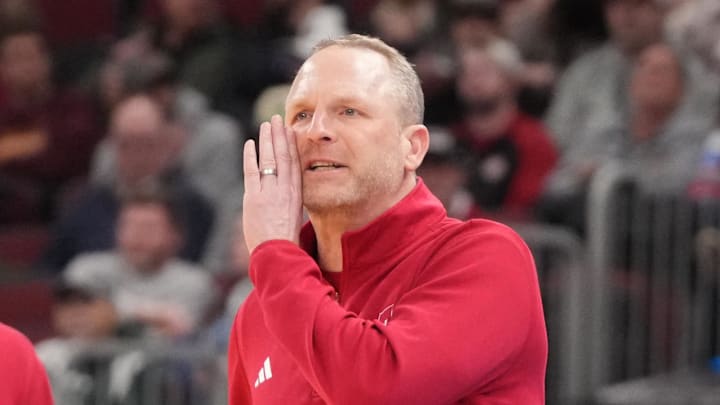
There are rebuilds, and then there’s what Indiana Hoosiers just went through over the last year. Year 1 under Darian DeVries wasn’t simply about installing a new offensive system or adjusting to a new voice on the sideline. It was about piecing together a roster on the fly, managing expectations, and trying to stay competitive in one of the toughest conferences in the country.
The result was an 18-14 finish, a 9-11 record in Big Ten play, and a 10th-place finish that ultimately left Indiana out of the NCAA Tournament for a third consecutive season. For most programs, that type of year is considered part of a natural transition. At Indiana, it only amplified the urgency.
That urgency exists because of what Indiana basketball represents historically. This is a program with five national championships, including the iconic undefeated 1976 team, and a legacy shaped by figures like Bob Knight and Isiah Thomas. The expectation in Bloomington has never been to slowly build toward relevance. The expectation is to compete at a national level, and anything less is viewed as falling short. That backdrop is what makes this offseason feel so critical. DeVries didn’t just need improvement. He needed transformation.
A complete roster overhaul signals urgency
Indiana didn’t flirt with change this offseason. It fully committed to it. The Hoosiers are returning just one scholarship player from last season in Trent Sisley, which underscores how dramatic this reset really is. Six of the team’s top scorers from the 2025-26 season are gone, either because they exhausted eligibility or entered the transfer portal. That kind of turnover is rare, even in the modern era of college basketball, and it signals a coaching staff that understood incremental fixes were not going to be enough.
This approach allows DeVries to build a roster from the ground up with players who fit his system rather than trying to adapt his philosophy to inherited personnel. Instead of patching weaknesses, Indiana essentially hit reset and began constructing a team with a clear identity. That level of roster control heading into Year 2 is significant, especially when combined with the caliber of talent the Hoosiers were able to bring in.
The portal class changes everything
Indiana’s transfer portal haul is where the narrative around this program begins to shift. The Hoosiers didn’t just add depth pieces or role players. They assembled a group that addresses nearly every major flaw from last season while also raising the overall talent level. Markus Burton gives Indiana a true offensive engine, a guard capable of creating his own shot and carrying the scoring load when possessions break down. Bryce Lindsay adds perimeter shooting and spacing, something the Hoosiers lacked consistency in a year ago.
On the wings, Darren Harris and Jaeden Mustaf bring size, versatility, and the ability to impact the game in multiple ways, whether through scoring, defense, or rebounding. In the frontcourt, Aiden Sherrell and Samet Yigitoglu provide the kind of interior presence Indiana desperately needed, offering rim protection, rebounding, and physicality in the paint. Altogether, this six-player portal class doesn’t just improve the roster. It gives Indiana a balanced lineup with complementary skill sets across every position.
This roster finally fits DeVries’ system
What stands out most about this group is how cleanly it aligns with DeVries’ coaching philosophy. At previous stops, his offenses have been built around dynamic guards who can control tempo and create opportunities, surrounded by players who understand spacing and can operate within defined roles. That structure was difficult to implement in Year 1 due to roster limitations. This season, the pieces appear to be in place.
Burton projects as the focal point of the offense, someone who can initiate sets and handle late-clock situations. Surrounding him with shooters like Lindsay and Harris should open up driving lanes and create more efficient scoring opportunities. Mustaf adds another layer with his ability to attack off the wing, while Sherrell and Yigitoglu provide balance inside. For the first time, Indiana’s roster doesn’t just have talent. It has cohesion, and that could make a significant difference in how the team performs on a nightly basis.
Why Indiana’s history makes this different
The context of Indiana’s history elevates everything about this rebuild. This is not a program content with simply returning to the NCAA Tournament. The standard is far higher, shaped by decades of success and a fan base that expects to see Indiana competing with the best teams in the country. The banners hanging inside Assembly Hall serve as a constant reminder of what this program once was and what it is expected to be again.
That level of expectation can be a burden, but it also creates urgency. DeVries was not brought in to oversee a long-term rebuild with no timeline. He was hired to restore Indiana to relevance, and the moves made this offseason reflect a staff that understands the importance of accelerating that process. The transfer portal has provided a pathway to do just that, allowing Indiana to reload quickly rather than waiting on traditional recruiting cycles.
The expectations have officially changed
With the roster now in place, the conversation around Indiana shifts from potential to expectation. Last season, the Hoosiers were trying to find their footing. This season, they should be competing. The additions made through the portal have raised both the floor and the ceiling of this team, giving Indiana a legitimate chance to climb the Big Ten standings and reenter the national conversation.
There are still variables that will determine how high this team can go. Chemistry will need to develop, roles will need to be defined, and players will need to adjust to playing alongside new teammates. However, the overall structure of the roster provides a much stronger foundation than what Indiana had a year ago. That alone is enough to significantly improve the outlook heading into the 2026-27 season.
Year 2 is where it becomes real
Year 2 under DeVries is no longer about laying the groundwork. It’s about results. The roster overhaul, the influx of talent, and the improved fit all point toward a team that should be capable of competing at a high level in the Big Ten. For Indiana, that means more than just being competitive. It means returning to the NCAA Tournament and proving that the program is moving in the right direction.
The opportunity is there. The roster is in place. Now it comes down to execution. If this group comes together the way it appears it can on paper, Indiana won’t just be improved. It will be relevant again in a way the program hasn’t been in several years.
 Add us as a preferred source on Google